From data collection to clinical confidence: What dental hygienists need to know



Episode highlights
- Assessment is more than data collection. Dental hygienists use critical thinking to interpret multiple findings and identify the needs of each individual.
- Clinical standards provide a framework for confident care. Understanding the process of care can help hygienists connect their assessment findings to diagnosis and treatment planning.
- Mentorship helps clinicians grow. Supportive colleagues, continued learning, and hands-on experience can help hygienists build confidence in their clinical judgment.
- Patients need to understand what you're doing and why. Explaining findings, asking open-ended questions, and involving patients in planning can strengthen trust and encourage participation in care.
- Professional autonomy and person-centered care go hand in hand. When hygienists are supported in working within their education and scope of practice, they can contribute more fully to collaborative care.
Episode description
Dental hygienists do more than collect clinical data. They interpret assessment findings, identify individual oral health needs, and use their clinical judgment to guide treatment planning. So how can hygienists move beyond the checklist and feel more confident putting that knowledge into practice?
In this episode of A Tale of Two Hygienists, Jessica Atkinson and Dave Torres talk with dental hygiene experts Jennifer Pieren and Karen Palleschi about translating assessment findings into meaningful dental hygiene diagnoses. They discuss how professional standards support evidence-based, person-centered care, why mentorship and experience help build clinical confidence, and how explaining findings to patients can make them active partners in their care. The conversation also explores clinical autonomy, student education, and the importance of recognizing the expertise dental hygienists bring to the dental team.
A Tale of Two Hygienists Podcast – Episode 561
Episode intro & meeting our guests — 02:32
Dave Torres: Welcome back to A Tale of Two Hygienists, the podcast where Jess and I just refuse to let this profession stay stagnant. If you're here, you already know that being a great clinician does not stop when you walk out of the operatory. It starts with conversations like this one. So settle in because today we have something special for you. And as always, I'm Dave and I'm with my amazing co-host Jess.
Jess, tell us about why this podcast is going to be so special and the special people that we're going to be talking to.
Jessica Atkinson: October is Dental Hygiene Month. And this October, we are focusing in detail on our professional standards of care. And we have the pros with us to talk about how we can implement these standards of care more effectively in our day-to-day clinical practice and professional work.
Today, we’re discussing how diagnosis can guide treatment planning for whole-person care. We have Jennifer Pieren—she is an RDH, MS, FADHA who is a nationally recognized dental hygiene educator, author, speaker, and researcher with more than 25 years of experience in clinical practice, education, research, and academic leadership. She serves as a faculty member at Youngstown State University and as an adjunct professor at the University of New Haven. Professor Pieren is co-editor of the 5th and 6th editions of Darby and Walsh’s Dental Hygiene: Theory and Practice with the 6th edition receiving the 2025 Textbook Excellence Award, known as the Texty Award, from the Textbook and Academic Authors Association. She has authored numerous scholarly publications, serves as a peer reviewer for professional journals, and presents nationally and internationally on topics related to dental hygiene education, clinical practice, and professional development.
Her professional contributions include serving as a content expert for the ADHA 2025 Standards for Clinical Dental Hygiene Practice and the 2026 ADEA Compendium curriculum guidelines for allied dental education. She also serves as a faculty expert for the ADHA National Board Review.
Professor Pieren's contributions to the profession have been recognized with numerous honors, very well deserved, including the 2026 UMKC School of Dentistry Alumni Achievement Award, Youngstown State University’s Bitonte College of Health and Human Services Alumni of the Year Award. Did I say that right, Jennifer?
Jennifer Pieren: Yes, Bitonte College of Health and Human Services.
Jessica Atkinson: Bitonte College of Health and Human Services Alumni of the Year Award and the YSU Teaching Excellence Award. She is a professional fellow of the American Dental Hygienist Association and an active member of ADEA, the International Federation of Dental Hygienists and Sigma Phi Alpha. We are in good hands today.
And we have Karen Palleschi. She is an RDH, BSDH, MS, Professor Emeritus, she has had a rewarding dental hygiene career spanning more than 40 years, but you wouldn't know it, including 38 years in academia, 25 years in clinical practice and public health. Well, maybe you would know it because you are pretty impressive, but if you look at you, wouldn't know.
Although she is retired from academia, she continues to be involved in our profession and is a contributing author to Darby and Walsh’s Dental Hygiene: Theory and Practice, editions 2 through 5, and the current 6th edition in 2025, the chapter titled Dental Hygiene Care Planning, Evaluation and Documentation. She's also a content contributor to the 2025 ADHA Standards for Clinical Dental Hygiene Practice, member of the American Dental Hygienists Association, New York State Dental Hygiene Association, and has served on the New York State Board for Dentistry. She's also been the recipient of the State University of New York's Chancellor's Award for Excellence in Teaching.
So, we have with us today two very influential clinicians, practitioners, hearts of dental hygiene to talk to us about how we can be better at implementing these standards. And I just want to thank you both for being here and letting us bask in your glow and to learn and to learn from you. Thank you so much.
Karen Palleschi: Thank you for having us. It's good to be here.
Jessica Atkinson: It's our pleasure. It is good for you to be here. I am so impressed. I have written newsletters. That's where Dave and I—we write newsletters. I've written an article. I have, I do have my master's degree in education. However, I have seen people who endeavor to write chapters of a book, and that is a level of dedication and cross checking that I don't know if I have the bandwidth for. So that gives me a little bit of insight into the kind of professionals that you are. And what that means to me is that you are dedicated to evidence-based practice and practice that changes how we care for our patients. So thank you and well done.
So, tell us a little bit about how we can translate our assessment findings into meaningful dental hygiene diagnosis.
Turning assessment findings into meaningful diagnoses — 08:18
Jennifer Pieren: I don't know. I'll start. And I think Karen and I are really great about bouncing off of each other. So this will work.
Jessica Atkinson: Yes, we'd love that.
Jennifer Pieren: But I think when we talk about translating assessment findings to meaningful dental hygiene diagnoses is kind of what you were talking about, right?
Jessica Atkinson: Yes.
Jennifer Pieren: I think the important thing to remember is that assessment data alone doesn’t improve treatment outcomes. It's really the interpretation of that data that drives meaningful person-centered care. So when we talk about the process of care and we talk about the clinical standards, really that's our framework that we use. And then we bring our critical thinking in and our expertise as primary oral care providers to execute that for the patient, or I should say for the person really.
Jessica Atkinson: I was just going to say, I think we can get caught up in the assessment taking and we often aren't giving ourselves the credit for as we're taking those assessment pieces. I know because of the education that we have, I'm starting to connect dots in my head. I'm starting to formulate potential reasons that I'm seeing certain things, I'm constantly working in the background with the assessment taking, and how are we, with the standards of care, how are we showing that connection between the assessment and the diagnoses?
I think that some people can get caught up and be like, “Well, I just take the assessment, I'm just assessing.” And you're like, as you assess your brain and you've been tested to competency and you've practiced, you're actually creating a dental hygiene diagnosis.
Karen Palleschi: I think it's, yeah, absolutely. I agree with that. I believe that as you're collecting data, you start seeing differences and you start seeing health, you start seeing evidence of disease maybe or risk of disease. And then you start seeing things that are most likely contributors. So as you're going, as you're doing the assessment part, you're really, that's a key element. You really need to be interpreting those findings and formulating your thoughts of— really critically thinking through your thoughts of what diagnoses need to be identified, dental hygiene diagnoses need to be identified for that particular person that you're working with. That's kind of how I see it.
And I think with experience, you do that a little bit faster every time you go through it. And talking to patients and collecting whatever data you have to, and then you can formulate multiple diagnoses. You really don't want to take one assessment finding and say, oh, patient has blah, blah, blah, or risk 4. You really need to look at multiple pieces of evidence that are going to lead you to that formulation of that dental hygiene diagnosis.
Jennifer Pieren: Assessment for me really becomes more meaningful when we take this information that we collect because we're just not task doers and data collectors, right?
Jessica Atkinson: Amen, amen. Say it again, say it again.
Jennifer Pieren: We are not just data collectors and task doers.
Jessica Atkinson: Things are happening in our brain.
Jennifer Pieren: That's right. So all those neural networks, actually, neural networks. So assessment really becomes meaningful for me when we take those data and start asking, what does this really tell us about the person's current, unique and future oral health needs and systemic health needs as well? So that for me, when you talk about the translation of those assessments, that's when it becomes most meaningful for me.
Moving beyond data collection — 12:18
Dave Torres: Yeah, and absolutely. I've mentored hygienists in the past, specifically newergrads, and you said this best, Karen, with experience comes more certain, right? But I've realized that we're very checkboxy, right? We just collect data, we do all these things. But where do we kind of pivot to that and instead of just gathering all this information, collecting all this information? I see some hygienists fall short and just say, well, I'll give that to the doctor and they will know best. And I've seen some experienced hygienists say, well, this is the data that I've collected. I'm telling the doctor what are some of the things that we're going to be doing because they have that experience, they have that critical thinking.
Now, how do we implement these things without How do I say not letting it fall short? And how do we move past the collector stage to the implementing stage? What advice do you guys have for some hygienists that feel stuck?
Jennifer Pieren: Well, can I address that as an educator actually first? I think this starts in education too, because I think we have students who become very focused on finding the “right” answer as opposed to what is the appropriate answer for this patient at this moment in time, right? So, and part of that, I think education breeds that a little bit, if I'm being honest.
Jessica Atkinson: Because I was listening to Dave and I was like, hopefully that you feel pretty comfortable with that or have that realization before you start clinical practice that you are creating those diagnoses as you gather that information. Hopefully you're having that experience.
Jennifer Pieren: Right. Well, so I think You're absolutely right, Jess. So, and I think though that with, like Karen said, as we become, as we progress through that typical learning curve, like, learning, we talk about Bloom's taxonomy, for example, we, first we just acknowledge that it exists and can define it, right? And then we go up to application and, you know, comprehension, application, and then eventually self-evaluation. So until the students really get there, that is a part of their practice. They need to go through those steps and they need to be mentored through those steps. And we need to facilitate that process for them so they become more, will become, A, they become competent at it, and B, they become confident at doing it as well. So, and I think what Dave was even acknowledging is that in practice, we have some hygienists who are not confident in that role as well, which is definitely something I think we need to own and say we have this process of care, we have the clinical standards, and that really gives us the structure we need to practice within our scope of practice. Does that make sense?
Jessica Atkinson: Oh, that totally makes sense. I was thinking, I'm like, it might not, it isn't a competency. issue. All of these students that have graduated in clinical practice have shown competency. It may be a confidence [issue.] And when you brought that to the forefront, I was like, oh, I can definitely see that. So for our clinicians that maybe aren't feeling as confident in trusting their data collection as reflected in a dental hygiene diagnosis, I'm hearing that you're suggesting to review the the clinical standards of care that could give you some really great direction on how to become more confident. And I would add, Dave, you mentioned the word mentoring. Find someone in the space that you admire and ask for some mentorship. And we've invited Karen and Jen here to be our mentors and to help us maybe see some areas that we could improve on. So have you seen some areas within our data collecting or our planning and implementation that you would like to see more of or less of?
Jennifer Pieren: Well, wait, can I go back to one thing real quick before we move on?
Jessica Atkinson: Absolutely.
Finding mentorship and building confidence — 16:28
Jennifer Pieren: I was gonna just say, and I would say, since I know we do have like some, we have students certainly listen to this podcast, So I was going to say that if a student is looking for that, I think one of the best things I can recommend for them is to, when they graduate, to maintain their membership in ADHA. Because from someone who has moved from state to state to state and practiced in multiple states, I can tell you where you find that information about like, how do I exist within this dental space I've come to work in and things like that. And how do I negotiate these kinds of changes or this kind of co-therapy that I want to do. I think you can find those mentors through your professional organization. I just needed to say that.
Jessica Atkinson: I'm hearing Karen giving her nod of approval.
Karen Palleschi: I agree. I think Jennifer makes some fabulous points. I love listening to her. She educates me. So I can only speak from my perspective as a clinician and how I grew into these standards because I graduated at the time where there, it wasn't really talked about. So, we weren't doing diagnosing and we were kind of collecting data and moving on.
But I don't know, there was always this part of me when I was in clinical practice. I don't know where it came from. I never realized it was there, but I seemed to do a process. And I looked at assessment as I tried to look at people as individuals, and I used to try to identify what their needs were. But you focus mostly on periodontal disease and caries and just those types of things. I wasn't looking that much broader from that.
And I remember, can I give you an example? I remember being in a practice, I've been very fortunate with the clinical practices that I worked in, and I remember I was in a practice and I remember walking down to the dentist operatory and saying to him, “I have a patient that I believe needs sealants, can you come and take a look?” And he looked up at me and he said, “Do they need them? And why do they need them?” And I had that discussion with him and he goes, “You're capable of making that decision.”
And all of a sudden I started, as I worked with him, I grew in the confidence that it was okay for me to make these decisions where I don't believe I ever really had that. I didn't have that feeling coming out. I felt like I worked for the dentist and I needed to get their approval on everything that I did, the little good person that I was, I had to get their approval. And he taught me and expected me to be my own person and to use my skills and to make decisions. And I have to say that was a turnaround for me; I started building confidence and I knew that I could take my skills and I could use them.
And then you grow as you work. You gain more experience and knowledge. Continuing education is fabulous; being exposed to new ideas and continuing to learn all help you grow. So I say to recent graduates coming out, you will grow into it. You have to trust yourself and just stay as current as you can, expose yourself to the literature that's out there, talk to other hygienists, be part of the process, be part of your membership. You're a professional organization. I'm such a proponent of that. And you will grow into it and trust yourself that you'll grow into it.
I really think the standards, when the standards were introduced, I was like, wow, this was just, this is who I am. This is how I want to practice. And I believe the standards really guide you through the process. So, if you know the standards and you work through the steps, it builds your confidence. That's how I built my confidence. I knew I had something that backed me up. I had something that helped me work through the different steps of working with a patient. And you trip, you fall, you make good decisions, you get a patient that has a fabulous outcome, you get somebody who doesn't, and you go back and you look at why did that happen? How can I be good in one place and that? It doesn't work all the time. And you learn, you just start learning and growing with that process.
Further reading: Building confidence as a new dental hygienist
Supporting autonomy in clinical practice and education — 21:29
Jennifer Pieren: And I think, yes, that's absolutely Karen. And I love, because I think a lot of us need that. I think what you're saying is you have that support from your dentist who was like your co-therapist that said, “Hey, you, know, I trust your judgment.”
I've had very similar experience too. That was one of the things where, like I think I told you, like it was earlier in my practice where I had finished like, you know, periodontal therapy and the one of the, dentist I was working with, the periodontist came in and said, “How did things go today? Or how did she do?” Because the patient was a female and the patient started to answer about telling the doctor how I did. And he's like, oh, he's like, wait a second here. He goes, “What you say is very valid, but she's the expert. I'm asking her about how do things look for you today?” How did the treatment, go down, all these other things.
And that for me was transformative to get that support from someone I was working with to get that acknowledgement. So I think that dental hygienists who find themselves in that kind of environment will thrive and can actually kind of function within that framework that we talk about better, or at least they feel more confident doing that.
And that's also something we need to do for the students too. Karen and I had talked a little bit previously about how we give students more confidence, give them more autonomy as they get close to graduating. I don't know if you've ever talked about like EPAs, or entrustable professional activities, on this broadcast or on this podcast before, but that's like one of the.
Jessica Atkinson: You are it, Jennifer. You are introducing it right now.
Jennifer Pieren: I highly suggest, if you're looking at educational series, to look into it. Because really, what we need to do is, and many large schools are doing this. Well, at least it's, well, I should say, not many. I mean, there are several, but big schools are doing it though. Essentially identifying where a student has met competency and can reproduce that. And then give them that leeway to go ahead and progress through the appointment through that and until they get to the points where it's like, hey, we need to, this part you have, we haven't like checked you out as being competent, but it gives them some freedom and some autonomy through that process. And it gets them past that check mentality.
Because, I tell my students, it's like, you're not going out into private practice and asking for a calculus check. You know what I mean? And it's like, please don't do that. Like, that's not what you're doing here. Like you are working side by side with someone in your own area of expertise and, you know, and really just providing therapy for the patient. So I think we need to, again, in education from an educator standpoint, I'm thinking we need to move past through that check mentality and giving them a little bit more autonomy and a little bit more confidence when they leave us.
Jessica Atkinson: I love that. And those are called ES…E…LMNOPs?
Jennifer Pieren: EPAs.
Jessica Atkinson: EPAs.
Jennifer Pieren: Yeah, we're going to definitely do it. EPAs are a whole separate conversation, but do you think we need to give our students more confidence? And I think that'll translate to more confidence and more autonomy and as we move forward. So.
Building trust through person-centered care — 24:59
Jessica Atkinson: How do you see that confidence being translated into implementing person-centered care? What do you think that how that translates for our patients?
Jennifer Pieren: Well, I think we have better decisions. We can make better decisions, and patients trust us, right? If we’re confident in our care, we can build trust and communicate better with patients. But we have that framework in place, and that really allows us to kind of practice within that framework and make those decisions unique to those individuals.
So, I don't know if I answered that or not.
Jessica Atkinson: You totally did. And when you brought up framework, it reminded me of what Karen was saying earlier, how she found herself doing things or following a pattern. And I feel like the standards of care are giving voice to our actions. Things that we're already doing is giving a voice and some recognition for what's actually happening behind the scenes.
Explaining the value of dental hygiene care — 25:58
Jennifer Pieren: Yeah, we need to say it. Like we need to say dental hygiene diagnosis.
And this is also about building value for the patient because I tell students all the time, like they don't, patients don't realize what we're doing unless we tell them. And we, you know, so I'm doing an oral cancer screening, a head and neck exam, and I'm telling them, I'm handing them a mirror saying, “This is what I'm looking for.” And they're like, “Nobody's ever done this before.” And I'm like, no, they absolutely have. Like, you know, but you may not have known it because they didn't tell you.
And the same thing about, measuring their, looking at their periodontal pockets, right, their periodontal measurements. It's, explaining to them it's a lot like blood pressure. Like we're looking at it, we don't know that it exists sometimes until it's symptomatic. So we measure it beforehand to figure out the status and how we can, you know, prevent the progression of disease and things like that.
So yeah, patients don't realize it until we say it and we need to say it. We need to say, this is, we're collecting, we're assessing for disease. We are assessing, we're assessing your blood pressure to see if you need to be referred to your primary care physician to, so we're screening. We need to say these things, and we need to say dental hygiene diagnosis as well. But I think we shy away from that.
What do you think, Karen?
Karen Palleschi: I agree. I think we need to use the terminology and talk. I believe in talking to the patients. I believe in explaining everything that we're doing. I want my patients to be involved, and I want students to involve their patients in the process. I think if you engage the patient in the process, and you educate them on what is happening, it makes a big difference.
Again, going back to clinical practice, I had a dentist one time walk into the room at the end while I was in between patients and say to me, I could overhear what you were saying to the patient if you educated everybody that way. I don't understand why everybody isn't doing—it was flossing at the time, flossing their teeth—and, you know, and it made me feel good too. I think that because I I was really trying to educate them and engage them and get them involved in what I'm doing so that they understand what their needs are.
And I think we talk about too, even with treatment planning, we talk about developing a plan of action, but having the patient be part of that process, you can start by sharing the dental hygiene diagnosis, that's always my stepping point. I use that dental hygiene diagnosis for everything: “This is what the findings are. Let's take a look at it.” And I have the patient sitting up and you have, and we encourage the students to do this, but you know, you set the patient up, you involve them in that, you put them at that eye level with you, you make them equal to you and you discuss what you're finding and you let them ask questions. I love asking open-ended questions and then sitting there and really listening to what they're saying to me, nodding my head, kind of like I'm sitting here nodding my head as Jennifer speaking, but nodding my head and giving them affirmation as to what is actual, what we're actually, what they're saying to me and helping them to feel confident in talking to me so that I start seeing what's really, what are the barriers that are really preventing this person from making gains or doing this the home care or taking self-responsibility for their oral health or like what's really going on here with them. And I think that when you engage them in that and they become part of the process, they are definitely more apt to take some a little more responsibility for what they're doing.
And if you truly understand why you need to do what you're asking, what people are asking of you, it's easier for you to make that change that you need to make and become part of that process. So, I love using the dental hygiene diagnosis as my stepping stone to treatment planning, going through the treatment plan, developing the treatment plan, however you want to engage the student in that or the patient in that process to let them be part of the whole process. You're going to get better outcomes. You're partnering with them.
Partnership, scope of practice, and professional confidence — 30:43
Jessica Atkinson: You're partnering. Yes. The experiences that you've been sharing with us today, I think the word that I would highlight is that you've been sharing experiences of partnership—partnership with a patient, partnership with other providers.
And I hope as you listen today, you heard an opportunity to partner with other providers. I love that both of you worked for providers who were aware of your application. Aware of what you could do, aware of your education and gave you the autonomy to work within your scope. And for those of you who are listening and maybe you are having your hygienist work within their scope, but maybe that's not reflected in their practice act, this is my plea, my plea to all of our partners out there to work with us as we seek person-centered care.
We talked earlier about confidence. And when we are allowed to work within our scope of practice to the height of our education, our confidence grows and we are able to provide more access to care. So thank you for being part of that. I wouldn't even say change, I would say realization from the standards of care that dental hygienists out there, you are capable, you are You're capable. You are, I want an alliteration here. You are competent and you're confident. So there you go. Thank you, ladies, for being with us today.
Dave Torres: Thank you.
Where to find our guests
Contact the ATOTH hosts
Jessica Atkinson: [email protected]
Dave Torres: [email protected]
Previously on A Tale of Two Hygienists

About the Author
 Jessica Atkinson, MEd, BSDH, RDH, FADHA
Jessica Atkinson, MEd, BSDH, RDH, FADHA, is a dental hygiene educator, clinician, and advocate dedicated to advancing the profession through innovation and education. She combines her clinical expertise and love for education to create engaging, practical learning experiences. Jessica is an Associate Professor and Senior Clinic Coordinator at Utah Tech University, co-host of A Tale of Two Hygienists, and CEO of HYGIENE edgeUCATORS, where she develops continuing education for educators and clinicians. She co-founded Hygiene Edge, a platform with over 100,000 YouTube subscribers. Recognized with the Element Award and Outstanding Service Award, she is a Fellow of the ADHA and past president of UDHA.
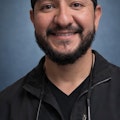 David Torres, CRDH
David Torres, CRDH, cohost of A Tale of Two Hygienists, is an experienced dental hygienist with over a decade of clinical expertise, specializing in patient education, preventive care, and the integration of modern dental technologies. Known for his passion for teaching, campus recruiting, and coaching, David is dedicated to elevating patient experiences while helping dental professionals improve efficiency, workflow, and long-term success.