Beyond the “cleaning”: How standards of care define dental hygiene



Episode highlights
-
Standards of care are a framework, not just a checklist. JoAnn explains how standards support evidence-based, safe, person-centered care and professional accountability.
-
Dental hygiene is more than instrumentation. The conversation challenges the “just clean teeth” mindset and encourages hygienists to reclaim the full scope of the profession.
-
Words shape how the profession is understood. The hosts discuss why repeatedly calling a dental hygiene appointment a “cleaning” can reinforce a limited view of what hygienists actually do.
-
Standards can help clinicians push back on unrealistic appointment expectations. A patient arriving late doesn't mean the hygienist should abandon the elements of comprehensive care simply to complete instrumentation.
-
Professional standards protect patients—and hygienists. Understanding and applying the standards can strengthen clinical judgment while helping hygienists protect their professional responsibilities and licenses.
Episode description
Standards of care can sound like something reserved for policy documents, accreditation, or legal conversations. But as JoAnn Gurenlian explains, they are much more practical than that. In this episode, Jessica Atkinson and Dave Torres talk with JoAnn about how standards provide a professional framework for evidence-based, person-centered dental hygiene care—and how they can help clinicians think more critically about assessment, treatment decisions, documentation, communication, and accountability.
The conversation also challenges the idea that dental hygienists are simply there to “clean teeth.” From handling a patient who arrives late to recognizing when a patient needs more assessment before treatment, the standards can give hygienists a framework for making decisions and explaining those decisions to patients, employers, and other health-care professionals. The larger message is about owning the profession, practicing to the top of one's education and licensure, and using standards to provide the best care possible—one patient at a time.
A Tale of Two Hygienists podcast – Episode 559
Welcome to the episode — 02:32
Dave Torres: Every clinician has a moment that changed the way they see their profession forever. A conversation, a patient, a lesson that stopped them in their tracks and made them realize how much more there is to this work.
Today's episode might just be that moment for you.
Welcome back, listeners, to another episode of A Tale of Two Hygienists podcast. I am Dave, and I'm here with my amazing co-star, Ms. Jess. Happy October.
Jessica Atkinson: Hello, hello. Happy October, which is Dental Hygiene Month. Whoop, whoop!
And today we are starting off this month with the one and only JoAnn Gurenlian. And I am so excited to have her come and talk to us about standards of care, what makes a dental hygienist a dental hygienist, and why we must own our own professional framework.
I'm so excited for this conversation. And let me tell you a little bit about JoAnn to give you an idea of why we chose JoAnn for this conversation.
First of all, she is somebody who is a mentor to me and who shows passion with professionalism. It is something that I wish she could sell, and I would take it daily because sometimes I can get really passionate about something and not be as polished as I'd like to be.
But JoAnn is always polished. I think it's because she's the director of education, research and advocacy for the American Dental Hygienist Association. She is also professor emerita for the Department of Dental Hygiene at Idaho State University.
She's a fellow in the ADHA, affiliate academic fellow in the American Academy of Oral Medicine, and past president of not only the ADHA, but also the International Federation of Dental Hygienists. Which is awesome.
Jessica Atkinson: Dr. Gurenlian is the author of over 350 papers in dental hygiene, dental, and medical publications, and has conducted over 650 presentations at regional, national, and international events.
Thank you for being with us today, JoAnn, and welcome to Dental Hygiene Month.
JoAnn Gurenlian: Thank you for having me. I'm excited to have this conversation with you both.
Why standards of care mMatter in everyday practice — 04:40
Dave Torres: Talk to us about why standards of care matter for everyday hygienists. I mean, we're talking about hygienists working in a private practice, a hospital, school, community health setting. Why do these standards apply equally to all of them?
JoAnn Gurenlian: One of the things that I think we have to remember is that a hallmark of our profession is that we have accountability for what it is that we do, and standards are a part of that process.
The standards provide a framework that guides dental hygienists, making sure that we have evidence-based practice, safe practice, and person-centered care, and that we have the opportunity to provide something that is unique to what we do.
Our standards outline those things for us and help us ensure that we are reliable, accountable, professional healthcare providers. It's a level up from just showing up and doing a little instrumentation and moving out of the practice.
It changes the way we are looked at by other healthcare providers. It changes the way that statutes and rules and regulations are created. Knowing that we have a professional standard to uphold makes us accountable in so many ways.
Jessica Atkinson: I'm digesting this. I wonder if, as you're listening, you're thinking, “Aren't standards of care just common sense?” And I would like to invite you to go to the ADHA website and find that maybe your common sense needs a little elevation.
JoAnn, tell us about the changes that were made just last year, right, to the standards of care? So tell us a little bit about the changes that were made, maybe why they were changed, and how, as a practicing clinician, you can evaluate whether or not you are providing the kind of care that you are capable of.
Further reading: The responsibility to evolve: The standard of care for dental hygiene should never be the ceiling
How the standards have evolved — 06:50
JoAnn Gurenlian: So I will tell you that I've been around for the entire evolution of the standards of care. That's how long I've been associated with this wonderful profession.
I'll just give you a little background history. In 1985, the standards were first developed. And this was a recognition of the need to have standards. We hadn't really formalized them prior to that.
The focus was really on creating a process of care. So it wasn't just about the end product. It was, how do we get there? What are the elements that we include in that process of care?
At that time, we looked at assessment, planning, implementation, and evaluation. And we were pretty happy with those standards, by the way.
Fast forward, a number of years, to 2016. Somebody said, “How are you validating the standards and how are you showing recognition for things that have changed from 1985 to 2016?”
And so the standards evolved. We added dental hygiene diagnosis. We added documentation to the standards. And it was kind of this recognition that we really do incorporate critical thinking and decision-making in this process of care.
It isn't somebody dictating to us what it is we need to do. It's us making the decisions about what is appropriate care.
Revisiting standards of care in 2025 — 08:21
Fast-forward again to 2025, and we have clinicians and educators saying it's been almost 10 years. Things have changed in our world, in our profession, and we need to really advance those standards.
The expectations that clinicians and educators had for our profession were elevated, and our 2016 standards were no longer measuring up.
That was an impetus. We were very fortunate to have a lot of interest in this. Even some of the same people who are a part of developing chapters and dental hygiene textbooks and things like that came on board and said, "We want to be part of this. We want to help challenge ourselves to see what has been different in a nine-year period of time."
There were some major revisions incorporated in this. The whole assessment category was totally updated. Dental hygiene diagnosis included social determinants of health. There was an expansion of the evaluation section, and even expansion in implementation to look at the importance of home-care instruction.
That was based on research that shows, believe it or not, that it is the education that a patient receives that improves their health more than even the scaling work that we do in our clinical practice settings.
We really looked at that. What is the evidence telling us now? What does research say about some of the things that we do, and why is that important for us?
That gives us the impetus, then, and the recognition that the profession has evolved over time. I hope I answered your question.
Jessica Atkinson: Oh yeah, you did. And you also hit some things that I really loved.
I want, as you listen over the next month, because we're going to talk about this all month long, for you to listen with the lens that this is not adding to what you're doing. This is giving voice to what you're doing.
This is giving opportunity to document what you're doing—the things that you were sharing, like the things that are happening with social determinants of health, with evidence-based modalities, things that are happening in the industry that, under the previous standards of care, didn't have the room to move or grow or be recognized.
The standards of care as of now allow you to realize those things, to document those things, to step into the dental hygiene profession.
Standards, Ethics, and Professional Accountability — 11:09
Dave Torres: Exactly. And I want to turn up the heat a little bit, right? I mean, I know it's October, but it's still hot down here.
I want to turn up the heat a little bit and talk about these standards, ethics, and, quite honestly, professional accountability. Where does following the standards and ethical responsibility begin? And what does it look like when a clinician knows the standards, but they choose not to [follow them]? They do something different. And who pays the price for that decision? JoAnn?
JoAnn Gurenlian: Wow, you've talked about a lot in one question, so I'm going to try to remember it all. But if I don't, you have to jump back in there, Dave.
So, the professional standards represent a benchmark for the things that we should be accomplishing with our patients. It demonstrates also a reflection of adherence to our statutes and rules and regulations that govern the way that we practice.
But then there's the ethics part of this. This is an element that requires us to prioritize the patient's well-being over our own interests. We have to make sure that we demonstrate trust and beneficence and all of those things that govern moral and ethical choices that we're making when we're working with our patients.
And then it leads to the whole issue of accountability, because this—well, it is not technically a legal document. It is used in legal practice to ensure that our patients have had consistent, appropriate care.
And so that we're documenting our clinical outcomes, we're not making mistakes, we're not leaving something out. It kind of bridges that gap between those rules and regulations that govern the way that we practice and how we work ethically and safely to benefit the patient. I can't remember what else you asked me, Dave.
Dave Torres: Like, who suffers? Who pays for that?
Jessica Atkinson: Yeah, you did touch on who pays for it when we're not holding ourselves to a standard.
JoAnn Gurenlian: We all pay for it.
Our patients pay for it when we're not providing the best possible care, when we're not looking at this as person-centered care and kind of getting into that robot mode—everybody gets the same treatment. And we know our patients are not the same.
We protect ourselves and our professional status, but we also protect the practice by ensuring that this is the best possible care we can offer. And it is based on science. It's not based on whim. What we are doing is based on what we know from the current evidence that we have.
Reclaiming the scope of dental hygiene — 13:54
Jessica Atkinson: I'd also like to just really scream this out. If your patient cannot tell the difference between when you are providing services and an assistant is providing services, then you are not working to the standard of care.
I get so fiery about the conversation of allowing an unregulated, unlicensed body to do services that need accountability and need education and need competency.
And if you can't tell the difference between the care that you're receiving, that's, I think in some ways, JoAnn, we have made our own bed in that conversation.
If you have been relegated to just scaling teeth and have neglected the standard of care, and are upset that you may be losing some professional autonomy because of that, it's time to maybe take a look at these standards and go, how can I reclaim the profession of dental hygiene?
JoAnn Gurenlian: I'm going to jump in here. First of all, I love everything that you said. It warms my heart completely.
Jessica Atkinson: I think it's a little warm for me. It's a little hot. It's getting hot in here.
JoAnn Gurenlian: It's okay. One of the big misconceptions that people have—our employers, our patients—is that we just clean teeth, right?
We have actually— that's on us because we have allowed that perception to occur. We do it the minute we call a patient or schedule an appointment. We do it the minute they walk through the door and they go, "Oh, Dave, you're here for your cleaning."
It just is like nails on a chalkboard for me for people to say that. And I know that there are times where we have to try to speak a language that our patients understand, but my patients understand they're here for a dental hygiene appointment.
It bothers me greatly when I'm the patient and I'm seated in the chair and a little bib is put on to cover my chest area and somebody picks up a curette.
The thing that I do, and I'm sure I am hated by some people for doing this, is I grab their wrist and say, "How do you know that I need that? How do you know? And by the way, I am a cancer survivor, and I would really appreciate it if you would do a comprehensive oral exam before you do anything else.”
JoAnn Gurenlian: And so I probably earn the black marks that are against my name sometimes, depending on who I'm with. I have wonderful dental hygiene practitioners, but I haven't always had wonderful dental hygiene practitioners.
When we reduce ourselves to that idea that all we do is scale teeth—right? You just scale, polish, and you're good to go—no, we do very complex health treatment with the patient, and we are managing biofilm-related diseases and other oral and systemic diseases.
You can't do that just by scaling. So I'm going to get on my soapbox too, but that, I think, is a big misconception that is everywhere, and it is going to take a while for us to change that.
My preference is that we stop using the word cleaning. We don't clean. We scale, we replane, we debride, but we don't clean.
So, okay, switch topics. I'll get off my soapbox.
Changing the language of dental hygiene — 17:59
Dave Torres: But that's a really good point because, I mean, at the end of the day, how do we, as hygienists—the people that are listening to this episode are resonating with this, right? I, for one, don't like the word cleaning.
I try very hard, and my brother's a dentist and I work with him, and I work with my wife as well. We try very hard to make sure that he doesn't use that word because it's kind of like a curse word, if that makes sense.
We just start from across the room, we just stare at him with daggers, right, if he dares say the word cleaning.
Dave Torres: Through my loupes, it's like a sixth sense. He has a whole different side of the office. He can feel it if he's trying to get the patient with the crown delivering and says, "Good, now let's schedule your next hygiene appointment," is what we try to get him to say.
But if he ever says cleaning, I'll probably stop everything. Like an Instagram TikTok reel, remove my gloves, and go over there and say, "What did you just say?" Right?
Because how do we do that without overhauling the whole protocol? What are some of the tips that you can give us that we can incorporate these standards every day in our office, starting tomorrow? Or maybe we're driving to the office right now and we're finishing this episode.
JoAnn Gurenlian: One of the things that I did in the courses that I taught, and I think we start with education, right?
In my course syllabus, I had, "You may not curse at me in class." And so you may not say cleaning, and you would get points taken off if you said cleaning. It definitely is an incentive to start changing language.
At the graduate level, we talk about how words matter and how that influences who we are and what we do. And I like for students to go to their employer and have that conversation that words matter and that you are demeaning me and my profession by not recognizing what it is I actually do and can do for this practice.
But something else that I think is really helpful is to actually download and read the standards and ask yourself, where are you on the spectrum of using standards?
Are you over here like, "I didn't even know I had standards," or are you over here on the opposite end? Or you're somewhere in the middle and saying, "I haven't thought about this in a while. I've been out of school for five years or 10 years or whatever, and I have not thought about the relevance of standards in the care that I provide.”
Reading them and really taking the time to think this through and ask, how would I change what I do now based on these standards?
I think it helps hygienists learn to control their practice.
You are a licensed healthcare provider. You own the dental hygiene practice. Nobody else owns that. Not even your boss owns that. You own that.
What would you do differently to elevate your practice and to hit the marks on all the aspects of the standards of care?
And I think if we have that honest reflection, it doesn't mean we have to change overnight and suddenly we're super hygienists. It just means we have to really be honest and say, what can we do differently that's ultimately going to benefit our patient?
Common misconceptions about the standards — 21:36
Jessica Atkinson: What are some misconceptions about these standards?
I'm listening and I'm thinking about my own clinical practice. I'm thinking about school. I'm thinking about how to make this more forefront in the up-and-coming professional generation.
And how do I navigate some misconceptions that they have to be this 100% mega hygienist right now? What are your suggestions on that, JoAnn?
JoAnn Gurenlian: I think one of the misconceptions—I know you'll have an episode that talks about this—is the idea that we cannot diagnose. So that whole section on dental hygiene diagnosis doesn't apply to me, right? We can't diagnose.
So that is a big misconception. I hear it all the time: "We can't do that. We are infringing upon dentistry. We can't teach it."
I hear that one, and I think to myself all the time, like, that's just a lot of nonsense.
We have our own specialty. I don't know if we think about it this way, but we are a specialty of oral healthcare. We are prevention specialists. And so these standards represent the opportunity that we have to reflect that prevention specialty.
So what a great way to think about this. And the other thing is that we work in isolation of other healthcare providers. Other healthcare providers have professional standards too.
And I think that when we are working collaboratively to demonstrate that we have professional standards, and this is what we are upholding to ensure we're providing that best possible person-centered, holistic care—whatever words you like to use—makes a difference in how you are viewed by other healthcare providers.
Further reading: Sharpen your dental hygiene diagnostic skills after reviewing ADHA standards
One hygienist can start the change — 23:31
Dave Torres: Yeah, and it's one of those things that if it doesn't challenge you, it doesn't change you, right? I like to think that even one hygienist can make a difference in their office.
If you're thinking and you're out there, you're like, "Well, I'm gonna go to work and I'm gonna do these standards and I'm gonna try to be better than I was yesterday."
But I know I'm gonna get overwhelmed feedback of like, "Why are you doing this?" or "How come you're doing this now?" or "All of this change is happening."
Some people go through their stages of change, right? They're further in denial and then eventually you get to acceptance.
But being able to be the one single healthcare provider in that office could potentially be something that kind of triggers that domino effect of having inspiration for the other hygienists and doctors who get on board, right?
Like I said, I stare daggers at my brother every time he uses the word cleaning. He may have a little bit of trauma every time he says anything cleaning, even if it's cleaning his car. But at the end of the day, these are things that we kind of have to give ourselves value and the importance.
I mean, we all feel this as hygienists. A patient comes in for us to have a relationship with us. We're the ones spending the most time with them. And there's always a lot of pressure to make sure that the message that we're delivering is a pleasant one, is a nice one, that we are doing a co-diagnosis for the patient. And even though the best hygienists are the ones doing it, even though the patients don't necessarily even want to, if somehow that makes sense.
But you guys are educators. Jess is an educator. The future of standards, what hygienists, students, what are they commenting about? Because I graduated back in 2012 and a lot has changed. You told us how many times it has been updated, but where do you think the future holds for understanding these things and moving forward?
What the future of standards could look like — 25:30
JoAnn Gurenlian: I think our standards, every time we are updating them and educating and creating awareness about them, I think it helps to create the future that we're looking for.
My experience working with the American Dental Hygienists Association is that so many hygienists want to be recognized as valued healthcare providers.
This provides the opportunity for that, but takes it to the next step and moves us toward achieving the ability to work to the top of our scope no matter where we are across the country and to work towards greater autonomy.
I do think that when we are sort of shouting from the rooftops that we are professional healthcare providers, we are the prevention specialists, we have our standards that demonstrate that, it helps to move the needle forward in terms of changing regulation and practice.
And that's what I hope to see: that when you are incorporating all these standards, you are a different provider. You are a different professional than somebody who kind of limits themselves to only one role in a practice setting.
I look at this so many times, and I think, Jess, you mentioned it earlier: policymakers don't know who we are and what we do. They don't know we have professional standards. They don't know that the healthcare that they should receive is a reflection of those standards.
What standards mean when a patient is late — 27:04
JoAnn Gurenlian: Think about it. What happens sometimes? I hear from colleagues all across the country: a patient comes in late for their appointment and the doctor or the office manager, somebody says to the hygienist, "Well, just do what you can in 15 minutes."
“And we're going to charge the patient for a full appointment because it's their fault they were late.”
But this gives the rationale for saying no. This gives the rationale for saying, "Dental hygiene practice incorporates all of these elements, and I can't do that in 15 minutes, by the way."
So we are not doing that. We are going to give this patient the full time that they deserve by reappointing them so I can incorporate all of these elements that they deserve and this practice deserves.
That's something to think about as we look towards the future: changing the way we practice so that we are at the top of our scope. So we are able to provide a care that is different from, as you mentioned, just a dental assistant.
Jessica Atkinson: Because on that note, having a patient come in, you only have 15 minutes, and they say, "Do what you can."
I dare say the thing that people think they need to do in that 15 minutes is pick up a curette.
Instead, when you look at the standards of care and say, "What we can do in that 15 minutes is we can get started on updating your medical history, and then we can maybe start on radiographs. Those two things will be done, and we'll reappoint you for the rest of your appointment."
And seeing it as whole-person care and not distilling what you can do to the action that evidence says is the least effective overall.
If you're going to use 15 minutes, talk to them about how they're brushing. Do a disclosing. Have them brush, show you how they're brushing their teeth.
If you are looking at those standards and using evidence-based practice, but in our minds—I've been, listen, I'm coming to you as an evolving hygienist. I am continually evolving. I'm continually looking at the standards and seeing where I can square up.
And I know I have said, "Well, what's the most important? It's removing that calculus, you know?" And I think we do a disservice.
I don't know how to change this because what are we so focused on in school? We're so focused on removing calculus.
Protecting standards without sacrificing patient care — 29:53
Dave Torres: Do you guys have any advice or tips for people listening to this on how to—I don't want to say politely decline—but how to kind of give that pushback while still protecting our standards, our integrity, our value?
I have two ways of looking at this.
Jess, you brought up a good point about being able to kind of update the documentation and the X-rays and also <mark>those things that not it's in a hygiene appointment, but not necessarily the most important thing in a hygiene appointment, as you just mentioned.
For me, I basically rely a lot on my peers, right? Like if my other friend hygienist had a cancellation, I'd be like, "Great, can you wait for Susie, for example, to kind of see you and get there?"
That way I alleviate that stress from having to do it in 15 minutes to now getting them a whole hour with a different hygienist. Yes, it's not what it was planned for, but it was something that we can kind of pivot while us not sacrificing those standards of care.
Because unless this patient only had one tooth, there's no way this is going to happen in 15 minutes. You know what I mean?
And then for the doctor that is so focused on running behind and tightening their hygienist, "Don't run, do this quickly," because I've been there, done that.
It's specifically when I've temped, you know ,the only words that I can muster is to the patient, "Mr. Jones, I would love to see you. I'm going to update some of these things that we have going on, but I don't want to compromise the quality of care that I'm giving to you because we don't have the ample time. I don't want to rob you of that experience."
Do you have any other tips, JoAnn, to kind of help us when we square off with our providers and our team members or maybe even the patient, because I know everybody's in a rush?
Start with assessment, not assumptions — 31:48
JoAnn Gurenlian: And you brought up some really good tips yourself. So kudos to you for thinking this through.
I'm going to go back to something I said earlier: how do you know the patient needs that care? You don't. You assume the patient needs that care.
But unless you put things in a form of a process and work from A to Z instead of Q to Z, you really—you can't do a service to the patient or the practice.
I never like to assume that I already know everything about this patient and what is gonna be presented in their mouth or their health in general, that I can just pick up a curette and start scaling because that's what they need.
We have to change our mindset. We don't know.
And so, Jess, when you said, "I'll start with the health history," that's a good starting point. I'll take some vital signs.
How do we know it's safe to treat this patient today, by the way? Maybe the best thing we could do is not treat the patient that day.
So, I think we have to get out of our heads, get out of this archaic practice model that many of us are forced to work in. We have to change that. We have to be willing to really look at this and say, "That is not benefiting anybody." And we have to start with where our standards say we start.
Oh, and by the way, this is your license you're protecting too. It's not just the practice. It's not just the patient. It's your license you're protecting. And no one can tell you to practice against your license—or no one should tell you that.
Closing thoughts — 33:41
Jessica Atkinson: JoAnn, thank you.
Thank you so much for being here with us today and helping us recognize that it is time for us to step into those standards, take a look at those standards, remember that you are protecting your license, and by ripple effect, you're caring for your patients.
So let's get out of our head and into the heart of dental hygiene and uphold these standards as we care for our patients. Thank you, JoAnn.
JoAnn Gurenlian: Thank you so much for having me. And thank you for such an important conversation.
Dave Torres: Yes, I said it at the beginning of the episode. I was like, we all, as clinicians, we all have that moment that changed how we see the profession. And this conversation, I'm sure clinicians are seeing, hearing rather, and understanding that I was like, you know what?
Yes, we have to practice these standards of care. We have to be better at it. We're not there yet, but we'll do it one patient at a time.
About the Author
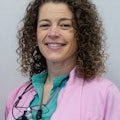 Jessica Atkinson, MEd, BSDH, RDH, FADHA
Jessica Atkinson, MEd, BSDH, RDH, FADHA
Jessica Atkinson, MEd, BSDH, RDH, FADHA, is a dental hygiene educator, clinician, and advocate dedicated to advancing the profession through innovation and education. She combines her clinical expertise and love for education to create engaging, practical learning experiences. Jessica is an Associate Professor and Senior Clinic Coordinator at Utah Tech University, co-host of A Tale of Two Hygienists, and CEO of HYGIENE edgeUCATORS, where she develops continuing education for educators and clinicians. She co-founded Hygiene Edge, a platform with over 100,000 YouTube subscribers. Recognized with the Element Award and Outstanding Service Award, she is a Fellow of the ADHA and past president of UDHA.
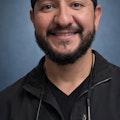 David Torres, CRDH
David Torres, CRDH
David Torres, CRDH, cohost of A Tale of Two Hygienists, is an experienced dental hygienist with over a decade of clinical expertise, specializing in patient education, preventive care, and the integration of modern dental technologies. Known for his passion for teaching, campus recruiting, and coaching, David is dedicated to elevating patient experiences while helping dental professionals improve efficiency, workflow, and long-term success.