Beyond “teeth cleaning”: What competency really looks like in dental hygiene



Key highlights
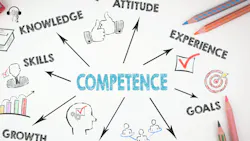
- Competency is more than clinical technique. Communication, critical thinking, ethics, judgment, and patient care are all part of becoming a capable clinician.
- Dental hygiene programs are packing more into the curriculum. New technologies and adjunctive therapies are being added without necessarily adding more time to already demanding programs.
- Data can help prove competency. Tracking student performance gives educators evidence for accreditation, remediation, and student progress.
- What happens after graduation matters, too. Entry-level competency is a starting point—not the end of a hygienist's education.
- Hygienists need to own their expertise. Continuing education, research, conferences, and staying current with emerging technology are part of professional practice.
Episode description
What does it really take to become a competent dental hygienist? Sara Taft joins Jessica Atkinson and Dave Torres to talk about the rigor behind dental hygiene education, why clinical competency matters, and what educators are trying to prove when students move from the classroom into patient care.
The conversation also looks at accreditation, tracking student data, patient communication, continuing education, emerging technology, and the responsibility hygienists have to keep learning after graduation. Because competency isn't about being perfect—it’s about building the knowledge and skills to provide safe, thoughtful care and continuing to get better.
A Tale of Two Hygienists Podcast – Episode 550
What competency really means in dental hygiene [00:35]
Sara Taft: People don't understand what a dental hygienist is. They don't understand what our curriculum is, the rigor of our program, our qualifications.
They have no idea. They understand what a nurse does. You think about when I graduated from school over 20 years ago, we didn't have all the adjunctive therapies that we're learning today. And they haven't increased our credit load. So we're shoving more into that time of that associate degree.
I've done second-year clinic. I've been through all of them. And watching that progression and how much they learn per semester, it's unfathomable to think about we're going to have less training. Put that in somebody's mouth.
So I always tell my students when they graduate, this is the baseline. You are an entry-level dental hygienist. You're going to just still learn your skill. You know, you're competent to graduate, but you're entry level, and you're going to hone those skills the next few years.
But you have to keep going to CE. You have to keep reading the articles. You have to look at the research.
Dave Torres: A tale of two hygienists.
And welcome back, people, to another Tale of Two Hygienists podcast, episode 550. I'm Dave Torres. I am your co-host here, and I'm with my amazing co-hosts.
Jessica Atkinson: In the flesh.
Dave Torres: Yes.
Jessica Atkinson: So Dave and I are recording on the exhibit floor at RDH Under One Roof with a wonderful human being, Sara. We are so glad that she is here. Sara Taft has joined us as our first recording on the floor.
Now you might be listening to this, and you probably are going to hear somebody that was recorded after Sara was, but she was our first. I want everyone to know that she was our first on the exhibit floor. And Sara, please tell us a little bit about you.
Sara Taft: Okay, so no pressure. The first. No pressure.
Jessica Atkinson: None.
Sara Taft: My name is Sara Taft. I am a dental hygienist. It is my passion. I've been a hygienist for over 20 years. I've been teaching for about 20 years. I started as adjunct.
I went into full-time program director and just kind of worked my way through learning about the curriculums, teaching oral anatomy, perio, clinic, being a facilitator. Just had an accreditation visit, so kind of every year. Yes, I am still, and I'm not wounded. I made it out clean.
But I just really love the dental hygiene profession. I have respect for our students, for faculty, and it's just a really great community. I love coming to these conferences and talking to everybody. We're all in the same boat. We all want what's best for our patients.
I still practice. I think that's important, where I go in and remember why I'm doing this, not only for the students, but for the patients, really.
Jessica Atkinson: Absolutely. So Sara comes to us with a huge reservoir of experience, huge reservoir of passion.
And we want to talk to you about getting ready for school. And you have a specific lens on competencies. And right now it's kind of a little bit of a buzz conversation about what it means to be a dental hygienist, what kind of qualifications you should have to be a dental hygienist.
And I want you to give the listeners just a little glimpse on what goes into making a competent clinician.
Sara Taft: It is a lot of work. Anybody who has not taught before, the hours be put in, the raking over the wording of everything, working with our different students these days and what their expectations are, meeting where they're at technology-wise, personality-wise. There are so many things that are going on, and personal too with our students.
It used to be when I was in school, nobody talked about the personal life, and students are more open about their challenges these days. So I think it's important that we're addressing that and then meeting where they are to help them become competent dental hygienists.
And do they have the skills that they need, the knowledge, passing the boards? But we really want to protect our profession and prove competency. And it's really important that we hold that sacred and we have those values, we protect our patients, and we prove that competency before we allow people to get licensed and do dental hygiene.
Jessica Atkinson: Do use sharp things in people's mouths. Not just use sharp things, but competence as a dental hygienist, things that kind of get my hackles up with this conversation of maybe allowing other professional lines of opportunity to treat our patients without any kind of schooling or competency or any of that.
I get really prickly because as a dental hygiene educator, I watch students not only become competent in their clinical skills, but also practice competency in their ethical skills and practice competency in their communication skills and practice competency in a number of different ways that then translates into treating the public well.
Dave Torres: It's so much more beyond that. I mean, I joke all the time that 10% of what we do is actually dentistry. Everything else is so much more.
There's a certain pressure or responsibility that we have as clinicians to be able to honor the patient, honor our careers, and being able to kind of promote that. Have there been any aha moments looking back at all this data of saying, "Okay, this is what we kind of have to work on even more," without pushing too much, where we're just turning students off and like, "Oh, it's too hard, I don't want to do it"?
Sara Taft: Yeah, I mean, it's really interesting, the entrance requirements now to some schools. You know, what's being—who's being admitted? What are their qualifications? What does our curriculum look like?
There's so many things going on and so much pressure. The biggest thing I think is that people don't understand what a dental hygienist is. They don't understand what our curriculum is, the rigor of our program, our qualifications. They have no idea. They understand what a nurse does and how important they are.
How many ways are hygienists asked to prove competency? [06:47]
Jessica Atkinson: Can we pause on that? Because let me ask you, my little sister's a nurse. And do you know how many tests that she takes to show her competency? Anyone? Anyone?
Dave Torres: For boards.
Jessica Atkinson: Oh, how many? One. Sara, last count, how many boards did our students take?
Sara Taft: Well, in the state of Wisconsin, we have two, but I know Washington State, many more.
Jessica Atkinson: Yeah, I'm thinking about my students in the state of Utah. They took the NBDHE, so that's their written. They took their, basically, their OSCE, their ADEX OSCE, which is a clinical examination, for lack of better description. And then they took their clinical ADEX boards on the mannequin. So that's those three for them to practice those aspects of dental hygiene.
In our state, it's not required, but I encourage—now I'm just going to put a little plug here—I encourage to take everything that's available to you when you're a student and you're ready to take the exams.
Because as a clinician, I thought when I was done with my exams, I would never have to take another exam ever again. And fast-forward 10 years into my life, I ended up taking the restorative course and board.
Sara Taft: Yes.
Jessica Atkinson: And so I'm like, if you have an opportunity to take that, take that now, please. So I was going to say, even though it's not required, then we have the anesthetic written and clinical. What are we up to now? Five.
Sara Taft: The expense.
Jessica Atkinson: We're in thousands of dollars.
Sara Taft: And it's really a shame because they are proving competency. I work with hundreds of schools across the country, looking at how they're proving competencies for their students. We have rigorous programs. We're all CODA accredited.
Why that standard is not held and they graduate, we can say they're competent, get a license and give patient care. That's where it should be at.
But yes, you're right. They're having to spend thousands and thousands of dollars proving competency on these exams when they're proving competency right in front of us. That's what we're here for.
The rigor of hygiene education doesn't stop at clinical skills [08:55]
Jessica Atkinson: And that's—and how does that, what is, for somebody who is listening to this and maybe hasn't been in school for a long time, or maybe is going to be reminded of maybe a little PTSD, right? But maybe a little bit.
Like Dave, take us back to your very first competency. What does that look like?
Dave Torres: Well, it's beyond that, right? Like I'm thinking, as you were talking, I'm thinking about all the things that I have to go through in school, which gives you that certain tough skin, that belief system that you overcame something difficult.
Jessica Atkinson: And you have feedback.
Dave Torres: Yeah. But I remember being in school and you're like, "Oh, this is so hard. Why is it so hard?" And oftentimes I was talking to my brother who's in dental school, and he was like, "You have to do what? And you have to do what?"
Jessica Atkinson: So many dentists are shocked when they get involved in dental hygiene. Yeah, they're like, "Oh, oh."
Sara Taft: Our standards are so much more prescriptive.
Jessica Atkinson: I remember when I was on an outreach trip and I was in a mix of dental students and hygiene students, and we were talking about injections and what the requirements were for dental students to become competent at injections and what the requirements were for hygiene students.
And they were like, "They continue to watch you and give you feedback after your first injection." And they're like, "Wait, to a dental student? Dental students don't get watched on every injection?"
They're like, "No, we prove competency and then we just go for it."
Dave Torres: Even perio does. Like I was talking to my brother about perio, and he was like, "Well, that's like two, three weeks of perio in my school. And then you guys have to do two years."
And it was a big—I did think it was a little unfair how I have to be checked by a dentist. And my own brother is telling me, like, "I only learned this a couple weeks," but it was only a couple weeks and everything that I have to learn.
So it's kind of like after we started practicing together, way after I graduated and got my license and took four boards and understood what it's like to be a practicing hygienist, he just gave me this face, like, "What do you think? Are these teeth hopeless? Are you able to work on them? Should we do flap surgery?"
What do you think? So he was asking for my opinion. And so it's very fascinating when I know a listener out there is thinking like, I know we've spoken about OPAS before, right? And then now we're thinking about CODA and all these requirements.
And I'm just like, I'm confused because how much is too much and how much is not enough where we're just walking around on campuses, right? Our faculty or students are walking around campuses and just asking the very obvious question: Why is it so complicated to be a provider?
Are dental hygiene programs trying to fit too much into too little time? [11:41]
Sara Taft: Well, and I think also, if you think about when I graduated from school over 20 years ago, we didn't have all the adjunctive therapies that we're learning today, right? And they haven't increased our credit load.
We're shoving more into that time of that associate degree, which is a bachelor's plus.
Jessica Atkinson: I mean, anytime somebody says, "Well, I have an associate degree in dental hygiene," I'm like, "Oh, I know what that means. You basically have a bachelor's degree. You are shy credits that haven't been awarded to you." Correct.
Sara Taft: Yeah. What were you putting in there just because they don't want to—and I understand trying to make it affordable for the students and a timeline and things like that—but it's really doing them a disservice when we're trying to pack so much into the curriculum.
All the laser, the nitrous, and all these things that have added to our practice act that we are rolling into other courses now. Where are we taking away? Where are we giving?
Jessica Atkinson: That's really difficult. And then you get feedback from students saying, "It's really a disservice to us not to let us know what's on the market or what we can really accomplish as dental hygienists." And it's like striking that balance.
And then what does it look like to show competency? When Dave says, "What's too much?"
What is too much to show that you'll be safe working on a patient? And currently, some states think that nothing is too much. And as an educator, watching students progress through the competencies that we had and watching them become successful at scaling, watching them become successful at probing, I have a hard time saying, "I think we should lower that standard."
Sara Taft: It's really difficult. I've taught pre-clinic, done skills lab for them every week. I've done second-year clinic. I've been through all of them. And watching that progression and how much they learn per semester, it's unfathomable to think about we're going to have less training and, you know, put that in somebody's mouth.
Jessica Atkinson: Yeah.
Sara Taft: That's really scary.
Why data matters in proving competency [13:36]
Jessica Atkinson: I remember as a dental assistant, I had a very, like most—we talk about people don't know what a dental hygienist is. As a dental assistant, I did not know what a dental hygienist is.
As I was working in an office with dental hygienists, we had a temp come in and ask where our probe was. And I had no idea what this was. I'm like, I went to my dentist and I was like, "You know, what is she asking for?" And he's like, "Oh, it's, you know, in this dark, dark drawer."
And the clinicians then weren't doing the things that make us make our profession what it is, make prevention, make data.
I think what's lost on us is data is important. Yes, competencies are important. Showing that you are competent, showing that you have the data behind that competency shows progression.
Give us a little bit of your unique background on tracking that competency and why that's important.
Sara Taft: Yeah, it's really important. First of all, accreditation visit, that's 9.1, right?
Jessica Atkinson: So why do we even have accreditation, Sara? Which is so scary. And oh my gosh, I'm already thinking about accreditation. I think we're already getting started and it's not even for another three years.
Sara Taft: You know, the thing is that we are all doing what we're supposed to be doing. We really are. It's just, are we having the tracking ability and the paperwork and the evidence to show it?
I talk to educators all over the country and they're doing what they're supposed to, but can they collect the data in a place to give it to CODA for the student assessment to show that they're competent?
If the student's not competent, do they have the data to back that up if there's a grade appeal or holding a student back? So those are the important things that we really need to track.
So before I was the program director, I was a clinical coordinator for second year for 10 years. It's my favorite job. It is. It's a tough job, but I love it. You get to really know the students, meet them where they're at, where they're struggling, where you can help them. It's really fulfilling. It is really fulfilling. And that's one of my favorite jobs.
I really liked being that clinical coordinator, but I was doing four hours a week tracking students' stuff. It was so much work. Like I got to make sure they're doing this and this and this, and I'm proving this and this, and do they need help in this, and how are we proving that they're helping and that they're competent and things like that.
So it was a big burden on top of my workload that I was not even being awarded for. So we all know our workloads have increased over the last, you know, 20 years. We're working a lot more. Colleges are cutting back where they can.
So I just needed a better way to do that. And so I helped develop a program called Upscale Assessment that tracks student competency, but also helps me run the reports I needed for accreditation.
From school to clinic: making data useful [16:22]
Jessica Atkinson: And I translate that to clinical hygiene. Like Dave, in your office, you don't have a probe in a dark, dark drawer because you understand the importance of data tracking.
I mean, it translates from school into clinic. Like, what's the importance of perio chart?
Dave Torres: Yeah, everything, right? Like it's our baseline, right?
I remember once in school—I'm trying to go back and not remember trauma, right? But remember once our instructors threatened that we might not be accredited, right? And the word CODA meant something to them, right? And I was too busy with my own stress factors, but then—
For a student, maybe a potential student listening to this, like, what does that mean? How can we help show these things to you guys? How can we help you get accredited?
Because one thing that was a fear is I'm not doing all this work for us not to be accredited and then not getting our degree, right, or getting our license, right?
What are some of the things that we can do in helping you guys with that?
Sara Taft: Yeah, and I think the thing is that with students, they're really not at a point in their life where they understand accrediting. No, that's an unnecessary—like, I try to explain to them, like, we have to prove this out.
This is what we're doing, especially as we had CODA site visitors come in and speak to our students. So I wanted to prepare them. What is accreditation about? Why are we doing these things? Why are we making you prove this?
But it was difficult before when the students couldn't even track their own requirements, know where they stood, what is their grade? How are they doing? Are they struggling?
So it was really difficult where they couldn't really run their own reports and see where they were standing and track that. I mean, in every other course you can, right? I have an 88%, I know I'm doing this, this is what I have to do and study.
So we really didn't have those clinical measures. Even some schools do a pass, no pass, or unmet, unmet, however, but you need to track that. You need to prove that competency no matter what school you're at and what you're doing.
So for students to be able to really understand where they're at in the program at any time, you know, running the reports and looking at the comments from the faculty, which is very important. So they can just pull that up, see all the comments where we're looking for patterns, where we can help them improve, do remediations. Those are the most important things.
And so we really had that lack of student involvement. I was more chasing them down and we didn't—we were trying to, "Yes, I have this requirement done." "No, I don't." And we're tracking back and forth.
So it really helped to kind of build a software that students can be engaged in to track their own learning, be responsible for that, look at the remediation plans and own them. So it's really been a good switch where students are more involved and I'm not running everybody down and trying to find things.
Show patients the data, too [19:21]
Jessica Atkinson: Yes, and I love that because it translates into clinical work.
Because I want my students to be autonomous. I want them to understand what they are producing. There's a conversation about like, "Oh, how much am I going to get paid when I exit into the workforce?" And I'm like, "Well, how much are you going to produce?"
Because in the business of dentistry, you only have claim to 30% of what you produce because so many other things also need to be paid for in an office.
So if you're going to come out, "I'm going to be asking for $75," well, are you getting that kind of cash flow into the office? And you need to be able to back your ask with data.
And you need to back your ask of your patients with data, meaning, "Hey, last time you came in, these are the areas that we were concerned about."
Show your patients their data, like seeing is believing.
All of this translates through all of the experience of being a dental hygienist.
And I think it would translate also—I mean, ideal, in my ideal world, it would also translate into your conversations with your legislators on why dental hygiene is a profession that needs to show competency.
Sara Taft: Yes.
Dave Torres: Yeah.
Competency should give hygienists confidence in what they provide [20:40]
Dave Torres: And it's been my experience, right, that you have these conversations with those patients and you start understanding very quickly that obviously no hygienist wants to sound like a salesperson, right?
But when you kind of slow down and you look and you think outside the box and you look at everything altogether and you show up to service the patient, you open up your toolbox, right?
And you say, "I can do sealants. I can do fluoride preventive services, or cancer screenings," all of these things.
Sara Taft: And you can say you can do them at a level that is beyond—
Dave Torres: That you're trained.
Sara Taft: Yes. That you actually know what you're doing.
Why I'm picking this product, why I'm assessing this—that is so important.
Dave Torres: Yeah.
I mean, even something as simple as fluoride, right? Like not all fluoride is the same.
Sara Taft: Critically thinking why they're using that, choosing that particular thing for their patient.
Dave Torres: My last conversation with my patient literally last week was like, you know, I obsessed about the type of fluoride that I use because I don't ever want to use something that I don't believe in, first of all.
But second of all, I want to make sure that I'm giving you the best that's out there.
And it doesn't work if you don't like it, if you don't like how the taste feels or all that stuff, right?
And so when a patient looked at me and was like, "I'm getting the best of the best," and I was like, "Yeah, I owe that to you, right? Why wouldn't I do that?"
It immediately clicks on them.
And you best believe next time they come back, they're probably looking forward to, "What else can I offer?"
Let students experiment before they enter practice [22:15]
Sara Taft: One of my favorite subjects I teach in perio is chemical agents.
And I love to say to my students, I am challenging you now to—so I make them research different chemicals, and then I want you to go out and buy something on the market. Try it.
I want you to taste it. I want you to feel it in your mouth. I want you to have that experience and give us feedback as a class: why you liked it, why you didn't, why you would suggest this to your patients, why you wouldn't.
And that's the fun part of it. Getting them to experience, you know, that kind of thing and trying different products and what are they going to recommend to their patients?
Jessica Atkinson: And don't you want a dental hygienist that's been educated by someone like Sara who is encouraging them to have these experiences before they are your provider?
Yeah.
Don't you want a provider who's shown competency and has—I tell students all the time, I want you to make as many mistakes as you can. They won't ever be all because that's how we learn.
We're going to be making mistakes forever, but I want you to make as many as you can here, where you're getting feedback, when you have people around you that are rooting for you, where you have all these resources, because you're going to go out into the working profession and have all these skills because of this experience.
And competency—I mean, Dave did say he's like, this might be some trauma of reminding what a competency looked like when I was at school.
And I would love hygiene school to be a lot less traumatic. And I understand that there is a rigor for a reason. And that rigor comes with some resistance.
And I want that experience to be happening in school so that experience is not going to be happening in their office.
“Fail” can be part of learning [23:58]
Sara Taft: So one of my favorite speakers, when I heard them, they said FAIL stands for "first attempt in learning."
Jessica Atkinson: I like that.
Sara Taft: And that's what I tell my students too.
Like, this is—you’re used to getting straight A's probably when you're in high school. They have a personality, right?
Jessica Atkinson: Yes.
Sara Taft: When you come to hygiene school, you're just hoping to pass it. Bare minimum, if it's 80%, just be happy you got an 80.
Don't worry about 100%. And don't ask what your friend got.
Jessica Atkinson: Right, exactly.
Sara Taft: You know, you'd be like, "I passed." Worry about yourself, get it done, be happy, be proud, and keep moving on.
You know, and I always say, if you're not successful with the first attempt, well, we'll work on it. We'll remediate and we'll do it again.
Competency isn't perfection — 00:24:35
Dave Torres: So I want to laser-focus on that because I feel like oftentimes we have a certain pressure, right?
Because we put that pressure on ourselves to be the best of the best, right?
But I mean, competency is a combination of what a person knows, what they can do, and how they behave to achieve successful performance.
Doesn't mean perfection, right?
And I always tell my patients and I always tell hygienists that are younger than I am, you don't have to be perfect. Just be better the next day.
Worry about not what you were able to do as of right now, but imagine all the cool techniques, all the networking that you can do, and being able to identify with another peer listening to this podcast, talking to their instructors about the future of dentistry, and what we can do to get there.
And so I want listeners to really remember that at the end of the day, I'm excited for you today, but imagine how powerful you will be tomorrow.
And I think that's what we need in our career a little bit more, right? It's forfeiting the idea of, like—because we all get a little frustrated with, like, "Oh, we're not there yet."
I know, but we have come so far.
Hygienists need to recognize their role in health care [25:51]
Sara Taft: Yeah, and I think the more conversation with the systemic link that is coming up—you know, American Heart Association is starting to address some of that more about the diabetes world—saying what an important thing the mouth is on the bodies.
Jessica Atkinson: Yes.
Sara Taft: And we're oral health-care providers. We're just not teeth cleaners.
Like, we really need to hold ourselves up high. We need to appreciate the rigor of our program, how difficult it is, and get the respect that we need in the health-care community.
Jessica Atkinson: And hold yourself up high when you leave school.
Something that I—it's a little triggering for me when people are like, "Well, that's school. You're able to do that in school."
I'm like, you want to be able to do standard of care out of school. And that's standard. That's not even—you can even go beyond and have excellence of care.
Like, yeah, I had time to probe in school. And yeah, I want you to still continue to probe when you leave school.
And I was talking to a number of people here at the conference and just the hope that hygienists will recognize that they are an integral part of health.
Sara Taft: Yes.
Jessica Atkinson: And to hold themselves up to what they know. And to continue that learning, continue failing, and then let's take that next step to being even better and better and better.
Why continuing education and data matter [27:12]
Sara Taft: And that's what I love about these conferences, right? RDH Under One Roof has great courses, continuing education, learn more, be on the cutting edge, look at the products on the floor here, seeing what the vendors have.
I mean, there's a lot of great research coming out, new adjunctive therapy we can do. So it's exciting to be here.
Jessica Atkinson: And then research comes out because of data.
Sara Taft: Yes.
Jessica Atkinson: I know that people—
Like don't love that four-letter word, but data is so important and tracking competency is so important. Tracking the impact that you're having is so important.
And that, I mean, that's integral to what we do.
Yeah.
If it's not written down, it wasn't done.
Sara Taft: It wasn't done.
Dave Torres: I am curious. What is exciting to you about the future of dental hygiene?
What does the future of dental hygiene look like? [28:04]
Sara Taft: I think all the new products coming out, more preventive things. They're even looking in Japan about growing back teeth.
Cool, amazing, right?
If we can do that for somebody—when I go in a nursing home and treat patients and they're almost edentulous and having a hard time eating and things like that, that's heartbreaking.
So if we can be more preventive in our care and all these products coming out, that's exciting to me.
I think AI, of course, is going to be a huge thing.
So if that can help us, of course, it's just like any other thing. It's not—I don't want it to take over. Can it assist us? Yes.
Just like Keradont.
Jessica Atkinson: Making our data easier.
Sara Taft: Yes, we want that.
So I think it's going to be exciting that we have a lot of oral-systemic links coming up, people talking about that, all these different preventive options coming out, the stannous fluorides and the Keradonts and the lasers and AI.
So I think there's going to be a lot of great technology that's going to help us in the future.
I'm just hoping that we stay abreast of it, right? And that we are able to teach that in our colleges.
I mean, there's a lot of cutbacks, dental hygiene. We work with dental assisting and dental therapy schools. Those are all expensive programs to run.
Jessica Atkinson: They are.
Sara Taft: And so, you know, where are we getting that funding to make sure our students can get that hands-on so when they graduate, they have experience with those kind of technologies?
Using AI as part of the patient conversation [29:21]
Dave Torres: But it's also exciting, right? Like, okay, so it reminds me of like five years ago or even 10 years ago, where everything was coming about and you're like, "That would be nice," but now it's so proactive.
I had a patient last week, or this week, probably this week, where we were talking about hygiene and services and all stuff.
And this specific patient was like, "I use ChatGPT."
And so I was taken aback because I was like, "Wait a minute. So, like, are you going to believe AI over me?"
Or I was like, "You know what? Take it out. Let me see what you asked."
And then immediately I made it part of it. And I was like, "Ask ChatGPT about this," right? This specific procedure, what does it tell you, right?
And so embracing that with the patient too.
I also am very fascinated in how nowadays we're practicing dentistry and we can join the conversation through the patient, just like a photo.
Like 10 years ago, you will show a patient an intraoral photo and they're like, "Oh, I get it now," right? Like, I can see the tooth with deep grooves.
Where 15 years ago, that wasn't a standard. Like the patient just—you held the mirror and they're like, "Okay," nod their head, but you were hoping that they believe you.
Now you have tools like AI where you're like, "All right, give me research based on this product that my hygienist is recommending."
And we're now can have an honest conversation about the type of dentistry that we're providing.
And with that specific case, the patient was like, "Oh my God, everything that you are talking about, I can tell you're up to date."
And I was like, "Thank you very much."
Staying current after graduation is part of being competent [30:53]
Sara Taft: And what? They're Googling more than we are.
They're ChatGPT, and anything that we're recommending, they're asking about fluoride. They asked about this and that. They're coming in with facts and they have good questions.
They're asking me questions about, you know, charcoal toothpaste and all these things when they come in, and I need to keep up on that.
So I always tell my students when they graduate, this is the baseline. You are an entry-level dental hygienist. You're going to just still learn your skill.
You know, you're competent to graduate, but you're entry level and you're going to hone those skills in the next few years.
But you have to keep going to CE. You have to keep reading the articles. You have to look at the research.
This is your professional—you know, opinion matters to your patients.
Sara Taft: Both.
Yeah.
And you know, it's so fun too when I see that student where I'm like, they would make a great instructor and planting that seed early.
Like, just, I know you're just graduating, you're a little traumatized, but have you ever thought about education?
When you get down, practice for a few years, but really keep that in the back of your mind because we need great educators.
And I think planting the seed early with some of these students that we love, that we know will be good, I think that's just great.
What makes a good future educator? [31:57]
Dave Torres: Can I double-click a little bit on that?
What makes a good—
Sara Taft: Detail-oriented, right?
I mean, they are not skipping, cutting corners. They are asking good questions.
Yes, they're involved, they're engaged, they're prepared. You know that they came to class and they read their material, they study what they should have.
Yes, accountable.
The bedside manner, how they talk to their patients, how they talk to their peers, how they engage with faculty and are respectful.
So looking at those qualities, I'm like, that is what we want for more future dental—
Dave Torres: Absolutely.
Learning to teach can build empathy for instructors [32:32]
Dave Torres: I wonder if there's something intermediate for that, because I should say that my last semester, my wife and I got accepted to the honors clinic.
And what that meant is that we, the seniors, were checking off the juniors.
Sara Taft: Yeah.
Dave Torres: And they were like, by the way, if you are showing, dare I say mercy, but if you're showing bias, like, we will mark you down.
And so that was very fascinating to me because when we did that, very quickly, obviously the easiest way to kind of understand and grasp something is when you teach it, right?
Sara Taft: Yes.
Dave Torres: But it was also very refreshing to see how far we've come as seniors, explain the juniors, and we understand, dare I say, their trauma, right?
Sara Taft: Yeah.
Dave Torres: Or what they're going through.
So I wonder if that's something that schools can do intermediate to kind of figure it out.
But it was a fun experience for us, and that taught us to do exactly what you just mentioned is the attention to detail.
Jessica Atkinson: Maybe it gave you a little empathy for your instructors.
Dave Torres: A little a lot.
A lot.
Sara Taft: Yes.
So at WCTC, Waukesha County Technical College, our last day of pre-clinic, those students see the senior students as patients. And so they are giving that feedback.
And it's so funny because they're like, "Wow, it is really hard to be an instructor."
So wording it, right? Like trying to explain things and walking through.
So compassionate, but also hold a standard.
The takeaway: hold the standard and keep learning [34:00]
Jessica Atkinson: And Sara, we're so grateful that you came to show us the importance of data, the importance of being compassionate and holding a standard.
And because our profession is prevention and our profession is integral and, dare I say, essential to your overall health.
And thank you for being here with us today.
Sara Taft: Well, thanks for having me. This was great. I'm glad we could meet in person. A lot of times it's online with everybody.
So it's great to be at a meeting and see people face to face and connect and actually touch.
Yeah.
Dave Torres: Thank you for having me.
Sara Taft: This is a great podcast. I always love to listen to it.
Jessica Atkinson: So thank you, Sara. It was a pleasure.
Dave Torres: Thank you.
About the Author
 Jessica Atkinson, MEd, BSDH, RDH, FADHA
Jessica Atkinson, MEd, BSDH, RDH, FADHA
Jessica Atkinson, MEd, BSDH, RDH, FADHA, is a dental hygiene educator, clinician, and advocate dedicated to advancing the profession through innovation and education. She combines her clinical expertise and love for education to create engaging, practical learning experiences. Jessica is an Associate Professor and Senior Clinic Coordinator at Utah Tech University, co-host of A Tale of Two Hygienists, and CEO of HYGIENE edgeUCATORS, where she develops continuing education for educators and clinicians. She co-founded Hygiene Edge, a platform with over 100,000 YouTube subscribers. Recognized with the Element Award and Outstanding Service Award, she is a Fellow of the ADHA and past president of UDHA.
 David Torres, CRDH
David Torres, CRDH
David Torres, CRDH, cohost of A Tale of Two Hygienists, is an experienced dental hygienist with over a decade of clinical expertise, specializing in patient education, preventive care, and the integration of modern dental technologies. Known for his passion for teaching, campus recruiting, and coaching, David is dedicated to elevating patient experiences while helping dental professionals improve efficiency, workflow, and long-term success.