Taking a thorough medical history of your patients isn't optional—making assumptions can lead to negative outcomes. There may be no better example of this point than SSRIs.
Single-use dental items are absolutely necessary, but they don't decompose in the landfills. Cranberry has addressed this problem. What do users think of the gloves?
Lauren wants other hygienists to know it's OK to not be perfect. She shares her imperfections with others in the hopes they'll take steps to improve, while not being hard on themselves...
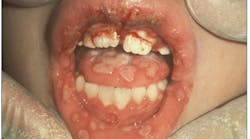
Dental professionals are strategically positioned to identify variances in the normal presentation of oral structures. Learn how to differentiate red ulcerative lesions to arrive...
Dr. Timothy Donley says dental professionals need to become more science-based in their approach to managing oral disease. Science doesn't care what people believe, he says.
At some point along the way, you might find your passion and curiosity waning. So how do you get them back? Start acting like a 3-year-old. Amanda Hill explains.
Identifying a patient's level of risk has never been more important. Through proper review, hygienists can develop effective treatment plans based on each patient's needs.
Are you confused about the differences between the CDT codes for caries arrest (D1354) and caries prevention (D1355)? The authors clarify these and introduce a new code (D2991...
As the wife of an active duty service member, this hygienist has moved and changed offices every few years, exposing her to many different environments. Here's some of what she...