An opioid without a fingerprint: What cychlorphine means for the medication history and the dental hygienist
Key Highlights
- Cychlorphine poses a detection challenge: This potent synthetic opioid may not be identified by routine opioid urine screens or fentanyl test strips.
- Update the medical history conversation: Asking specific, nonjudgmental questions about nonprescribed substances and documenting patients’ responses can reveal important safety risks.
- Consider treatment implications: Unknown opioid use can increase respiratory-depression risks when combined with opioids or sedatives used in dental care, making same-day treatment and sedation decisions especially important.
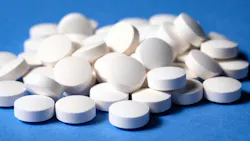
Every health history form has a line for it: recreational drug use, yes or no. More often than not, the dental hygienist is the one asking, and more often than not, the answer is no. Some of that is honesty. Some of it is how the question gets asked. And some of it is that a pain pill from a friend doesn't feel “recreational” to the person who took it. A new synthetic opioid called cychlorphine makes that checked box more dangerous than it has ever been.
What is cychlorphine?
Cychlorphine is the street name for N-propionitrile chlorphine.1 It belongs to a newer subclass of synthetic opioids that forensic toxicologists call the “orphines.”1 Like fentanyl, it activates the mu-opioid receptor, producing analgesia, euphoria, and respiratory depression.2 Unlike fentanyl analogs, it is structurally a benzimidazolone, a different chemical family altogether.1 That is one very important detail. It explains why the tools built to find fentanyl can't find this.
Cychlorphine has spread quickly. The Drug Enforcement Administration's (DEA) forensic laboratory system logged one identification in 2024, 106 in 2025, and 89 more in the first part of 2026.2 By late August, the DEA counted 225 encounters across 19 states and identified cychlorphine in 49 deaths, in victims from 18 to 66 years old.3 The White House Office of National Drug Control Policy (ONDCP), counting differently, linked 55 deaths to it in 2025 and 2026.4 Those are the cases laboratories found. But remember, laboratories may only find what they are testing for.
On August 27, 2026, the DEA temporarily placed cychlorphine and three related orphines in Schedule I, an order that runs through August 2028.3 That is welcome news, and it is also a reminder of how this game is played. The DEA has reported 22 different nitazene compounds since 2020, and new analogs tend to appear as soon as scheduling puts pressure on the old ones.5 Change one piece of a molecule, and you have a drug no law names yet. Regulation will always run behind chemistry, which is why our clinical defense can't be a list of drug names.
“Ten times stronger than fentanyl”
News coverage has settled on “ten times stronger than fentanyl.” ONDCP puts it at eight to 10 times.4 The Center for Forensic Science Research and Education estimates about 10, based on in vitro testing,1 and the DEA's scheduling order cites greater receptor binding affinity than fentanyl.3 What doesn't exist is human dosing data. So, the precise statement is this: in the laboratory, cychlorphine is more potent than fentanyl, but what is unclear, or unknown, is what dose can kill a person or at least impair their ability to carry out tasks that ensure personal and public safety.
If you have listened to my presentations on illicit drugs and licit drugs used illicitly, you know that I have continually sounded the alarm on detection of substances like these in yet other substances that your patients normally don't consider addictive, or substances that they use regularly and that they are therefore “used to.” According to ONDCP, cychlorphine is not detected by drug test strips or by the routine opioid urine screens hospitals run.4
Related: Substance abuse and oral health: Recognizing the signs behind the smile
In the community, fentanyl test strips are widely available, but fentanyl test strips are built to recognize fentanyl, and this isn't fentanyl. A patient who says they “tested” their pills is relying on reassurance that doesn't apply. By extension—and this is my inference—a negative workplace drug screen that clears someone for work that day doesn't clear someone taking a drug that screen was never designed to find.
Cychlorphine has been found mixed with fentanyl, methamphetamine, cocaine, as well as bromazolam, another “designer” benzodiazepine never marketed in the US.4 In Toronto in 2025, cychlorphine turned up as the only opioid contained in counterfeit tablets sold as oxycodone and hydromorphone.6 My read—and it is only my read—is that this looks less like contamination and more like marketing. A drug nobody else sells means a customer desperately loyal to the only dealer that can.
Importance of the medical history
As always, this brings us to the medication history. Many of us may not feel comfortable asking a direct question like: “Do you use recreational drugs?” So, we might substitute it with questions patients can answer accurately: “Do you take anything that doesn't come from a pharmacy, such as a pain pill, something to help you sleep, or something to take the edge off?” And of course, the most important follow-up question: “Did you take it today?”
However, the most important aspect of that exchange comes next: document the answer in the patient's own words. The words “Patient admits that they ‘took a pain pill from a friend’ this morning” answer two questions at the same time—one, that you asked the question, and two, that the patient admitted to the use of a substance. Even if the patient says no to your question, the words “Patient denies the use of substances” again answer those same two questions at the same time.
Why does this matter to us in dentistry and dental hygiene?
This matters because we use drugs with similar actions and adverse effects in our daily practice all the time, from opioids to treat pain to sedatives like benzodiazepines for anxiolysis and conscious sedation. Concomitant administration of opioids and sedatives deepens respiratory depression, and a patient taking cychlorphine may be under the influence of a substance we and they know nothing about.4
If there is real doubt about what a patient took today, it is reasonable to question whether that patient is suitable for treatment that day. For a patient who discloses the use of nonprescribed substances, conscious sedation and peri- and postoperative pain control is a conversation worth having with their physician.
Cychlorphine is the name of the drug of the month. There will be another drug next month, and neither the test strip nor the urine screen may help us keep up with it. Only a complete and accurate medical history and documentation of the patient's responses may protect dental clinicians and patients alike—which is why I always say the three most important questions of any dental appointment are:
- What do you take?
- Why do you take it?
- Did you take it today?
Also by the author:
- The dental hygienist’s guide to dental pain and pain management (part 1)
- The dental hygienist’s guide to dental pain and pain management (part 2)
- Will kratom become our kryptonite? Why this “herbal supplement” deserves a dental hygienist’s closer look
Author’s note: This article is intended for informational and educational purposes only. It does not constitute medical, dental, or pharmaceutical advice, does not establish a standard of care, and is not a continuing education activity; no continuing education credit is offered or implied. Decisions regarding an individual patient should be made by that patient’s treating clinicians in consultation with the patient’s physician of record.
Editor’s note: This article first appeared in RDH eVillage newsletter, a publication of the Endeavor Business Media Dental Group. Read more articles and subscribe.
References
- Public alert: Increase in fatal overdoses linked to novel synthetic opioid N-propionitrile chlorphine (cychlorphine). The Center for Forensic Science Research & Education. January 2026. https://www.cfsre.org/nps-discovery/public-alerts/increase-in-fatal-overdoses-linked-to-novel-synthetic-opioid-n-propionitrile-chlorphine-cychlorphine
- N-propionitrile chlorphine. Drug Enforcement Administration Diversion Control Division. Drug & Chemical Evaluation Section. May 2026. https://www.deadiversion.usdoj.gov/drug_chem_info/N-Propionitrile_chlorphine.pdf
- Drug Enforcement Administration. Schedules of controlled substances: temporary placement of 5,6-dichloro brorphine, 5,6-dichloro desmethylchlorphine, N-propionitrile chlorphine, and spirochlorphine in Schedule I of the Controlled Substances Act. Federal Register. August 27, 2026. FR Doc. 2026-17531. https://www.federalregister.gov/documents/2026/08/27/2026-17531/schedules-of-controlled-substances-temporary-placement-of-56-dichloro-brorphine-56-dichloro
- Drug threat notice: cychlorphine, a synthetic opioid involved in at least 55 deaths, has potential to spread across nation. Office of National Drug Control Policy. April 30, 2026. https://www.ems.gov/assets/ONDCP-Drug-Threat-Notice.pdf
- Public safety advisory. News release. United States Drug Enforcement Administration. May 12, 2026. https://www.dea.gov/press-releases/2026/05/12/public-safety-advisory
- 103 samples checked: October 18-31, 2025. Toronto’s Drug Checking Service. October 31, 2025. https://drugchecking.community/report/october-18-31-2025/
About the Author
 Tom Viola, RPh, CCP
With more than 30 years’ experience as a board-certified pharmacist, clinical educator, professional speaker, and published author, Tom Viola, RPh, CCP, has earned the reputation as the go-to specialist for making pharmacology practical and useful for dental teams. He is the founder of Pharmacology Declassified and is a member of the faculty of more than 10 dental professional degree programs. Viola has contributed to several professional journals and pharmacology textbooks, and currently serves as a consultant to the American Dental Association’s Council on Scientific Affairs.
Related
 xylazine, tablets and syringe