Oral signs of celiac disease: What dental hygienists should know

Celiac disease is an autoimmune disorder in which eating gluten (found in wheat, rye, and barley) triggers an immune reaction that damages the small intestine villi. As celiac disease becomes more common, dental hygienists should understand its oral consequences.
Prevalence of celiac disease
Celiac disease affects approximately 1 in 100 people globally, representing roughly, three million Americans and tens of millions worldwide. It is significantly underdiagnosed. Health organizations estimate between 80-83% of those who suffer from the disease remain undiagnosed or misdiagnosed.1
Celiac complications
If celiac disease is left untreated, it can lead to serious health problems such as nutritional and vitamin deficiencies, osteoporosis, infertility, and even lymphoma of the small intestine. When one is suspected of having celiac disease, they must not adhere to a strict gluten-free diet until diagnosed because this could render tests unreliable.2
There are many theories of why celiac disease is on the rise. It could stem from changes in the way grains are grown or harvested. There have also been discussions about how migration from different countries, and the use of K-casein in milk products contribute to the development of celiac disease. In addition, infections that occur in the digestive tract in the first year of life correlate with a higher risk of celiac disease later in life.3
Oral complications
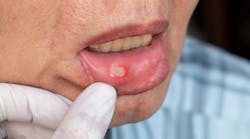
Celiac disease causes gastrointestinal and nongastrointestinal symptoms including dental enamel defects, persistent canker sores, xerostomia, and delayed tooth development. These oral manifestations are often driven by autoimmune responses and the malabsorption of crucial micronutrients such as calcium and vitamin D.4
Those not on a gluten-free diet are at a greater risk for cancers of the mouth, pharynx, and esophagus. Patients who have celiac disease at an early age (7 years or younger) might have disrupted enamel formation in their deciduous and permanent teeth, resulting in enamel defects. Enamel defects appear as bilateral and symmetrical, with chronological white or yellow opacities with or without rough horizontal lines or grooves. The enamel is without glaze and structural defects could be present. This is caused by an immune-mediated reaction affecting enamel-forming cells, and nutritional disturbance. Early diagnosis of celiac disease while enamel is forming may decrease the amount of future enamel defects.5
For patients with celiac disease, oral care products, drugs administered to or via the oral cavity, and any other materials used should be gluten-free. FDA encourages, but doesn't require, drug manufacturers to state on drug product labels whether any ingredients come from a gluten-containing grain. Many polishing pastes, fluoride gels, and varnishes do come in gluten-free formulas; however, not all gluten-free products are labeled as such. A list of gluten-free products is available from the Beyond Celiac website.6
Who acquires celiac disease and why does it occur?
Having a first-degree relative with the condition gives you roughly a one in 10 chance of developing celiac disease. According to the Celiac Disease Foundation, people inherit specific genetic markers such as HLA-DQ2 or HLA-DQ8 genes, which make them susceptible to the disease.7 However, having the genes does not guarantee you will develop celiac disease, as environmental factors can trigger the condition.
My daughter was diagnosed with celiac disease. I originally thought that my daughter’s enamel defects, which occurred at a young age, were due to lack of receiving fever-reducing aids during enamel development. She later discovered the probability of the digestive tract being the true culprit of enamel defects.3
Gluten is broken down by transglutaminase, which is an enzyme that allows interaction of HLA-DQ2 or HLA-DQ8 on the surface of antigen -presenting cells. Gliadin is a structural protein found in the gut and is a component of gluten. Gliadin is presented to reactive CD4 and T cells through a T-receptor, resulting in production of cytokines that cause tissue damage. The introduction of gluten alters the HLA gene by triggering autoimmune responses that attack ameloblasts, which are the cells responsible for building enamel.
How is celiac disease diagnosed?
Diagnosing celiac disease requires a two-step process. It typically starts with a tissue transglutaminase (tTG-IgA) test followed by a conclusive biopsy of the intestine through an endoscopy. A pathologist will view the biopsy under a microscope to examine damage to the intestinal villi. Genetic testing can also be done by testing your blood for the HLA-DQ2 and HLA-DQ8 genes, which are present in almost all people with celiac disease. In addition, often those with celiac disease develop itchy and blistering rashes called herpetiformis, and doctors can perform a skin biopsy without the intestinal biopsy.8
What treatments are available for celiac disease?
Currently, the only treatment for celiac disease is a strict gluten-free diet, which stops the immune response and allows the intestinal villi to heal. This diet includes elimination of all wheat, barley, and rye, and includes a gluten-free household kitchen where no contaminants are introduced.
There is some promising research including epigenetic therapies, which restore normal HLA expression so that the T-cells can recognize and remove gluten. Another treatment is the use of microbiome metabolites and GLP-1, as they act as epigenetic modulators (an oral or injectable therapy that heals the gut barrier even during accidental exposure to gluten).9
As dental professionals, we may be the first to identify these oral manifestations, and it is important to recognize and intervene to prevent irreversible damage in the oral cavity. This multifactorial approach is necessary for the overall health of our patients.
Editor's note: This article appeared in the October 2026 print edition of RDH magazine. Dental hygienists in North America are eligible for a complimentary print subscription. Sign up here.
References
- 20 things you might not know about celiac disease. Celiac Disease Foundation. August 19, 2016. https://celiac.org/2016/08/19/20-things-
you-might-not-know-about-celiac-disease/ - One-third of Americans are trying to avoid gluten—but is it the villain we think it is? NYU Langone Health. 2015. https://nyulangone.org/news/one-third-americans-are-trying-avoid-gluten-it-villain-we-think-it-is
- Diagnosis of celiac disease. National Institute of Diabetes and Digestive and Kidney Diseases. Reviewed October 2020.
https://www.niddk.nih.gov/health-information/digestive-diseases/celiac-disease/diagnosis - Wieser H, Amato M, Caggiano M, Ciacci C. Dental manifestations and celiac disease—an overview. J Clin Med. 2023;12(8):2801. doi:10.3390/jcm12082801
- Celiac disease. American Dental Association. December 8, 2023.
https://www.ada.org/resources/ada-library/oral-health-topics/celiac-disease - Beyond Celiac. Shopping for gluten-free food. Beyond Celiac. https://www.beyondceliac.org/gluten-free-diet/shopping/
- Celiac disease screening. Celiac Disease Foundation. https://celiac.org/about-celiac-disease/screening-and-diagnosis/screening/
- Collinson MA, White MJ, Bocquier P, et al. Migration and the epidemiological transition: insights from the Agincourt sub-district of northeast South Africa. Glob Health Action. 2014;15;7:23514. doi:10.3402/gha.v7.23514
- Ahuja N, Sharma AR, Baylin SB. Epigenetic therapeutics: a new weapon in the war against cancer. Annu Rev Med. 2016;67:73-89. doi: 10.1146/annurev-med-111314-0359000
About the Author
 Anne Stevens
Anne Stevens is a dedicated registered dental hygienist and faculty instructor with 20 years of clinical experience. She holds a BSDH focused on scientific writing and research and is currently pursuing a master’s degree in education. Passionate about lifelong learning, she teaches at Concorde Career College. Outside the classroom, she enjoys spending time with family, arranging flowers, playing golf, snow skiing, and playing with her two 2-year-old basset hounds.
Related
 2202 Rd Hmon P 01
 canker-sore-gluten-sensitivity