What bruxism can tell hygienists about airway health



Key highlights
- Recognizing airway clues: Bruxism, tooth wear, tongue scalloping, and other clinical findings can prompt hygienists to ask additional questions about sleep and airway health.
- Making screening part of the appointment: The conversation explores how tools such as STOP-BANG can be incorporated into the hygiene workflow.
- The referral gap: Identifying a potential problem is only the first step; patients may struggle to follow through when sleep testing requires additional appointments and coordination.
- Home sleep testing: Lee describes a two-night home testing process using a small finger-worn device rather than an overnight sleep-clinic visit.
- The future of remote monitoring: Sensor-enhanced appliances could potentially help clinicians monitor clenching, grinding, and airway-related information between appointments.
Episode description
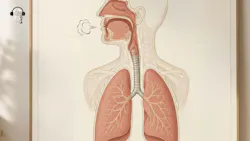
Bruxism may be more than a finding to document in the dental chart. In this episode, Andrew Lee, RDH, MBA, discusses the connections between bruxism, airway health, and sleep-disordered breathing, and explains why dental hygienists may be in a valuable position to recognize potential warning signs during routine appointments. The conversation covers clinical observations such as tooth wear and tongue scalloping, patient questions, STOP-BANG screening, and the challenges that can arise when patients are referred for sleep testing.
Lee also shares how his own experience with severe bruxism helped lead him toward developing sensor technology and Oresome Health, a platform designed to connect dental practices with sleep physicians and simplify home sleep apnea testing. The conversation looks at how remote monitoring and sensor-enhanced oral appliances could eventually give dental teams more information about patients between appointments.
Connecting bruxism and airway health — 02:17
Jessica: And welcome back, preventive specialists, to another episode of A Tale of Two Hygienists podcast. I am Dave, and I'm here with Jessica. And thank you so much for joining us for another episode. And Jess, happy September. Did you know that the first email was sent in September 1971 by Ray Tomlinson?
Dave: And he also was the one who introduced us to the little at symbol, which we all kind of get overwhelmed with nowadays. But fun fact about September, I looked it up and I thought it was interesting. I'm getting into the stage where I just like fun facts.
Jessica: Yeah, I'm grateful to say that I was born after the first email was sent, because I just found out this week that I cannot say that I was born after the first text message was sent.
I am now old. Old. I'm old. This is what has happened in my life. But here we are. And today we are joined with probably someone younger than me. I don't know, Andrew.
Okay, good. Andrew also was born before the first text message was sent. And we are here today with Andrew Lee, RDH, MBA. That's exciting. Who is a dental hygienist, health-care innovator, and founder and CEO of Oresome Health.
We're going to talk more about what that is. With more than 20 years of dental hygiene, Andrew's career has included private practice as well as roles at UCSF and the University of the Pacific Arthur A. Dugoni School of Dentistry. He holds an MBA with a concentration in health care and biotechnology and received an NIH grant supporting his patented bruxism and airway sensor technology.
The technology he describes is essentially turning an oral appliance into an Oura Ring for the mouth, which I love. I'm really excited about this conversation.
Today, through Oresome Health, Andrew is working to help dental teams move beyond simply identifying potential airway problems by creating a workflow that supports patients through screening, testing, diagnosis, treatment, oral appliance therapy, and billing.
And importantly for our audience, Andrew believes dental hygienists may be some of the best-positioned health-care professionals to recognize early oral signs that something isn't right. Round of applause, everybody. Round of applause.
I also believe that, too, Andrew. And Andrew, when I was in hygiene school — this was after the first text message was sent — but when I was in dental hygiene school, airway wasn't a common topic. So I'm curious how you stumbled upon, or how did you get into, the field of connecting dentistry and airway health?
Andrew: Yeah. Hey, first of all, it's great to be here to share what I know.
I would say that, you know, when it comes to airway assessments and just treating that in the dental chair, as a clinician and even as a patient, I don't think either side was aware that we could do that within the dental chair.
When I graduated from the dental hygiene program, I learned about bruxism, but it was rarely taught that there was a connection and a comorbidity to airway issues like sleep apnea. And so it wasn't until further along in my hygiene journey as a clinician that I realized there was a connection between the two.
I mean, there's a saying that goes that the mouth is the gateway to the body. And I'm a firm believer in that. Even in Eastern medicine, there were physicians who would diagnose things just by looking at your tongue.
So I think we were taught that much in school. It's just we were never really connected to specific things like airway and sleep apnea. And so that was a passion that I just grew and just further did research on. And it's just something that I love doing and talking about and just really helping the dental industry become the frontline for that kind of condition.
What hygienists can look for when screening — 05:37
Jessica: That was awesome. Was there, like, I think about bruxism, looking at oral manifestations of it, looking for where facets, looking for the Mallampati scale, looking for a number of other things that may be contributing.
And those things, the Mallampati not necessarily, but like where facets take time. It takes time for us to see these manifestations.
What are some things that you recommend screening for when you are making this connection?
Andrew: Yeah, that's a great question. And it's so true because, if you think about it as hygienists, do we have the bandwidth during the patient, one-hour appointment, to really build a relationship with the patient, unlike the dentist who is just really going at it and skipping from chair to chair?
So when a patient is sitting in my chair, I'm not just doing the intraoral, extraoral assessments and things like that. I'm asking questions. You know, not just, "Hey, what did you do last summer? How was that trip?" It's more like, "Hey, how are you feeling lately? Have you been tired?"
Because I'm noticing scalloping on the tongue. I'm noticing attrition along with gingival recession. All of these little things that are tagged onto the physical manifestations of bruxism that really let them say, "Have you ever been sleep tested?"
Because I think there is a connection between why you're doing this and something that's really more rooted that we need to really resolve here if you really want therapy and optimal standard of care.
And so that's, I believe, how we approach the assessment. And it only takes about one or two more minutes. And it involves including a few assessments that I love that help determine the STOP-BANG, which asks these kind of subjective questions.
Are you feeling tired during these moments? Do you feel like you're not being rested or feeling restful? You know, those are the kind of questions from the STOP-BANG.
And then the app work gets really down into it, where the clinician, whether it's the hygienist or the dentist together, will then, you know, do other things like measurements of diameters of the neck, you know, just really getting deeper to then determine, "Okay, you know what? You should take a sleep test because I believe you may be a candidate for sleep apnea."
Recognizing signs of sleep apnea in the hygiene chair — 07:56
Dave: I find it very interesting because I literally had a patient about a month ago. I was taking X-rays and I do intraoral photos, and I just noticed that his tongue would just take over, right?
And I just asked him, I was like, "Have you been diagnosed with sleep apnea?" And he just gave me this face like, "Why would that? How would that?"
And I was like, wow, the mouth is part of what we look at. Yeah. Like, he was — I like to think that he meant no harm, right? But the tone is what got me.
But I mean, honestly, you guys, we probably have patients that are falling asleep in our chairs, right? That are gagging on every X-ray, that are just choking with the suction.
And so these are things that we can be recognizing. So what are some of the, I know that we're in a unique position to kind of recognize these things, but what are some of the signs and symptoms that we can kind of pick up and maybe have that conversation, start the conversation with the patient and evolve from there, other than like, "How was your summer?"
Andrew: Yeah, and you know, talking about that patient experience was so resonating because I go through that with my current patients.
There are at least three to four patients where I will assess just general manifestations of bruxism. Then I'll go deeper and just say, "Hey, so I'm noticing these things that are signs of bruxism."
Are you feeling — and then I'll start asking questions from the STOP-BANG assessment and say, "Have you ever noticed yourself like waking up and not feeling fully rested? Are you noticing yourself like kind of dozing off here and there?"
I'll start asking those questions, and then I'll just go right into it and be like, "By chance, have you ever taken a sleep test?"
Because I will notice those other manifestations where it's like a macroglossal tongue and all these other things where I'm like —
But then you'll also have these other candidates, these patients where, you know, it's not the enlarged tongue or just all these other kind of typical signs of sleep apnea, because you can be fully fit and still have other signs that really trigger the questions to then just move forward and say, "Oh, you may want to get a sleep test."
And a lot of these patients will be like, "I actually just took one. I was actually told by my doctor to get a sleep test."
And then when I asked them, "So why haven't you gotten it done?" They'll say, "Well, I hate CPAP. It's too tedious of a process. I can't get an appointment with my doctor."
It's just this never-ending battle where, for the patient and for the provider, it's just so hard to get from start to finish and really get them to the clearing where the right therapy is provided.
What STOP-BANG can tell you — 10:32
Jessica: So I'm hearing that's where Oresome Health comes in. But before we get there, I did not know what STOP-BANG stood for. So I just did a quick little Google search.
And STOP-BANG means you're asking your patients questions about snoring, that's the S. If they're tired, that's the T. If they have observed any apnea, like are they stopping breathing or choking, or somebody, their sleep partner, if they're noticing that at night, that's the O, observed apnea.
P is pressure. So this is — are you looking for, like, I'm gonna make this plug. Take your patient's blood pressure. Take your patient's blood pressure. If this has fallen out of your standard of care, put it back in, take their blood pressure.
And then BANG. The B is the body mass index. So are they — is it greater than 35 kilograms per M squared? I don't even know what M squared means, but I am — this is the wrong country for me to understand that.
Anyway, if they're having — if their weight is impacting their ability to breathe. A is for age. That says older than 50 years old, but this is not necessarily just for people who are 50 years old or older.
N is neck circumference, which you talked about. And G is gender because it says that being male is a higher propensity of having sleep apnea than being female, which is interesting because usually it's us females that get the short end of those sticks.
Dave: No, we're just like on our sleep.
Jessica: Yeah, maybe that's it.
Andrew's personal experience with bruxism — 12:01
Jessica: I am curious, though. Andrew, you yourself as a patient have experienced some of these, but you didn't — tell me about the story, because I don't think it manifested by you being screened at a dental office. Tell us about how Oresome came to be from a personal standpoint.
Andrew: Yeah, so, you know, a year after finishing and graduating from the dental hygiene program, I unfortunately was a victim of a near-death experience where it left me in the ICU for a week.
Jessica: Oh, jeez.
Andrew: Yeah. And so after I got out, I started experiencing PTSD-induced bruxism.
Jessica: I did not know that was a thing. I didn't know that was a symptom of PTSD.
Andrew: Yeah. I mean, because I myself, even before the incident, I was very mild. I was just maybe the occasional clenching and grinder. And even when I did, it was very mild to where my teeth weren't affected. Just my general oral health wasn't affected until this happened.
Jessica: Higher stress. Like, in my mind, I'm associating stress with bruxism. I just never associated PTSD with bruxism.
Andrew: Especially while you're sleeping. I just noticed it happening to the point where one of my laterals just completely chipped off when I woke up. Yeah, it was that bad.
And fortunately, I was working for a dentist at the time and she was just happy to, like, go put a filling on that thing. But I started getting more into it and I started studying it and just really getting more into the whole bruxism realm of things and noticed that, man, it's not just me because I had gone through the over-the-counter night guards.
I had purchased the custom night guard and paid almost completely out of pocket because I was only working part-time. And even with the dentist discount, I was still paying a little more than I could afford.
But I still didn't really find that I was getting the optimal comfort and protection that I needed because if we all think about using a night guard, it's really meant to protect, but it's not doing anything to really alleviate the symptoms and really resolve and even get down to the root cause of what's going on, which is mainly just certain types of stressors.
We also have certain types of medications that can trigger it. Then we also have the comorbidity to sleep apnea, where unfortunately the sleep apnea episode can cause a physical stressor that then forces you to start clenching and grinding as well.
From clinical experience to sensor technology — 14:38
Andrew: And so when I started looking into all these things, I started noticing the more I started going back to work and seeing this in my patients and start asking questions and then seeing it with some of my family members. I'm like, whoa, okay, this is bigger than I thought it was.
And that's where I really started digging into like, okay, what's this all about?
And so fast forward to where, you know, I started just really — when I got into the MBA program and I was really focused in the health-care and biotech sector, I started learning about all these new technologies that were coming out.
I mean, I even wrote a paper to get a small scholarship for school where this company had developed a tattoo, a rub-on tattoo that had sensors within them where they could actually — doctors didn't have to have you in all these wires, laying in a medical bed, getting bed sores. No, they could track all of your vitals just from this one tattoo.
And then when they were done tracking you remotely, you could then literally go into the shower and just rub it right off.
So I did a paper on that and I started thinking, I wonder if there's any way to do that with oral technology. I mean, we're putting these oral appliances in our mouths. Is there any way to do something to help resolve that and collect data?
And so I started digging more and more into that, and then I realized there are all these new technologies like microsensors that actually do pick up things.
And what we're finding also is that in the oral cavity, we're finding that sensors like PPG sensors that Oura Ring uses for their devices, it's actually in an optimal environment because we're now working in a dark, very fibrotic tissue environment where the light can actually travel through the tissue and collect more accurate data that way.
Jessica: That is wild. Isn't it?
Andrew: And so, I mean, just talking about it, I just get really excited. And so I started working more on that.
I developed a microsensor technology, submitted my first patent application. And it's just crazy how the universe works because I received my first patent on the anniversary of when I almost died. On June 1. Yeah, that's when I got my first patent. And that's when I got into the accident.
Jessica: How serendipitous.
Andrew: And then my second patent, I actually got it just a week after the accident anniversary. It was just crazy that I was just like, okay, something going on here. I should keep going.
But yeah, it was an exciting journey. It was a terrifying journey because it takes a lot of determination. It takes a lot of money.
And fortunately, the NIH believed in what I was doing. And so I was awarded a very generous grant and it's a very competitive award. So I was actually very fortunate to get it in the first place, but it really helped me to validate the technology.
And from there, that's when I created Oresome because aside from providing the technology to now not only protect teeth, but now collect the data to help alleviate the symptoms, we're still working with the workflow issue where dental and medical are completely siloed and fragmented.
Closing the gap between dental and medical care — 17:40
Jessica: Oh, if I had a magic wand, if I had a magic wand, Andrew.
Andrew: It's something that it's been stagnant for decades and nobody seems to want to do anything about it until now. I think Epic just finally started doing something with the software that connects dental EMRs with medical.
Well, how about we do the same thing when it comes to treatment planning, you know, specifically with bruxism and airway issues like sleep apnea?
Because now with Oresome, before, I should say, a patient would come in, we're noticing these symptoms of bruxism, and we're immediately putting them into a night guard without considering that it might be sleep apnea correlated or there's a comorbidity to that, and potentially they actually may benefit more with the mandibular advancement device.
So because our priority is to the teeth, all we can do is put them in the custom night guard and then give them a referral to then go get a sleep test done from their physician.
Unfortunately, we're finding in research that there's a 90% drop-off because of the fact that once we give the patient that referral, they now have to schedule a sleep test with their physician, go to a clinic to sleep overnight to get that sleep test done.
Fortunately, now there's technology.
Nobody wants to do that.
Fortunately, there are technologies now we're —
Jessica: If they can barely sleep in their own bed, how are they going to be sleeping in a bed? Like, I'm always curious about that. I'm like, you know what?
Dave: I had a hunch, man. This whole referral process is just so wonky because obviously we are trained to understand, screen, and have that relationship with the patient.
But why is it that so many patients never complete that referral process? Like, it has to be frustrating.
Andrew: It's the life of — I mean, it's the stress of the daily grind, right? I mean, we've got so many other things in our plane.
Jessica: One more thing. One more thing.
Andrew: Exactly.
Jessica: You know, we need to just figure out how, if you just scroll the — like, if you're just scrolling Instagram, like, that will just do your sleep study for you.
Dave: And that's how it is. This is why Amazon is so popular because it's like one-click purchase. We needed a one-click screening test.
Making sleep testing easier for patients — 19:45
Andrew: Oresome's done one better. Now, as a patient, you don't really have to do anything but click.
Because with Oresome now, when the patient comes in, we assess, we now include STOP-BANG and effort with assessments, and it only takes about two or three more minutes. We submit the case right from the computer from our operatory.
That case is submitted. And now the patient, all they do is sit back and let the work happen.
Because through Oresome's platform, we do two things. We now help with the workflow that connects the dental practices to our sleep physicians.
And we also take care of the billing.
So now you get an email the moment the case is submitted. The patient clicks on the magic link and it sends them to the portal where now it lets them review all of the information, what they're covered for a custom night guard in case it is just bruxism and what they're covered for by their medical insurance in case they are sleep apnea positive and they'll need a mandibular advancement device as well as what the cost will be for their sleep test.
They approve just for now, just for the sleep test costs.
Once they click, it then triggers a referral to our sleep medical group physicians that are covered throughout all 50 states to then approve the sleep test.
We now ship you a little finger device where you wear it around your finger for two nights in the comfort of your own bed.
That report is shared with our sleep physician.
We interpret, we diagnose, we then send a prescription with a letter of medical necessity if you're OSA positive to your dentist so that they can now proceed with their —
Jessica: So you did make it social media friendly.
Andrew: I just — there you go.
It's literally two clicks for the patient now. You don't have to do anything.
There are no referrals, there's no traveling, there's no sleeping in the clinic. Everything's done from home and from your phone.
And then for the dentist, it's even easier because they don't even have to do anything. They just literally get the letter of medical necessity for an oral appliance rather than a CPAP, and it's only for mild to moderate cases.
And they'll also get the prescription so that they can now proceed and order it from their dental lab and deliver it immediately rather than having to wait months for the billing and everything to clear out.
Plus, because this is a medical device, we'll also handle the prior authorization and the claim so that the check for reimbursement is now shipped directly back to the patient.
Jessica: Love that.
Dave: Interesting.
A simpler approach to home sleep apnea testing — 22:00
Dave: I mean, I started the podcast with, like, the email in the 1970s. And now look at Andrew coming up with, like, two-click technology here. That's amazing.
Andrew: Well, hey, look, it's 20 years of experience where we've seen this as hygienists happening over and over and over again.
And we all know that it's already hard enough to get patients to accept any kind of treatment, let alone this referral process to a doctor.
I mean, it just makes sense.
Jessica: It cuts out the ambiguity.
I love that you said they get all of the results. They can read it. They can see what that looks like.
And I am super curious about this little thing they just wear on their finger.
Dave: Yeah.
Jessica: This is where the tattoo started. So tell us about this thing that they wear on their finger.
Andrew: Yeah, it's an amazing device.
It's FDA cleared. We're working with an amazing company called PranaQ and their device is called the home sleep apnea test. They specifically call the device the TipTraq.
And it literally, with the Velcro strap, wraps around your forefinger, the tip of your forefinger.
And it uses the same PPG sensor technology as Oura Ring to record heart rate, oxygen desaturation, all the indicators to help determine whether someone is sleep apnea positive or negative.
And so it creates, for each night, a single report. And so from that, we can use that to determine the scoring to then determine if a patient is mild, moderate, or severe for sleep apnea.
It's that simple.
And no more wires, no more going to a clinic to spend the night there. It's all done through this one small device.
Making health technology easier to live with — 23:40
Dave: That's amazing. I would imagine that will increase the amount of people that actually have these conditions, right?
Just because it's making screening a lot more simple. And I'm excited for the future, you guys. This is fantastic because, I mean, obviously, it's like a full-circle moment, right?
Like, being able to kind of have the conversation with the patient, maybe even us as health-care providers.
I'm seeing a lot more hygienists wear like these rings and things because they want to track everything, right?
Jessica: Yeah, but it's a real pain in the butt when you've got your PPE on and you don't want that ring on.
I just need — they need to create like something I can wear around my ankle or my baby toe.
Dave: I can't — you commit a problem.
Jessica: I don't want that.
Never mind. I don't want that, Andrew. I'm just joking.
Dave: That's funny because I used to just — showing off her new accessory and people were just thinking about her like —
Jessica: I used to wear my Apple Watch around my ankle because I would get better steps and people are like, "Are you a criminal?"
And I'm like, "It is too small to be an ankle tracker, people."
But I had too many people ask me what it was and then I no longer wore it around my ankle.
So I need something around my pinky toe or maybe a set of earrings. I don't know. I need something other than a ring.
Dave: I'm excited to find out how many times you have to overly explain that it was an Apple Watch.
Jessica: At work, I was like, "It's an Apple Watch."
So I changed the band from a black band to something that was super colorful.
And then somebody else — I bedazzled it. And then somebody else asked if I had committed a crime and I was like, "It's pink."
Andrew: People are all patting you on the head like, "You're so pretty."
Jessica: So I took it off.
Dave: There's criminals that like pink, Jess, okay? Anyways, we digress.
Jessica: I took it off. There you go, Andrew. I need something that I can wear that's inconspicuous. It doesn't make me look like I'm a felon.
Andrew: Technology is going that direction and it's becoming a lot easier. And that's why there's so much more patient adoption. And that's what's making it easier.
You know, no matter what industry you work in, when it comes down to it, whether you're a customer, a client, or a patient, all we want is something that's easy, fast, and efficient, right?
And so that's what we're slowly doing in dentistry because we want a seat at the table, especially when it comes to general wellness and health.
And so I think we're finding that dentistry is now catching up. And so we're doing our part to really get to that part where everything is seamless.
Moving dentistry toward prevention — 26:16
Dave: The best part about this is that it's extremely preventive, right?
Like, these are things that I feel like oftentimes dentistry has a bad rep of being so reactive.
I mean, even an X-ray, right? X-ray shows us what has happened. But now what is going to happen or what is happening, right?
And so being able to kind of use this technology and kind of forecast how we can check those boxes between general health and oral health and how we can work symbiotically.
It's amazing. And thank you for working on this and creating these things.
Jessica: And I'm finding a recurrent theme when we do these interviews and episodes is that unfortunately, these things are happening because somebody has had an experience like yourself, right?
Where you start identifying, "My gosh, I'm going to evolve and do these things because it was very close to home," right?
Yeah.
Tell me about the next five to 10 years. If you had, like, Andrew-verse, right, which we believe a lot in this podcast, what would that look like?
What would that technology look like other than like Jess's pinky ring?
Dave: Or my earrings.
Andrew: I mean, the future of Oresome, I would love to now incorporate the sensor technology that I developed before even creating the platform.
Wouldn't it be great where now, once we've delivered, whether it's a night guard or a mandibular advancement device, we can implement the sensor technology to monitor the patient remotely?
Like, wouldn't it be great if, like, say for instance, the dentist placed the crown and then they're now wearing one of our sensor-enhanced night guards and as they're chewing through that and clenching and grinding, instead of them just guessing and automatically just diagnosing themselves, we can then contact them and say, "Hey, Dave, we noticed that you've been clenching and grinding a lot more this past week to week and a half."
And we put that crown in that, you know, on number 13, like a couple of weeks ago.
"Could you come in so we can check that crown so to make sure it's not broken?"
You know, now we can then say, "Hey, you should come in" rather than you guessing and diagnosing yourself.
And then it turns out that you just wasted some of the patient's time on the schedule and it turned out to be nothing.
So those are some of the things that I love to use for the technology, even with the mandibular advancement device where we can then track airway and make sure that the airway is always staying open rather than them having to come in and then readjust titration.
So those are all amazing things that we hope to do in the future by incorporating sensor technology into the platform where we're not just delivering the optimal appliance, we're making sure that we also collect data to remotely monitor patients as well.
What remote monitoring could look like — 28:58
Dave: Yeah, it's great because even for babies, right? Like I'm a parent and there's a lot of, like, I think there's like the Owlet, right? Where you can track your baby's patterns and breathing.
I mean, we do all that as parents. We ought to do it for ourselves, too.
And I would love to get a notification on my phone that says, "Hey man, you've been clenching a lot. You've been grinding a lot."
And not at the club.
You've just been so stressed out that this is what's happening.
And I would love to see one day where I can have that relationship with a provider and when we can have a whole portfolio of my overall health, right?
My sleep, my dental, my blood pressure, all those things would be fantastic and amazing.
And I think everything is changing for health.
I mean, we all work out.
GOPs are becoming so popular now because patients and people are realizing health is just so much more beyond just like working out on a healthy diet.
No, it's sleep, it's mental health, it's stress, it's anxiety, all of those things.
And that affects us in the dental world as well.
Andrew: Yeah. I mean, wouldn't it be great if we can even put a sensor into something as thin as a Vivera tray so you can even wear it during the day, because we're all clenching and grinding during the day?
But what if it pinged on your app and said, "Hey, Dave, you're actually clenching and grinding right now?"
Jessica: Chill out.
Andrew: Exactly. Let's take a step back and do a breathing exercise. Or how about you treat yourself to a massage? Here's a promo code to one of our partners.
Wouldn't that be?
So we're now catching you in real time when you're clenching and grinding.
Jessica: I really like the promo code idea. The promo code idea, Andrew. I like the promo code idea.
Dave: Andrew, you know what's going to happen?
It's either going to go two ways. I'm going to be with a patient and I'm going to get a notification saying that patient's stressing you out.
Here's why.
I'm probably going to have an argument with my wife and why she ordered more things on Amazon and now I'm going to be stressed out.
Jessica: Don't worry, Dave. She ordered one of these devices from Oresome. So it's going to be okay.
But Andrew, it's been so good to talk with you and I'm so grateful that you took an experience of your life that was near death and you've created an experience to give life.
So thank you, Andrew.
Andrew: No, thank you. I love being here and just sharing this story and I hope that we're all able to really help patients with it.
Yeah, so thank you.
Jessica: Thank you.
About the Author
 Jessica Atkinson, MEd, BSDH, RDH, FADHA
Jessica Atkinson, MEd, BSDH, RDH, FADHA
Jessica Atkinson, MEd, BSDH, RDH, FADHA, is a dental hygiene educator, clinician, and advocate dedicated to advancing the profession through innovation and education. She combines her clinical expertise and love for education to create engaging, practical learning experiences. Jessica is an Associate Professor and Senior Clinic Coordinator at Utah Tech University, co-host of A Tale of Two Hygienists, and CEO of HYGIENE edgeUCATORS, where she develops continuing education for educators and clinicians. She co-founded Hygiene Edge, a platform with over 100,000 YouTube subscribers. Recognized with the Element Award and Outstanding Service Award, she is a Fellow of the ADHA and past president of UDHA.
 David Torres, CRDH
David Torres, CRDH
David Torres, CRDH, cohost of A Tale of Two Hygienists, is an experienced dental hygienist with over a decade of clinical expertise, specializing in patient education, preventive care, and the integration of modern dental technologies. Known for his passion for teaching, campus recruiting, and coaching, David is dedicated to elevating patient experiences while helping dental professionals improve efficiency, workflow, and long-term success.