What periodontal endoscopy can reveal that probing can’t



Key Highlights
- Why probing depths don't always tell the complete clinical story
- What periodontal endoscopy allows clinicians to see beneath the gingiva
- How direct visualization can change instrumentation and calculus removal
- Why difficult anatomy, including furcations and concavities, can challenge conventional instrumentation
- Judy Carroll's approach to giving patients more options when periodontal disease appears advanced
Episode Description
What can we learn when we move beyond tactile detection and actually visualize what's happening beneath the gingiva? Judy Carroll, RDH, joins Dave and Jessica to talk about periodontal endoscopy and how direct visualization can change the way clinicians think about diagnosis, instrumentation, and difficult periodontal cases.
Judy shares lessons from her clinical experience, including why probing depths don't always tell the whole story, how endoscopy can help identify calculus and challenging root anatomy, and what she has learned from treating patients who were facing significant periodontal challenges. The conversation also gets practical, covering instrumentation, visibility, patient communication, and the mindset shift that comes with being able to see the subgingival environment.
A Tale of Two Hygienists Podcast – Episode 556
Why periodontal endoscopy changes the diagnostic picture — 00:40
Judy Carroll: The biggest surprise, I would say, to me was learning that our probing depths often are inaccurate. People don't like to hear this, but our probing depths often are inaccurate. And I show this when I lecture and teach.
We can be probing right on top of calculus. It's not just a calculus removal or calculus detection device. It's also a really powerful diagnostic tool for dental work and really treating things earlier. Earlier the better, you know, then they don't end up in a root canal or bigger issues.
The beauty of a dental endoscope is that, for my profession, for our profession, we can now regenerate bone around hopeless teeth. We can actually give patients hope where there was no hope before, where they are facing full mouth extractions. I routinely treat patients facing full mouth extractions.
Introducing Judy Carroll, RDH — 01:40
Dave Torres: For me, everything we do on this podcast comes back to one thing.
That's the patient in your chair. Every conversation, every lesson, every perspective we bring you exists to make sure that you're more confident, more informed, and more of a compassionate hygienist.
So welcome back to A Tale of Two Hygienists podcast. I am your co-host Dave, and I'm here with my amazing co-host Jessica. And I am so excited to be talking to our amazing guest today. So just tell us more about her.
Jessica Atkinson: I am really excited to talk to Judy Carroll. Judy Carroll is a registered dental hygienist and the founder and clinical director of Perio Peak Innovations, which is a private periodontal therapy practice in Washington state. That's awesome.
She provides regenerative periodontal endoscopy and holistic periodontal therapy and medicine. Judy attracts patients from all over the world due to her consistently remarkable clinical results and her comprehensive approach to patient care. Judy is a clinical pioneer, patient advocate, national lecturer, writer, and private clinical instructor.
Her 36 years of clinical experience has fueled her determined pursuit of a more comprehensive and preventative periodontal therapy methodology, as well as her strong emphasis on integrative care. Her mission is to teach and train others to routinely provide regenerative and holistic periodontal therapy.
Judy, thank you for being with us today.
Judy Carroll: Thank you, Jessica.
What exactly is periodontal endoscopy? — 03:17
Jessica Atkinson: We are so happy to learn from you. And I just recently had a colleague ask me, what is endoscopy? Is that some kind of laser? Like, what is endoscopy?
So, what is periodontal endoscopy and how does it work, Judy?
Judy Carroll: So, it's a miniature fiber optic camera about the size of your probe that you can basically just think about your probe, and it has a little camera on the end of it. And it's got a bright light that you can place into the sulcus or the pocket and look around and see the roots and look at all the crown margins and fillings and anything that you need to see beneath the gums, beneath the surface.
Jessica Atkinson: So it's X-ray vision.
Judy Carroll: It's better than X-ray vision because you're getting that 3D view of around the root surface, like I said, of crown margins, fillings, furcations, root depressions, all that kind of thing.
So you're basically, you've got a high magnification, at least 48X magnification. Some of the new endoscopes, I think, are up to 100X magnification. And you've got a bright light.
So it's really like having a little microscope with a light on it on the end of your probe. It's the best way to describe it. So anywhere your probe will go, the camera can go.
Jessica Atkinson: So it's a probe with eyeballs.
Judy Carroll: Yeah.
Jessica Atkinson: And those eyeballs are wearing loupes.
Judy Carroll: It's like loupes and lights on your probe.
Jessica Atkinson: That's amazing. I'm just imagining a visual of my probe with eyeballs wearing loupes. I'm really enjoying this.
Using the endoscope to guide treatment — 04:45
Jessica Atkinson: So how does it—what does it do for you as a new instrument?
Judy Carroll: So, you can actually see what calculus you've left behind, and you can remove it visually with what I like to use, a piezo ultrasonic. So you can have your little probe under the gums—you know, your eyes under the gums with your endoscope—and then your piezo tip in there removing the calculus.
So you're actually being guided by the endoscope when you do what we call visual root planing, basically. It's kind of like visual root planing, right? I call it a complete detoxification of the root. So it's just at a much higher level of a detoxification of the root, basically, so that you're able to achieve much better results non-surgically.
But also, you can, like I said, you could see crown margin decay, root fractures, root decay, all sorts of things. There's just all sorts of things that we're not seeing on the X-rays.
And the biggest surprise, I would say, to me was learning that our probing—I mean, people don't like to hear this—but our probing depths often are inaccurate. And I show this when I lecture and teach. We can be probing right on top of calculus. Your periodontist can probe right on top of calculus.
Or let's say you're probing a furcation and it's filled with calculus. Well, you might probe that as a 7. You might probe the sulcus as a 2, and it's actually a 7. I show pictures of all this in my lectures.
And I think that was the biggest surprise for me. It was to not only find out that the probing was inaccurate in a lot of cases—it's pretty routine—but also that we are missing a lot of decay on our X-rays, especially crown margin decay.
But even, you know, I can even see interproximal decay or root decay. Things like that just don't show up on the X-rays. So that was a big surprise for me initially, to find out that we're very limited.
A more complete diagnostic picture — 07:01
Judy Carroll: We have very limited diagnostics currently, right? The probe has been around for over 100 years, basically hasn't changed that much. And we rely on that very heavily for diagnosing our patients for disease and pocket depth and all that sort of thing.
And the endoscope is just a much better tool. So I tell my patients, you know, when they come to see me, I'm guided by the endoscope, and then I get the real picture of what's going on. Because really nothing can hide from my endoscope.
So you're still using the X-rays to guide you. You know, you kind of put everything together. You're looking at tissue, you're reading the tissue, that sort of thing. But it's just adding another tool. It's just taking you up to a higher level and a higher level of understanding as well as, you know, why is there an 8 millimeter pocket? Okay, why is there an 8 millimeter pocket?
Now you're, as a dental hygienist, able to go in there and figure out why. Whereas before, we had to refer those patients out to have the periodontist either flap that open or do osseous surgery or whatever they're going to do. And so much more of this can now be kept in a dental hygienist's hands. And that's really where it should be.
You know, we should be—it's just a more preventative, higher level of care if we can keep most of our patients in-house and provide comprehensive periodontal therapy. Then when we need the periodontist to do things like grafting or extractions, implants, bone grafts, those sorts of things, they can focus more on that.
But as far as periodontal therapy, this is a very comprehensive approach, to use an endoscope. Even just in regular general practice, let's say you're doing traditional root planing. Let's say you just got maybe 5- or 6-millimeter pockets. Well, you're going to do a better job. You're just going to do a better job.
Beyond calculus: finding the source of bleeding — 09:07
Judy Carroll: And here's one thing that people don't think about: I think a lot of the doctors and even the hygienists think of the endoscope as just a calculus-detecting tool.
When in maintenance, let's say you're doing dental hygiene your regular day and the patient comes in, there's some bleeding around number 14, mesial. You can actually just pick up the endoscope and look in there.
You can use this to diagnose things right there chairside, and then the dentist can look at it and say, yeah, we need to do—you know, there's crown margin decay there or whatever it is that's causing that bleeding. And you can treatment plan the patient right there.
Like I said, that stuff doesn't show up on your X-rays. You can pinpoint it with your endoscope, show the patient, and then get them in for the needed treatment. So it's not just a calculus removal or calculus detection device. It's also really a powerful diagnostic tool for dental work and really treating things earlier.
Earlier the better, you know, then they don't end up in a root canal or bigger issues.
Learning to work with the endoscope — 10:08
Dave Torres: Well, my brain's about to explode because I want to go ahead and zoom in,, double tap to zoom in, on the conversation because I've never seen one. I haven't experienced one. And I'm so happy to be talking to you.
And I'm sure that there's listeners out there who are like, wait a minute, is this like essentially shrinking ourselves down into the pocket of the gums and then being able to see everything more so than ever? Is this something that as we're scaling, we are using as well?
For instance, things like claims, right? Like insurance claims. Can you show a photo or video about using this amazing tool and explain to them why the pocket is there, that necessarily the measurements are not as accurate as much as what this tool is able to show us?
Can you show me a little bit more, paint the picture of exactly what it is for somebody who's never used it? Because now I'm jealous.
You know how we get that feeling that as hygienists, we left the piece of calculus because we took a checkup X-ray and we just immediately feel like, I thought I got it all. And now you're telling me that we don't even have to do all that, we actually have a tool that we can—
Judy Carroll: Yeah. And, you know, I just want to say we're all doing the best we can with what we have, right? And you don't know what you don't know.
When I picked up an endoscope 26 years ago, I was just shocked. It was like—it's an incredible learning curve, but it's so much.
Jessica Atkinson: I was going to say, I think one of the things that holds people back is that learning curve. Tell us a little bit about that too.
Judy Carroll: It's so much fun, you guys. This is, I've been doing this for going on 26 years and I'm still having a blast, okay? I've treated thousands of severe cases. And I am still having fun. This is really the most fun a dental hygienist can have, being able to profoundly impact your patient's health.
So again, let's go back to your tools. What's in your toolbox for diagnosing and treating and providing periodontal therapy? You've got your X-rays, you've got your probe, you know, you've got your eyes on with your loupes and looking at the tissue, reading the tissue, right?
This tool will just take you to a whole 'nother level that you can't even imagine. You just can't even imagine it. And you really have to see it in action, Dave, to really get a full appreciation of what's going on. Not just a video of somebody posting on Facebook or something. Really get it in your hands or stand over someone's shoulder.
And by the way, my door is always open for anyone that wants to shadow me anytime. I'll put you to work and you can do my periodontal charting for me.
Seeing deep pockets in real time — 13:10
Judy Carroll: But being able to see on a big, bright color monitor, subgingivally, let's say you're in a 12-millimeter pocket, I routinely treat 12- to 16-millimeter pockets.
Jessica Atkinson: Which blows my mind, right? Because our policy is after six, we refer.
Judy Carroll: Yeah, so you don't—so there's no cutting. I'm just slipping that little micro camera down into that 16-millimeter pocket and then I'm guided visually on a screen, a beautiful color screen, that's magnified. You've got at least 48X magnification with a bright light.
And currently we've got water coming—there's water coming out of the end of it to flush the blood out of the way and the granulomatous tissue, and completely thoroughly detoxify that root surface in that whatever pocket depth. It doesn't matter what it is. You don't really have a lot of limitations.
So, if you can remove all the calculus in these advanced furcations and these vertical bony defects everywhere, which I treat every week, you guys, if you can do that, your patient—and it goes back to the research, look at the early research—your patient won't need to have flap surgery or osseous surgery.
So, if you can eliminate most of the surgery— I call this a first-phase treatment approach over traditional root planing. Normally our first-phase treatment approach is root planing. This is just a higher level of that. So I call it a first phase.
This is the first phase. Mrs. Jones, then we're going to have you see a periodontist in six months or a year, depending on the case and what their needs are, and reevaluate things, and then the periodontist will take it to the next level from there.
That's basically the order of things, okay?
Meanwhile, I'm correcting all the risk factors—airway stuff, deficiencies, blood sugar, all that kind of thing, smoking, diet, on and on. So I'm very comprehensive in treating all the risk factors.
From hopeless teeth to a different treatment conversation — 15:12
Judy Carroll: But the beauty of a dental endoscope is that for my profession, for our profession, we can now regenerate bone around hopeless teeth. We can actually give patients hope where there was no hope before, where they were facing full mouth extractions. I routinely treat patients facing full mouth extractions, which is really—
Back in 2000, what got me down this road was watching a 27-year-old in my perio specialty practice have all his teeth extracted. And he had these gorgeous teeth, not a single cavity, but he had severe, rapidly progressive perio. All his teeth were taken out that day, and I just said to myself, that's it. I'm going to leave.
I was so done, because you feel so helpless as a dental hygienist in perio practice. You know, you've got end-stage disease. You're looking at it all day long. You're assisting in surgery. You're removing sutures. There's piles of extracted teeth, okay?
And I just said, you know, there's got to be a better way. And that year, because I was in the right place at the right time, my periodontist was given the first-generation dental endoscope. It was actually a prototype.
And he gave it to me as a gift. And he said, here, do something with this, create a protocol. So, long story short, 26 years later, I'm still very excited about this technology.
I've been able to really push the envelope in what's possible by treating these very severe cases worldwide and being able to follow their progress for decades now, really.
And that's how you learn. That's how you learn what's possible. And the patients save a lot of money.
Where hygienists fit into comprehensive periodontal therapy — 16:59
Judy Carroll: You get to be the hero, you guys.
I mean, the dental hygienist can help patients that can't afford extractions and implants and crowns and all the stuff that—you know, bone grafts. I can't, you know, it's expensive. Not everybody needs that kind of money.
And by the way, the research doesn't support it. This is, you know, I demonstrate this in my lectures, that the research doesn't support extracting teeth and placing implants over non-surgical periodontal therapy long term.
It doesn't. Why, read some of the latest research on that by some of the best periodontal researchers.
We need to come back to comprehensive periodontal therapy, and this is where the hygienist shines. This is where my profession shines, right?
We're the ones that go to school to learn how to detoxify that root, to get the calculus off, to read the tissue, to read the X-rays, to really provide comprehensive periodontal therapy.
This is our specialty.
And the endoscope makes so many things possible that were never possible before just by using this tiny little micro camera in those deep pockets, around those crown margins, interproximal areas, furcations, like I said, flutings, all this kind of stuff.
And you can treat patients with—I mean, I don't really have a lot of limitations. I really don't.
Why isn't an endoscope in every dental office? — 18:26
Jessica Atkinson: So Judy, why is this not in every office?
Judy Carroll: Okay, that's a good, that's a great question.
Jessica Atkinson: I'm listening to you talk about this like this feels like the Disneyland of dental hygiene.
Judy Carroll: Like, I will tell you that here's the reasons. Well, first of all, insurance, right? If something's not covered by insurance, there's gonna be some hesitation there.
Jessica Atkinson: So is there an extra cost associated?
Judy Carroll: Yes, there's an extra cost. Currently, there's an extra cost. That is gonna change in the near future.
There's a new endoscope coming very soon. It's in certification right now, and this is so exciting, you guys. This new endoscope is gonna be very competitively priced. It's gonna be a lot lower for hygienists to even buy, okay?
Because they know who their market is. They know who their market is.
So they're going to market this to dental hygienists, just like if you have your ergonomic loupes, that kind of thing. Hygienists typically buy their own tools when it comes to loupes, right?
So if a hygienist can get this very small endoscope and there's no cost to use it, so he or she is just picking it up, it's right there on her counter, his counter, and you're picking it up and using it.
The hurdle right now is that the current endoscope and the ones past, we're on our fourth company right now. The fifth one is yet to emerge. It's not in the marketplace yet, but we're on our fourth company right now and the endoscope cost just keeps going up.
The cost to use it, it's at least 100 bucks every time you pick it up.
So these are hurdles that need to be overcome. I could go on and on about the hurdles.
Cost, training, and the learning curve — 20:11
Jessica Atkinson: Because I'm thinking, I'm like, this sounds like a no-brainer, but now that I'm hearing that it's an extra cost to the patient, there's an extra cost to the clinician, the office.
So I'm hearing that cost is a barrier. Are there any other barriers that are keeping us out of our hands?
Judy Carroll: Training and ongoing education are a barrier.
So here's—we need more robust education. We need, you know, I shared all this information with the new company. We need not only better clinical training, more robust clinical training for at least two days for that clinician, but then we need follow-up training and also an online forum where these professionals that have been trained can go in and continue to grow.
Robust education, because this isn't like using just loupes, you guys. This is one of the hardest things probably there is to learn.
Jessica Atkinson: But you have to keep it in your non-dominant hand while you're simultaneously instrumenting with your dominant hand.
Judy Carroll: Think of it as your mirror in your non-dominant hand. So you replace your mirror with your endoscope and you actually, with a little bit of practice, get very good at that in a very short period of time.
Jessica Atkinson: I remember how hard it was for me to do indirect vision with my mirror.
Judy Carroll: I think what people struggle most with is image interpretation and efficiency. And those are things that I teach very well.
I really focus on those things where I want every person I teach to just master this. I want them to be not only skilled with an endoscope, I want them to become a master periodontal therapist. You know, I want them to be a great clinician, not just use an endoscope to remove calculus.
The endoscope as a clinical teacher — 22:06
Jessica Atkinson: Well, with that endoscope, it is giving you that feedback that so often we don't have unless, like Dave said earlier, you're taking that next set of radiographs at their next appointment and you go, oh, I thought I got you.
Judy Carroll: Thank you for breaking that up, Jessica, because every time you pick up the endoscope, you grow. It's exponential.
And then, okay, so after you use that endoscope on Mary last week, now you're seeing this other patient today and after treating Mary last week, you've got a whole nother comprehension, if you will, acute awareness that you didn't have before you treated Mary's case.
And now that goes forward to this person in your chair and you're going, I remember that. That's probably what's going on here. You know what I mean? So the endoscope is actually your greatest teacher. It's the greatest teacher you've ever had.
Do you remember in dental hygiene school when the teacher, the instructor would come over and check your work with the Explorer? And I was so frustrated. I complained constantly to my instructors. I think I drove them crazy because I couldn't feel anything with the Explorer. Then they would come over and they would feel around, fish around in the pocket, and they would find something.
And now in the schools, let's just pretend you've got endoscopes in every school. I mean, you have no idea how fast this turns you into a masterful clinician in a very short time, actually.
What the next generation of endoscopes may look like — 23:38
Jessica Atkinson: Is the unit large? Is it something that I could have just on my bracket tray? Like, is it something that would be easy for me to implement, or is this maybe another hurdle?
Judy Carroll: The current endoscope is large, and the one that I'm using is large, and I don't like that. So the next-generation endoscope is one that you will be able to put on your tray or your counter. It's not going to have a bunch of—you’re not going to have to hook into water. It's not going to have all of those things that the current endoscope has.
It's just a whole new technology.
I don't want to go into great detail, but I will tell you that it only has one Explorer for the entire mouth. So you're not going to be putting—using four Explorers like we currently do, which is time-consuming, taking the camera out, putting it in a new Explorer. The Explorer is what helps you get around, say, the mesial, the buccal. Then you've got one for distal, you've got one for palate, you know, that kind of thing.
Now you're going to have one Explorer. You're going to have an endoscope that's small and portable.
So let's say it's needed in another room. Let's say you only have one and maybe your hygienist or the dentist even wants to look at a crown margin real quick. They can come in and grab that. Or because it's going to be competitively priced, they'll be able to get more than one.
Right now, what you've got is this great big thing on a cart, which is what I have, and the current endoscope that's being sold.
I think they were pricing it. Their current endoscope is like $45,000. Now that just—that's cost prohibitive for a hygienist. For me, it's cost prohibitive for me.
So, like I said, the next one is going to be smaller, portable. It's designed with an entire team of engineers. It's a completely different design and way. It's crystal-clear imaging.
So I'm really excited about that because I don't—I really, I've been waiting and chomping at the bit that we get over these hurdles so that I can finally teach.
Because I see this as standard of care. This will become standard of care, just like your loupes and your lights are standard of care pretty much now, right?
Judy Carroll: I mean, I don't know.
Jessica Atkinson: Loupes and lights, that is standard of care, having a loupe. Yeah, that's standard.
What changes once you can see? — 26:03
Dave Torres: Go ahead and take away somebody's loupes.
Judy Carroll: That's a good point, Dave, because if someone takes away your endoscope, let's say you have to do traditional root planing after you've used an endoscope, you're going to be lost and you're not going to be happy.
Once you can actually see, this is what I warn people when I teach them. I tell them there's no going back. Once you can see what you're doing, it's very difficult to go back to blind. It is a blind approach. It's based on tactile, and like I said, my instructor could feel calculus. I couldn't. It's very subjective.
My periodontist would call me in to show me what I missed. He would call me at home to tell me what I missed on the distal of 13. And that's why I said to him, look, I am doing the best I can, but there's no such thing.
It would be like a dentist trying to do a crown prep with a blindfold on. And there's not a periodontist in the world that can do blind root planing.
Jessica Atkinson: Yeah, vision—being able to see—is always better than not being able to see something that you are addressing.
I know that my own personal reasons of not using an endoscope, and I'm happy to hear that those things are being addressed and that there is the future of dental hygiene could be looking very differently now because of the changes that are happening.
Judy Carroll: It's going to look very different, you guys.
Showing patients what you're seeing — 27:36
Dave Torres: But even further than that, because imagine a patient looking at the things that you see as well. You know, it's like an intraoral photo, right?
Like, the patients are like, oh, I got a cleaning every six months, and they take a photo, and you're like—and they're like, I floss every single day and I brush 900 times a day, and you take a photo and you're like, you can't argue with me.
Judy Carroll: Thank you, yeah. Thank you for bringing it.
Dave Torres: What's going on in there?
Judy Carroll: Exactly. That's what I meant to mention. Thank you for bringing that up. It is like having your intraoral camera. It's just very similar.
You'd be able to show the patient and you'd be able to do that right there. You don't have to go set some great big machine up.
You see, you don't have to go get it out of the closet and bring it in and dust it off. But you'd be able to do it just like your intraoral camera. And that's the way it should be. And this new one, you'll be able to put the image—the image will actually go into your monitor.
Jessica Atkinson: That'd be nice, yeah.
Judy Carroll: So I just see great things for the dental hygiene profession. You guys, this is going to take our profession to such incredible level that we as a whole have never experienced.
Empowering hygienists and giving patients more information — 28:36
Judy Carroll: Now, I've been doing this for a long time. And I've been waiting and waiting and waiting because I'm chomping at the bit, many times over, because I want all the dental hygienists out there to feel like I feel every day.
And to have—to it gives you, it empowers you, it empowers you, but it also gives the patients some say in their choice for treatment. So maybe Mary doesn't want to have five teeth extracted. Maybe if it's just perio and we can do bone regeneration as a dental hygienist with an endoscope.
That's what I do. I specialize in regenerative procedures with regenerative proteins. And I've been doing that a long time, and, you know, it's a beautiful thing. There's a lot of research coming out now, and all the research is catching up with my protocol finally. It's great to be vindicated and validated.
A new tool for a new phase of a hygienist's career — 29:52
Dave Torres: Like an endoscope. I can see you being so excited about this because there's a lot of hygienists out there that are just feeling a little burnt out, not motivated.
I got to tell you, my enemy, my nemesis is these furcations, right? But being able to have a tool that takes me far beyond what I can see, show the patient, show my doctor, and think critically to reassess and potentially save that tooth or two or three.
Can you imagine the psychological factors that we have—or conversations, I should say—when we tell patients your teeth are hopeless? But being able to have a little bit of hope because we have this technology on our hands is worth trying, right?
So I can see hygienists using these tools and saying, yes, all right, version 2.0 of my career.
Here's how we're going to level up. Here's how we're going to come through and see the patients and do the right things for them through our skills, through our experience.
Judy Carroll: I love that. I love that, Dave. That's excellent.
And like I said earlier, not only treating those hopeless cases or even moderate to severe cases, but actually diagnosing and treating things really early on and just being at that highest level of preventative care possible.
That's what this enables us to do. Just being able to see. Isn't it interesting, just being able to see what that does?
And dentists that use microscopes, endodontists that use microscopes and dentists and even hygienists, they understand that as well.
Just being able to see just change—it changes the game, you guys. And I really see the dental hygiene profession embracing this.
I think it's going to take off like wildfire as soon as we get a more affordable, easier-to-use, by the way. This thing's going to be easier to use and teach, less expensive, all of that good stuff, right? And if we get enough people doing it, then the insurance game will start to happen. You'll start to see.
By the way, I love to teach, I love to lecture. So I love to get invited all over the country. If anybody wants to invite me to lecture, I love being invited.
And again, I just want to extend the invitation for anyone that wants to come shadow me. My door is always open.
Jessica Atkinson: Thank you so much, Judy. Thank you for helping us see what the possibilities can be for our profession.
And we are so happy to have had you today. Thank you.
Judy Carroll: I'm glad to be here. Thank you guys.
Dave Torres: Thank you, Judy.
About the Author
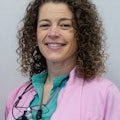 Jessica Atkinson, MEd, BSDH, RDH, FADHA
Jessica Atkinson, MEd, BSDH, RDH, FADHA
Jessica Atkinson, MEd, BSDH, RDH, FADHA, is a dental hygiene educator, clinician, and advocate dedicated to advancing the profession through innovation and education. She combines her clinical expertise and love for education to create engaging, practical learning experiences. Jessica is an Associate Professor and Senior Clinic Coordinator at Utah Tech University, co-host of A Tale of Two Hygienists, and CEO of HYGIENE edgeUCATORS, where she develops continuing education for educators and clinicians. She co-founded Hygiene Edge, a platform with over 100,000 YouTube subscribers. Recognized with the Element Award and Outstanding Service Award, she is a Fellow of the ADHA and past president of UDHA.
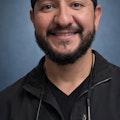 David Torres, CRDH
David Torres, CRDH
David Torres, CRDH, cohost of A Tale of Two Hygienists, is an experienced dental hygienist with over a decade of clinical expertise, specializing in patient education, preventive care, and the integration of modern dental technologies. Known for his passion for teaching, campus recruiting, and coaching, David is dedicated to elevating patient experiences while helping dental professionals improve efficiency, workflow, and long-term success.