Beyond the scaler: The power of teamwork in periodontal care



Episode highlights
- Rethinking non-surgical periodontal therapy: Dr. Sheldon explains what led him to move away from a surgery-first approach and give his hygienists the opportunity to develop their skills.
- The value of visualization: Explore how periodontal endoscopy helps clinicians see calculus and challenging root anatomy that can be difficult to identify through tactile instrumentation alone.
- Knowing your clinical limitations: A discussion about the challenges of conventional scaling and root planing, fractured calculus, and why visual confirmation matters.
- Building a stronger dentist-hygienist partnership: Learn why shared protocols, a trial period, consistent communication, and mutual trust are important when developing a successful clinical team.
- Creating a better patient experience: Dr. Sheldon shares how his practice approaches comprehensive diagnosis and treatment planning, helping patients understand the bigger picture before making treatment decisions.
Episode Description
What if you could actually see what you're trying to remove beneath the gingiva? For dental hygienists, achieving root cleanliness in deeper periodontal pockets can be challenging, especially when working around complex root anatomy, furcations, and areas that are difficult to access. Dr. Lee Sheldon joins Dave Torres and Jessica Atkinson to discuss how his approach to non-surgical periodontal therapy evolved over decades of clinical practice, including the role of periodontal endoscopy in helping hygienists visualize root surfaces and improve the precision of their instrumentation.
Dr. Sheldon also shares the story behind his commitment to non-surgical periodontal care, the importance of giving hygienists room to develop their clinical skills, and why a strong dentist-hygienist relationship can make such a difference in patient care. From learning to work with an endoscope and understanding the limitations of tactile instrumentation to establishing consistent office protocols and creating a more comprehensive new-patient experience, this conversation offers plenty for hygienists to take back to their practices. The biggest takeaway? Technology matters, but so does teamwork, curiosity, and being willing to keep learning.
A Tale of Two Hygienists — Episode 564
We've got a very, very high-tech practice, but the biggest tool is listening.
- Dr. Lee Sheldon
Rethinking periodontal therapy and the dentist-hygienist relationship — 01:00
Dave Torres: Welcome back, listeners, to another episode of A Tale of Two Hygienists podcast. I am so excited today with our guests. But before we get started, Jess, I have something fun for you.
Have you realized, most specifically this whole week, that I've gotten more energy the more energy we put out, right?
Jessica Atkinson: You're experiencing, like, the symbiosis of energy exchange.
Dave Torres: I'm starting to feel that. Yes. Either that or just put me in the sun, and I can just, like, beep, beep, beep, beep. But I'm so excited to be able to talk to our guest today.
Jessica Atkinson: I am thrilled to be here on the exhibit floor with Dr. Lee Sheldon because we're going to talk about something very near and dear to my heart, which is nonsurgical periodontal therapy and the care of our patients, and the relationship that there is between a dentist and a dental hygienist.
I'm going to have him introduce a little bit about himself, and we're going to get into it.
Dr. Lee Sheldon: Boy, is it a relationship. I'll tell you, Jess, that has been the biggest part of my career.
I entered dental practice in 1980, really, in private practice. I graduated from dental school in '75, so I've been there for a while. I think the one thing that I learned very early is that the relationships, not just with your patients but with your staff members, make all the difference in the world.
So we're talking about dental hygienists today. We're going to talk about what dental hygienists can do, what dental hygienists have done for my practice, and how that's created a practice that grew from a single periodontal practice to now a four-doctor practice, where I'm kind of in there now.
Jessica Atkinson: You want to be?
Lee Sheldon: Well, pretty much. I've been doing only examinations and treatment plans for the past 11 years.
We've got a board-certified periodontist doing the thing that I used to do. My son is a general dentist, and he's doing his thing. And we have a third general dentist in there now. And I kind of am in there just saying, "Wow, look what this has become."
Jessica Atkinson: I bet that feels good.
Lee Sheldon: Yeah, it does.
Jessica Atkinson: So when you say, "Look at what this has become," where did it start?
Lee Sheldon: It started as a single periodontal referral practice at 2223 Sarno Road, Melbourne, Florida. We used that same building for quite a while. It started off as a 1,000-square-foot building, became a 2,000-square-foot building for my hygienist and me. And then we ended up with three dentists practicing in that same six-operatory practice for almost 10 years.
Now they've said, "All right, what Dad's built was good enough." Now they've got a big, multi-operatory practice, much bigger than where we were. We just moved into that building less than a year ago.
Jessica Atkinson: Well, congratulations.
Dave Torres: Thank you. How has that teamwork effect happened? If we go back to the early stages, being able to look at hygienists and the relationship around that...
I work with my brother. He's a dentist as well, right? And he really looks at me and he's like, "Dave, you've got the perio part of it. You tell me what your limits are. Do you need me to do anything more than that? What instruments, what tools do you need to kind of focus on your specialty?"
When you look at your hygienist back then, or even the partnership that you guys have now, what are some of those pivotal things where you're like, "This is what's working for us"?
Finding your clinical philosophy and learning to work as a team — 04:43
Lee Sheldon: I think I had to discover who I was before I could discover who you would be or who my hygienist would be.
You graduate from school thinking you know everything. You've heard this before, and I'm sure you've heard this from other dentists on your podcast. You think you know everything, and it isn't too long before you find out that you don't.
For me, it was three months after I got into practice. I said, "Gee, I think I chose the wrong profession."
And when I did, I discovered that perio, the way it was taught, and perio, the way I felt it needed to be practiced, just didn't make any sense to me.
I graduated at a time when three-dimensional positive osseous architecture was the rule. In other words, the bone has to follow the gum. And so I was erasing good bone. I said, "Gee, that didn't make any sense."
So I had to discover who I was first. I had imagined and invested in a new home, had a baby, had a new practice, and I tell my wife three months later, "I think I chose the wrong profession."
Jessica Atkinson: Fast-forward, she's still your wife.
Lee Sheldon: She's still my wife.
Jessica Atkinson: This ended well. This ended well.
Lee Sheldon: That's right. So there was a lot of discovery to be made. I continued to practice perio and continued to do some of the things that I needed to do in order to be able to make things work while I discovered a lot of other things outside of medicine and dentistry.
I discovered different aspects of care. I learned TMJ, but I didn't learn TMJ from a dentist. I learned it from a clinical psychologist who said clinical psychology doesn't work for this. And so I got a little bit of education in nutrition and homeopathy and physical therapy and chiropractic, as well as applying those principles.
Very early, I found out I needed to broaden myself in order to be valuable, first to myself and then to my patients.
That led me to Dr. Perry Ratcliffe. Dr. Perry Ratcliffe was a periodontist in Scottsdale, Arizona, and I had gone to a practice management lecture by somebody who was a big practice management guru at that time, Omer Reed.
Omer Reed introduced us to his periodontist, who said we don't need to be cutting gums.
What he was doing was packing retraction cords, first filled with citric acid solution, retraction cords like he would use for crown and bridge. Then he would take out those retraction cords, but he wouldn't do it; the hygienist would do it.
Then the hygienist would pack retraction cords soaked with tetracycline, both of which are acidic—notice we're talking about acid 40 years later—but what it did was retract the gum tissue in such a way that the hygienist could now see down the root surface.
So I saw what his hygienists were doing. I brought one of my hygienists with me. I brought Barbara with me, and we went to Perry's office and saw what was going on. Talk about a development of teamwork. You know, it was Barbara and me together seeing what was going on, and Rebecca, who's the main hygienist who's carried me through my entire career. I saw what was going on at the lecture as well.
The decision to focus on nonsurgical periodontal therapy — 08:12
Lee Sheldon: So imagine what occurred when we were having a Christmas party right after the time that Barbara and I went to Scottsdale. We had a Christmas party, and I made the declaration. I said, "Next year, we're doing only nonsurgical periodontal therapy. We're going to charge our patients surgical fees. And if they need surgery, I'm going to do it at no charge."
Jessica Atkinson: Dr. Sheldon, this is music to my ears because I think we are sleeping on the efficacy of nonsurgical periodontal therapy done well.
Lee Sheldon: Yes, we are. And "done well" is where we graduated to.
How many periodontal surgeries do you think I did in that eight-month experimental period of time? I did four isolated periodontal surgeries in a total periodontal practice.
Jessica Atkinson: No way.
Lee Sheldon: That was it. It gave me the opportunity to observe. It gave me the opportunity to work with patients. And it gave our hygienist the opportunity to grow in a way that they'd never grown before.
And then we learned that the body knows how to heal. We don't have to create an environment that duplicates the gums by erasing bone. The body knows how to heal.
So that was the beginning. If you were talking about relationship building, it was the relationship building and the pride that we all took in each other and the support that we were able to give each other along the way in order to be able to get that result at that time.
Jessica Atkinson: I'm just thinking of a patient, just having somebody invest in you. Because as a patient, you often are told the story that you're going to be investing in your health, which you are obviously when you're making these decisions to better your health.
But going to a practice and having someone say, "We are investing in you by doing this protocol. And if this doesn't work with us working all together as a team, then we'll go in this direction for free."
Free? I mean, I want to come to Florida. I want to come to Florida and see what you have going on.
I'm thinking education here. I'm thinking of what changed as far as your nonsurgical periodontal therapy approach from what you were doing before Christmas and then what you were doing after Christmas based on what you learned in Arizona.
Lee Sheldon: It certainly gave our patients and our therapists the opportunity to do things differently from the way they did it before.
And don't forget, we're talking about 1988. In 1988, osseous periodontal surgery was the rage, although we had Dr. Ramfjord, who was proposing nonsurgical therapy as being a viable option, or at least the modified Widman flap. We didn't have to erase all those bones. So that was the controversy going on at that time. We weren't really talking that much about nonsurgical periodontal therapy.
When I saw Perry Radcliffe, and Perry Radcliffe at that time, he was 70. I used to think that was old, by the way.
Jessica Atkinson: Yeah, the new 30.
Lee Sheldon: So when I saw what Perry Radcliffe and his hygienist were doing, it just at least opened the door. Now, I only opened that door for eight months. I should have gone farther than that. But at that time, guided tissue regeneration was coming in, and I'm a surgical guy. I wanted to learn, I wanted to grow bone and put it in membranes and do all those types of things.
It is cool. And so I abandoned the nonsurgical approach, at least from that perspective, for another 13 years until I made that other discovery. We're going to talk more about that today, and that's periodontal endoscopy.
And then once we started with periodontal endoscopy in the year 2000, that was essentially a big shift in my periodontal career.
Periodontal endoscopy: The difference visualization makes — 12:10
Jessica Atkinson: I'm seeing a theme. You go to Arizona, they're retracting the gingiva with cord. And then the aha moment was, "I can see."
And then you fast-forward to the year 2000. What you're telling me is the second biggest shift in your practice as far as nonsurgical periodontal therapy was, "Oh, the periscope," which is, "I can see."
Lee Sheldon: Yeah.
Jessica Atkinson: So would you say that the biggest change in what was good periodontal therapy to now great periodontal therapy, as far as outcomes are concerned, is the ability to see?
Lee Sheldon: It is the ability to see. I mean, what Perry taught me was that at least we can give our hygienist somewhat of an ability to see. But still, we're looking with mirrors and with lights and trying to put the things in the right place.
Jessica Atkinson: And our imagination. I can think to my morphology. I can say, "Okay, I'm on tooth number 13. I know I'm going to have a fossa here." I know, you know, I'm in my mind going, "Okay, this is going to go into a concavity."
But I can't see that. I can only transfer what I know didactically into a clinical scenario. I wish everybody's tooth looked exactly the same, but I haven't found that.
And so I'm curious about what this new addition did to your already thriving protocol of, "Hey, we're going to try nonsurgical periodontal therapy and do it really well, and then look into surgery." Tell us more about that.
Lee Sheldon: Well, I think you bring out the fact, Jess, that you can't see on the distal of number 13, or we can't see into a furcation. Even if we put retraction cords in, we can't see.
And so the crude scope was available at that time. It was an analog scope. It means that you were seeing shadows; you weren't really seeing calculus.
And we talked about Rebecca. Rebecca was the one who was my lead hygienist for well over 30 years. And so Rebecca and I talk about this when I lecture. We've interviewed Rebecca now in retrospect about what it was like at that time.
And so she placed the camera, and the camera is only a one-millimeter camera. It goes down into the periodontal pocket, and then she could see it. Once she saw, whether it was seeing into the furcation or the distal of tooth number three or whatever it was, she said, "Now I can see it. Now I need to figure out how to get it out."
And so there were times, particularly at the beginning when you're learning something new, and there weren't very many people doing it.
Jessica Atkinson: There still isn't.
Lee Sheldon: No, there isn't. I hope we're getting to the point where we understand where visualization is important because the studies were done in 1981. Roger Stambaugh did a study with hygienists, and this study essentially said, "Okay, hygienists, you have as much time as you want to scale and root plane a tooth, and we're going to take these teeth out anyway for prosthodontic purposes. So now we're going to be able to look at these teeth and see how well you do."
And Roger and the hygienist took as much time as they wanted, which was upwards of 25 minutes per tooth. Some 45 minutes per tooth.
Jessica Atkinson: Listen, I feel pretty good. I feel pretty confident in my skills. I would say high 90% of the time. There are sometimes that I'm like, "I don't know if I got that off." And then you take that postoperative radiograph with what's available to you, and it's still there.
I can't imagine somebody taking a tooth out and being like, "Look at this. Look what you thought you got off." I'm curious what the results were of that.
Lee Sheldon: The number was predictably over a—not even predictably—that you were able to get most of the calculus off down to a level of 3.73 millimeters. Beyond that, it was a crapshoot. The best they found was four millimeters. Beyond that, there was calculus still left on the root surface.
Learning to use the scope and developing clinical confidence — 16:55
Lee Sheldon: I'm in a periodontal practice. I don't get to see very many 3.73-millimeter pockets. And so now Rebecca's looking down six-, seven-, eight-, nine-millimeter pockets. You say, "I can see it, but now I've got to figure out how to get it out."
And, you know, there were tears that happened when you come into your boss's office. And all I did was pat her on the shoulder and say, "You can do it. We're not going to charge the patient any more money. Do it and get it done."
And so it didn't take long, a few months. I mean, endoscopy is a new science, and unfortunately, it hasn't caught on yet. But it is. It's catching on now. You have to learn with your mirror hand to put the scope, the camera, down into the pocket, and with the other hand, work.
Jessica Atkinson: It's indirect vision on steroids. And I think maybe that's one of the hurdles, is that indirect vision on a mirror takes a while to master. And then you say, "Well, okay, indirect vision compounded with you're looking at a camera and a screen, and then you're using your instrument."
I'm sure that's probably one of the hurdles. How do you translate that?
Lee Sheldon: It is. It's a different hand-eye coordination. Now the screen is your eyes. So, yeah.
And when you see our hygienists doing it, now we have three really, really capable hygienists. Rebecca's retired.
Jessica Atkinson: Congratulations, Rebecca.
Lee Sheldon: Yes, darn right. I hope she hears this. First of all, don't think that you're going to be ladylike or manlike when you're doing this procedure. You're like this, and I am doing this with my hands up.
Jessica Atkinson: It's a little bit like a bird about to take flight.
Lee Sheldon: Pretty much. And getting this done. But you get better and better and better at it. You find out what instruments work well, what instruments don't. You find out that, I hate to say it, you actually use the point of the Cavitron tip in order to be able to...
Jessica Atkinson: But you can because you can see.
Lee Sheldon: That's right.
Jessica Atkinson: So, I mean, you know, when we teach, we tell the student that the last three millimeters of the side of the ultrasonic tip, right, to preserve the tooth structure.
But you can use the tip of an ultrasonic on calculus. The problem is that I'm teaching people that we can't see where the calculus necessarily is.
But if I can see, then I can tap on that calculus with the tip, knowing that I'm not going to be damaging the root surface because I can see where I'm going. I can make sure that, yeah, that is calculus, not root surface.
Lee Sheldon: Yeah. And surprisingly, calculus—remember you were talking about checking the radiograph? I gave a lecture yesterday, and I have a case where Jessica, my Jessica, or our practice Jessica, was doing the discovery. It was on the distal of tooth number 19.
And she saw this big piece of calculus. Then at the lecture I demonstrated, "Here's what the radiograph looked like." The radiograph looked completely smooth, and there's this big wad of calculus that's there.
You know, if it shows up in the radiograph, it's there. But there are so many cases where it doesn't show up on the radiograph.
In fact, the majority of cases, it doesn't show up on the radiograph. You need to do it by visual inspection. That's what Roger Stambaugh showed his hygienist in 1981. And that's where we are today.
Dave Torres: It holds true today.
Building a productive dentist-hygienist partnership — 20:32
Dave Torres: I want to double-click a little bit on Rebecca, or in fact, Jessica, right? There are hygienists listening out there who are like, they are the Rebecca. But how do they meet their doctor, right? How do they meet their Dr. Sheldon?
And I want you to share with us that relationship. There's no way Rebecca walked in and, like, boom, it was a match made in heaven, right?
But I notice and sense from you that there was constant feedback, excitement about going out there, not being perfect, but learning from each other and evolving together.
How do hygienists, or even dentists listening to this right now, work together and level up all those skills?
Lee Sheldon: I think it's important, and it has to be the right fit. You're right. And maybe the majority of the time, it's not going to be the right fit.
I mean, after all, look at when I was an employer. I was an employer up until about six years ago. When we would bring staff members in, you'd do the interview, or you might even do some of the tests to see if it's going to work out, whether it's compatible.
Tests don't work. It is that trial period, that time when you're working together and you say, "Let's put it together for three months." And during that time, you need to have your protocols written down. Everybody needs to know where they're expected to be and how to do it.
What's step one? What's, you know, for every one of our periodontal maintenance visits, we have three hygienists. All three hygienists take the same seven steps so the patient has the same experience.
Well, that is for any procedure. If I were doing a dental implant, for example, there's step one, step two, step three, step four. We don't want the assistant running out and getting an instrument that I might need. That means I've done something wrong. We haven't planned it correctly. So I think the doctor first has to have the plan in place.
Then the next step is that the staff member, whether it's a hygienist or anybody else, has to be able to read that plan, assimilate that plan, and do it. And some can, and some can't.
Jessica Atkinson: Got to drink the Kool-Aid, if you will.
Lee Sheldon: Pretty much. And I have my own Kool-Aid, which is different from others. That's the reason I'm speaking at RDH Under One Roof.
Jessica Atkinson: We like your Kool-Aid. We like your Kool-Aid.
Lee Sheldon: It's fun. By the way, this meeting's a ball.
Jessica Atkinson: It's a great time. Great time.
Further reading: Dr. Lee Sheldon on the hygienist's role in periodontal healing
How hygienists can introduce periodontal endoscopy to their practices — 23:00
Jessica Atkinson: I'm thinking about finding the right place to be, right? And so, say I find my Dr. Sheldon, but he hasn't yet heard about a periscope—but I have. Or endoscope, whatever word you want to use there. Similar.
Dave Torres: They haven't seen.
Jessica Atkinson: They haven't seen it. They don't know about it. It's not an inexpensive ask.
Lee Sheldon: Correct.
Jessica Atkinson: So what advice would you have, seeing the efficacy of an instrument like this? What advice would you have to anyone listening, dentist or hygienist, to adopt this modality? Like, how would you go about it? I want one. I want one. I want to use it. I want to be doing it. I want to be eradicating oral disease, and I want to be doing that without...
Dave Torres: Being part of a study that tells me that I missed a bunch of calculus.
Jessica Atkinson: That might hurt a little, but I'm willing. I'm willing to become better. You know, I'm willing to see where I'm missing. It might be the distal of 13 that I just can't get.
Lee Sheldon: Yeah, I think there's a lot of material available. Certainly, the endoscope that's being manufactured right now is by PerioView. And you would go to the PerioView site and say, "Here it is." You could go to my material.
Jessica Atkinson: What switched you onto it, though? What was the thing where you were like, "I'm going to do this"?
Lee Sheldon: It was, at that time, fairly easy. I looked at a scope. I said—and by that time, I already knew that I didn't like what was going on in perio—so I went to an American Academy of Periodontology meeting and said, "Oh, good, there's a camera. Yeah, that's a good idea. Let's buy it." So that was for me.
If we're talking about a hygienist who's trying to turn the person on, there is a number of resource materials available which you can get at perioview.com or perio-view.com, or go to my YouTube Channel to see some videos, which is, by the way, @DrLeeNSheldon.
So you can see some of that material. But I think more than that, the hygienist has to first understand that he or she can't get into that area and remove that material.
Jessica Atkinson: Pretty much.
Lee Sheldon: And so start to do some research yourself to show what the Stambaugh study shows, and bring it to the doctor and say, "This is my limitation right now. You want me to scale and root plane a seven-millimeter pocket? Well, I can scale and root plane all I want, but unless we get to root cleanliness, I'm really not doing the job."
After all, calculus fractures from itself. Calculus does not come off the root surfaces; there's always calculus left. There's a lot of data. If we go to some of the people that I've done some research or done some papers with, Dr. Charles Cobb, Dr. Stephen Harrell, if you look at their material, you'll see that.
And that way you're giving your doctor, "Here's the scientific data that shows what really happens."
I will give you another name for this fractured calculus. It's a study done by Dr. Charles Cobb and Dr. John Sottosanti, that was done in 2021 in the Journal of Periodontology, which shows by photoelectron micrograph what occurs and how fractured calculus occurs.
So now you're showing the doctor the fact that, hey, this calculus isn't coming off. And when I see a nice piece of green or black calculus coming out, I've only started the process, not finished the process. You start to show the doctor some scientific data, then the doctor can look at it and say, "Okay, now I understand where you're coming from."
Jessica Atkinson: Did it increase the time? Did it increase how long it takes to do a quadrant of them?
Lee Sheldon: Yeah, it does. It does. It's a learning curve like anything else.
We don't do standard scaling and root planing anymore because once the hygienist sees what, in our case, she—sorry, Dave—but she has been missing...
Unless you're going through this—by the way, we did have a male hygienist—but unless you can see what you're missing, then you don't know what you're missing. I mean, it's like—and once you see it, you can't unsee it. We've heard that a lot.
So I think that there is that discovery process.
But to your point, we just had two hygienists lecturing at this meeting today who bought their own scopes. They buy their own scopes.
Jessica Atkinson: Say it again.
Lee Sheldon: And they invest in themselves. And then they can show doctors and other offices what they can do. And there are a number of hygienists around the country who are doing this. And they're going to general offices, they're going to perio offices, saying, "I can do this in order to be able to help your patients."
Imagine what occurred when Rebecca got good. Don't forget, at that time it was, "scaling and root planing, wait six weeks, reevaluate. If it's bleeding, has a pocket, I'm going to do surgery."
And now I reevaluate Rebecca's material after she got done, six weeks later, and I'm saying, "You don't need surgery. You don't need surgery. You don't need surgery."
We're the biggest dental implant practice in Brevard County, Florida, according to our sales rep. And so you don't have to be nonsurgical. I've done grafts of all kinds of them. I've done ramus grafts. I've done chin grafts. I've done tibia grafts. I'd love to do surgery.
But this is a chronic degenerative disease, and what we're doing is getting to the heart of the disease, which very often is calculus, except in an aggressive case.
Jessica Atkinson: Removing the harboring location, the "hotels." I tell students, I'm like, you've got a biofilm community, and the hotel is still there. They're going to hide in the hotel. You've got to get rid of the hotel.
Dave Torres: It's true.
Jessica Atkinson: You've got to get rid of that.
Lee Sheldon: Yeah.
Listening: The most important tool in the practice — 29:16
Dave Torres: You come from years, decades, of constantly not being, dare I say, satisfied about standards, right?
What are some of the things that are exciting, that revitalize your passion for dentistry, partnership with hygienists? Any other equipment or tools that you can see that you're like, "I can't wait for dentistry to kind of level up"?
Lee Sheldon: We've got a very, very high-tech practice, but the biggest tool is listening.
Jessica Atkinson: Oh, I like that.
Dave Torres: I just want to put them in my pocket, and you just take them everywhere with me.
Jessica Atkinson: Everybody has that. You don't have to pay anything.
Lee Sheldon: Our new patient experience is, and we're very proud of this, a two-hour experience. No, you don't come in for an examination or cleaning. You come in for an examination and treatment plan. It's a two-hour experience.
My assistants are very well trained in diagnosis and treatment planning and all the things they're not supposed to be able to do. Yes, I want you to be able to do it. I want you to be able to understand it. I want you to be able to look at an X-ray and be able to identify things for me and identify things for the patients.
So the patient will come in, and they'll see the assistant for 40 minutes. They'll do the blood pressure, medical history, and that type of thing, take X-rays, CT scan. Everybody gets a CT scan in our office because I can't see things unless I see it in three dimensions. I can't see alveolar width. I can't see why a patient is getting a recession, for example. There are a lot of things that I can't see. I can see apical lesions a lot better with a CT scan than I ever could with a periapical radiograph.
And so the assistant has the opportunity then of working with a patient. By the way, the patient comes in for, right now, it's $99. But if they're referred, it's $50 to charity. And they write a check to one of the six charities in our charitable giving campaign. And so all of a sudden, that's different. And the patient is seeing that as being different.
They come in knowing they're going to have a two-hour experience. They're going to spend time with a knowledgeable assistant. And you don't have to be a trained assistant to be a knowledgeable assistant. Just spend some time in our office, and they become more and more knowledgeable.
So I can take any assistant who wants to do it and get them to the point where they are diagnosing, and they can assist the patient in determining which treatment plan they want.
Let them go through that to our experience, understand what the options are, whether it's the high-end option, which is whatever we need to do for perio plus restorative dentistry, because we want to give the entire picture to the patient.
Now the patient leaves with an entire picture that they've never had before. They don't know that this is the sequence of events that can occur.
My motto is, "The most expensive dentistry is the dentistry that has to be redone."
And so we don't want to just do the emergency, do the root canal with caries all over the place, and say, "Oh, gee, I got the root canal done, couldn't afford the crown, and by the way, there's caries all over." It may not make sense for the patient. The patient may need to have that tooth extracted because the budget isn't there for all of the things that need to be done. So we want the patient to have the entire experience.
And that's, if we're talking back to staff members, staff members know because they have the confidence when a patient comes in, they're going to get the complete picture. We're not going to just do an isolated procedure.
Yes, we'll do the emergency that needs to be taken care of, but we'll go through the entire plan first. And that way, the patient is confident and the staff member is confident.
My motto is, "The most expensive dentistry is the dentistry that has to be redone."
Creating a comprehensive new-patient experience — 33:00
Dave Torres: Is there any verbiage that you use, or how do you go about the whole new-patient experience without overwhelming the patient? Because at that point, I would imagine you have to be really bought in to the practice, to the team, to the referral, right?
But how do I—I'm thinking about my new-patient experience, and I use verbiage like, "We'll go as fast as you want to go, go as slow as you want to go. But this is a relationship that we have together for your health."
Lee Sheldon: I think so. I think, first of all, I'd have to go back to our front desk and say, "What do you say?" But I think as soon as you say, "You're going to have a two-hour experience here with the doctors and staff. You're going to get X-rays and CT scan for less than $100," I think that sets it apart right away.
"I've never had a two-hour examination in the doctor's office. What's going to occur?"
Well, you know, people go to the Mayo Clinic for a reason, too. They want the comprehensive diagnosis and treatment plan. It may not be as much the verbiage as the intention or the confidence behind the verbiage, where all of our assistants have experienced what our patients experience.
And so they see what the difference is. A lot of our assistants were experienced in dentistry, others weren't, but they're seeing what the entire experience is, and then they can project that confidence when they're talking with that new patient.
Jessica Atkinson: This is all before they see the dentist or the hygienist?
Lee Sheldon: Yeah.
Dave Torres: Wow.
Lee Sheldon: Because, I mean, the person who answers the phone is really the most important person in your practice because that person answering the phone is going to determine whether the patient even makes an appointment with us or not.
Dave Torres: Yeah. And that's a beautiful thing because oftentimes we get the misconception that more people, more revenue, right? But you're able to find a symbiotic relationship with your providers, your assistants, and the person in the front, setting the tone of a two-hour appointment to have a long-term success plan.
Lee Sheldon: Correct. That's right.
Finding Dr. Lee Sheldon and his educational resources — 35:00
Jessica Atkinson: And if you'd like another two hours of talking to Dr. Lee Sheldon, where can our listeners find you?
Lee Sheldon: The best way to find me right now—or there are a few. First of all, if you write to me at [email protected], you can email me.
If you want to see some of the material that we have, go to leesheldonlectures.com, and you'll see some of the material that's posted, which talks about endoscopy as well as treatment planning.
Jessica Atkinson: Thank you, Dr. Sheldon. I've got lots more questions, so I will keep them and write them and talk to you at another time. But thank you for being with us today.
Lee Sheldon: Thank you, Jess. Thank you. Thank you so much.
About the Author
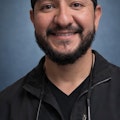 David Torres, CRDH
David Torres, CRDH, cohost of A Tale of Two Hygienists, is an experienced dental hygienist with over a decade of clinical expertise, specializing in patient education, preventive care, and the integration of modern dental technologies. Known for his passion for teaching, campus recruiting, and coaching, David is dedicated to elevating patient experiences while helping dental professionals improve efficiency, workflow, and long-term success.
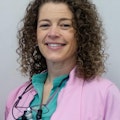 Jessica Atkinson, MEd, BSDH, RDH, FADHA
Jessica Atkinson, MEd, BSDH, RDH, FADHA, is a dental hygiene educator, clinician, and advocate dedicated to advancing the profession through innovation and education. She combines her clinical expertise and love for education to create engaging, practical learning experiences. Jessica is an Associate Professor and Senior Clinic Coordinator at Utah Tech University, co-host of A Tale of Two Hygienists, and CEO of HYGIENE edgeUCATORS, where she develops continuing education for educators and clinicians. She co-founded Hygiene Edge, a platform with over 100,000 YouTube subscribers. Recognized with the Element Award and Outstanding Service Award, she is a Fellow of the ADHA and past president of UDHA.
Related
 2006 Rd Hmcc P01
 2207 Rd Hsir P05