You dream it, I'll make it: The clinical and engineering team behind modern ultrasonics
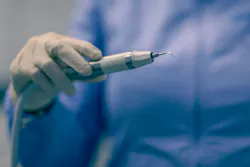



Key Highlights
- The best innovations in dentistry happen when clinicians and engineers work together to solve real-world problems.
- Ergonomics matters: thoughtful instrument design can reduce strain and help support a longer, healthier clinical career.
- Understanding insert wear, adaptation, and ultrasonic performance can help clinicians work more efficiently and effectively.
- Curiosity is a professional skill—many advances in dental hygiene begin with someone questioning the way things have always been done.
- Emerging ultrasonic technologies could improve portability, infection control, and access to care in underserved environments.
Episode description
Many dental hygienists know Noel Paschke as an educator, author, and champion of ultrasonic instrumentation. In this episode, she joins her husband, ultrasonic engineer Richard Paschke, to share the story behind the partnership that earned them the nickname "Mr. and Mrs. Ultrasonics."
Together, they discuss how clinical feedback shaped product development, why some of the most successful innovations begin with a simple conversation between clinicians and engineers, and how decades of collaboration led to inventions that many hygienists use every day without realizing who created them. From Rich's unexpected path from Air Force radar systems to dental engineering, to Noel's influence on product education and clinical design, this conversation offers a rare look behind the scenes of the tools, technology, and people shaping dental hygiene. The episode also explores emerging ultrasonic technologies, ergonomics, and why listening to hygienists remains one of the most powerful drivers of innovation in dentistry.
A Tale of Two Hygienists Podcast – Episode 543
Meet Mr. and Mrs. Ultrasonics
David Torres:
Welcome back to another episode of A Tale of Two Hygienists podcast, episode 543. I'm so excited for today's guests because we have the dynamic duo. Just like ultrasonic aerosols, there's some love in the air, and I can't wait to talk to this couple. Can you tell us a little bit about our guests today, Jess?
Jessica Atkinson:
Well, we are here with Mr. and Mrs. Ultrasonics and definitely producers of love aerosols, for sure. I adore these two, and we're going to hear more about how they became known as Mr. and Mrs. Ultrasonics.
You may have seen the recent articles this year in RDH magazine about Sonicare, so you might already know a little bit about them. Many of you know Noel more than you might know Rich because she is incredible.
She was the first dental hygienist at Johns Hopkins Hospital and the first appointed to the medical school faculty, which is a big deal. That's a really big deal. She also taught at the University of Maryland Dental School, where students selected her as Instructor of the Year. She spent many years in corporate dentistry as education director at three international companies: Dentsply, Philips Sonicare, and Acteon.
Not one, not two, but three international companies. She was also the recipient of the Danube Award and the Sunstar Award of Distinction, as well as a patent holder and inventor.
Together, they are Mr. and Mrs. Ultrasonics and writers for RDH magazine.
Let's hear a little bit more about Rich because he is just as impressive. Rich, how did you get involved in ultrasonics? What exactly is an ultrasonic engineer?
Rich's journey from the air force to ultrasonic engineering
Richard Paschke:
An ultrasonic engineer is basically someone who specializes in a very narrow frequency range of products. It can be diagnostic, it can be therapeutic. In my case, I specialize in non-radiating ultrasonics like dental instruments and dental units.
I started in government service when I was in the Air Force. I was trained as a microwave repairman, and later in my career I worked on heavy ground radar systems and was assigned to some very interesting posts. I was at the DEW Line, which stands for Defense Emergency Warning System.
Our responsibility was to detect and alert if there were any suspicious aircraft coming across certain lines.
This background allowed me to work in the government sector. My first job out of the Air Force was working with brilliant mathematicians, aerospace engineers, and physicists. I've been very lucky in that regard.
For those familiar with the movie Top Gun: Maverick, the SAM sites were a critical part of the defense system. One of my jobs was working on the guidance system of missiles that destroyed SAM sites.
Jessica Atkinson:
What's a SAM?
Richard Paschke:
A SAM is a surface-to-air missile.
In the movie, the SAM sites were located on mountaintops and stationary. During Vietnam, when I was developing this system as part of the team, these sites were movable and very tricky. They would turn them on and off so you didn't know exactly where they were until your jets were locked on and your pilots were shot down.
Our missile was called a Standard Missile anti-radiation missile, which meant, "Shut your SAM down, we don't care because we remember where you were." The second time they came on, we could triangulate them.
We saved a lot of lives in Vietnam with those systems.
Top Gun, James Bond, and family legends
Noel Paschke:
I actually have a funny story related to this.
When Rich and I first got married, our girls went to school and Richard told them that he had been in the Air Force. They extrapolated quite a bit of information from that and went to school telling everyone, "Our stepdad was Top Gun."
I was head of the PTA and people kept saying, "We heard about your husband."
I said, "Oh, isn't he a sweet man?"
And they said, "No, we heard he was Top Gun."
I had to explain that yes, he was in the Air Force, but no, he did not fly.
David Torres:
Did you have a cool call sign, Rich? Was it Mr. Ultrasonics?
Richard Paschke:
No, but it's interesting. My serial signing number was 007.
Noel Paschke:
The girls then went to school and told everyone their stepdad was James Bond.
We had some really good laughs over that.
Jessica Atkinson:
I mean, Noel, you've really done well for yourself. Top Gun and James Bond.
Noel Paschke:
Oh yeah. Oh yeah.
How they met
Jessica Atkinson:
I love the story of how you two met because it really leads into how you became Mr. and Mrs. Ultrasonics.
Noel Paschke:
Actually, we met through Dentsply.
I had recently been hired there. My role originally started as consulting work. I was doing table clinics on a new product that was being introduced, the Slimline insert.
At the same time, I noticed that their bibliography was somewhat outdated. I offered to update it and created an annotated bibliography covering ultrasonic literature from 1954 through 1994. It became a very powerful educational resource.
Eventually they hired me to run the education department, and that's where Rich and I really began working together.
Actually, we met before that. I was part of a focus group, although Rich has absolutely no recollection of me being there.
I must not have been very impressive.
But I did notice his socks. He wore really cool socks.
Richard Paschke:
Well, let me tell you about a time I did notice her.
Noel was lecturing at Phones University, and I had been assigned to support her. My plan was simple: bring the systems, set them up, make sure everything worked properly, and quietly sit in the back.
Instead, Noel got complete control of the audience. Then she suddenly announced that there was someone in the back from Kabataan who could answer any questions about the products.
I learned very quickly that if you're anywhere near Noel's vortex, you're part of the program.
You're not a standby participant.
If she's working, you're working.
We ended up having a wonderful conversation while waiting for a plane afterward, and that conversation really started everything.
From clinical problems to product innovation
Noel Paschke:
One thing I want to mention to new graduates is that what you're doing really matters.
If you're posting on social media, sharing your experiences, talking about products, companies notice that. I have a young dental hygiene friend who recently received a full-time position from a company after posting about their products on social media.
If you're interested in a corporate role, you may start out consulting or sharing your perspective online.
Companies really value people who can connect with their peers and connect with the profession.
You never know where it can take you.
David Torres:
What was it like working together? You've got missiles and military technology on one side and dental hygiene on the other.
How did that partnership work?
Richard Paschke:
Before Noel came to the company, most organizations used a top-down approach.
Marketing would come to engineering and say, "We need something to sell. Make it."
When Noel joined the company, everything changed.
We started observing clinicians. We asked hygienists what they needed, what wasn't working, and what problems they were trying to solve.
I remember walking into her office with a pad and pencil because customers were saying some of our inserts weren't adapting properly to the teeth.
I put the pad on Noel's desk and said, "Draw me the insert shape you need clinically. You dream it, I'll make it."
Noel Paschke:
That was transformative for me.
Before that, I had very limiting beliefs. I would think, "It doesn't exist, so it can't be made."
Rich changed that mindset.
One of the things he told me was, "The solution existed before the problem."
That idea was incredibly liberating.
If the solution already exists, then all I have to do is identify the gap and find where the need exists.
It completely expanded how I thought about innovation.
Keeper of my dreams
Noel Paschke:
A few years later, Rich did the sweetest thing. He wrote a poem for me called Keeper of My Dreams.
She then read the poem aloud to the hosts.
Richard Paschke:
I've held a lot of titles throughout my career, but when someone appoints you as the keeper of their dreams, that's a huge responsibility.
Jessica Atkinson:
I got emotional listening to that.
I love the idea that Noel is the keeper of your dreams, and you're the creator of hers. She has the dream, and you help make it actionable.
Together you've created something really special.
The products behind everyday practice
David Torres:
What's something you've created that many hygienists would recognize?
Richard Paschke:
One of my earlier designs was the first autoclave magneto handpiece called the Stair Mate.
At the time, concerns about sterilizing handpieces were becoming more prominent, and we developed a solution that delivered what clinicians needed.
One of my more recent projects involved insert wear.
People were trying to prevent inserts from wearing out, but that's not realistic because all metals wear. The goal is to understand the physics and design products that continue performing effectively throughout their lifespan.
That led to some interesting developments in insert design.
Noel Paschke:
Years before Rich and I met, I was using one of his inventions without knowing it.
As the hospital hygienist at Johns Hopkins, I worked alongside oral surgeons. One product I loved was the Power Matic because it allowed fingertip control. I didn't have to hunt around for a foot pedal in a crowded surgical environment.
Years later I discovered Rich had designed it.
Life in the ultrasonic lab
Jessica Atkinson:
What does a day in the life of Mr. and Mrs. Ultrasonics look like?
Noel Paschke:
We're both introverts and we're both geeks.
For us, a fun Friday night is going into Rich's lab. We still have an ultrasonic lab in our condo.
We enjoy looking at the patterns formed under video microscopes and studying how ultrasonic units behave.
One weekend Amanda Hill came over for dinner. Afterward we took her into the lab, and she was fascinated. She was laughing, pointing things out, and completely immersed in it.
For us, sharing what we know and love with other people brings us a lot of joy.
David Torres:
That sounds amazing. I want an invitation to the Batcave.
Noel Paschke:
You're welcome anytime.
Watching each other work
David Torres:
What I love about your relationship is how closely you observe each other.
Rich, when you watch Noel work clinically, what stands out to you?
Richard Paschke:
Watching Noel validates a lot of things for me as an engineer.
Many of the things she does seem small in the moment, but they matter. Observing those details has helped me become a better designer and engineer.
Noel Paschke:
Rich has watched me work so often that he'll notice things clinically.
He'll say, "That's interesting. It looks like you're struggling around the mesial line angles."
And I think, "Wait a minute. You're an engineer."
But he understands root anatomy, hand positioning, fulcrums, ergonomics, and adaptation.
He understands that an instrument should feel like a natural extension of the clinician's hand.
Looking ahead: The future of ultrasonics
Jessica Atkinson:
What products do we have to look forward to?
Noel Paschke:
We've got some exciting things coming.
Richard Paschke:
Imagine a handheld ultrasonic scaler that isn't tethered to a delivery system. It could have its own self-contained water source, potentially use medicaments, and be ideal for mission trips, military applications, or areas with limited infrastructure.
We've already received patents in Germany and Japan and are waiting for the U.S. patent process to be completed.
Another area we're working on is ergonomics.
One challenge clinicians face is cable torque and handpiece positioning. We're developing a swivel handpiece concept that could significantly reduce strain and improve usability.
Jessica Atkinson:
I am so excited about that. It sounds like a game changer.
Closing thoughts
Jessica Atkinson:
I'm incredibly grateful for both of you and for the way you've impacted our profession personally and professionally.
I hope hygienists take opportunities at conferences and meetings to thank the manufacturers and innovators behind the products they use every day. There are so many incredible people doing important work for our profession.
Noel Paschke:
Absolutely. Try the products. Talk with the people behind them. Show them some love.
David Torres:
Thank you both for being here.
Richard Paschke:
Our pleasure.
Noel Paschke:
Thank you.
About the Author
 David Torres, CRDH
David Torres, CRDH
David Torres, CRDH, cohost of A Tale of Two Hygienists, is an experienced dental hygienist with over a decade of clinical expertise, specializing in patient education, preventive care, and the integration of modern dental technologies. Known for his passion for teaching, campus recruiting, and coaching, David is dedicated to elevating patient experiences while helping dental professionals improve efficiency, workflow, and long-term success.
 Jessica Atkinson, MEd, BSDH, RDH, FADHA
Jessica Atkinson, MEd, BSDH, RDH, FADHA
Jessica Atkinson, MEd, BSDH, RDH, FADHA, is a dental hygiene educator, clinician, and advocate dedicated to advancing the profession through innovation and education. She combines her clinical expertise and love for education to create engaging, practical learning experiences. Jessica is an Associate Professor and Senior Clinic Coordinator at Utah Tech University, co-host of A Tale of Two Hygienists, and CEO of HYGIENE edgeUCATORS, where she develops continuing education for educators and clinicians. She co-founded Hygiene Edge, a platform with over 100,000 YouTube subscribers. Recognized with the Element Award and Outstanding Service Award, she is a Fellow of the ADHA and past president of UDHA.
 Noel Slotke Paschke, MS, BSDH, RDH
Noel Slotke Paschke, MS, BSDH, RDH
Noel is an award-winning former faculty at the University of Maryland Dental School and has led three international companies’ education departments, including Dentsply Cavitron, Philips Sonicare, and Acteon. She offers consulting and educational services through her company Ultrasonics Plus. Contact her at [email protected].
Richard Paschke, MS, BS
Richard is a dental ultrasonic engineer, mentored by one of the founding physicists-inventors at Cavitron. After a 30-year career at Cavitron and subsequently Dentsply, Richard started Paschke Ultrasonix, where he provides engineering services to many dental companies.
Together they are known as Mr. and Mrs. Ultrasonics.