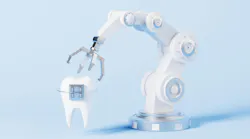
How saliva and AI are creating a new era of precision prevention in dentistry
Key Highlights
- The Saliva Movement is about building a smarter model of care that allows us to turn biological information into detailed, trackable patient insight.
- Longitudinal saliva testing identifies key salivary biomarkers that unlock personalized dental monitoring and faster disease detection.
- New advances in machine learning means that AI can identify and calculate complex information from saliva samples that may otherwise be missed, such as microbial ratios, multiple biomarkers, and more.
- Understanding the benefits of salivary testing and AI, as well as the limitations, is essential to the future of early detection and personalized patient care.

Several years ago, someone close to me developed severe pain on the tip of their tongue along with fatigue, inflammation, and other symptoms that did not seem connected. Around the same time, I noticed my own salivary flow changing during clear aligner therapy and, very consistently, after my morning coffee. Once I noticed it, I could not stop noticing it—in patients, colleagues, friends, and sometimes in the small pause someone takes (or I take) before swallowing.
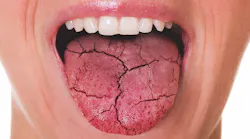
That observation launched the first article in this series: that saliva is not merely moisture, and dry mouth is not merely uncomfortable. Saliva provides buffers acids, supports remineralization, protects tissue, influences microbial balance, assists digestion, and participates in immune defense. It also carries a remarkable stream of biological information.
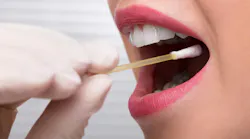
In the second part of the series, we moved from “why saliva?” to “how?” We explored collection methods and a growing menu of tests for caries and periodontal risk, peri-implant disease, salivary function, inflammation, wellness, HPV, and oral cancer. In article three, we focused on one of the most meaningful applications: using emerging salivary genomic tools as an adjunct when “wait and see” no longer feels like a sufficient plan for a persistent or suspicious lesion.
Now it is time to pull the series together and look beyond any single test. The saliva movement is no longer simply about recognizing saliva’s importance or introducing new testing products. It’s about building a smarter, connected model of care that turns biological information into trackable patient insight. The real power of saliva is not only what one sample can tell us today. It is what repeated samples may help us understand tomorrow.
Why does longitudinal saliva testing matter?
Dentistry has traditionally been very good at snapshots. We record probing depths, capture radiographs, document lesions, note medications, and increasingly create detailed intraoral scans. These are important moments in time. But biology does not stand still between recare appointments.
Imagine that a patient’s salivary test shows an elevated inflammatory marker. That result may be useful, but it’s still one point. Now imagine we repeat the same standardized test after nonsurgical periodontal therapy, repeat that test again following a medication change, and again six months later. We layer those results with bleeding scores, pocket depths, caries activity, dry-mouth symptoms, health history, and serial intraoral scans.
Suddenly, we are not simply asking, “Is this result high or low?” We can ask better questions: Is the patient moving toward health or away from it? Did our intervention change biology? Is tissue breakdown accelerating even though the mouth looks relatively stable? Does this patient’s pattern differ from a population average but remain highly meaningful for them?
That is the difference between collecting data and creating insight. Researchers already describe salivary biomarkers as a potential key to personalized dental monitoring, particularly in periodontology, while also noting that methods and biomarker panels remain heterogeneous.1 The National Institute of Dental and Craniofacial Research is investing in salivary biomarkers and devices specifically to advance easier, faster disease detection and health monitoring.2 The direction is clear. The infrastructure and clinical standards are still catching up.
How does salivary diagnostic technology work?
Salivary products can look wonderfully simple from the operatory: spit, swab, ship, scan, or wait for a line to appear. Behind that simplicity may be several very different technologies. Some tests use culture or chairside chemistry to assess properties such as pH, buffering capacity, or flow. Immunoassays—including ELISA and lateral-flow formats—use antibody-based reactions to identify proteins, hormones, antibodies, inflammatory mediators, or other targets. Molecular tests may use polymerase chain reaction (PCR) or quantitative PCR to detect and measure selected microbial or human genetic material. Next-generation sequencing can characterize much broader microbial communities or nucleic-acid patterns. Proteomic and metabolomic platforms examine patterns across proteins or small molecules. Microfluidic and biosensor systems aim to move more of this analysis into small, rapid, point-of-care devices.3,4
Then comes the AI layer. AI does not make saliva magical, and it does not rescue a poorly collected sample. What machine learning can do is examine combinations and relationships that may be too complex for a human to calculate chairside: multiple biomarkers, microbial ratios, changes over time, clinical measurements, imaging, health history, medications, behaviors, and outcomes. It can help researchers discover which signals to pay attention to, help developers build risk models, and eventually help clinicians recognize patterns earlier.5
Think of the test as the instrument collecting notes. AI may help us hear the music — but only when the notes are accurate, consistent, clinically validated, and interpreted in context.
How can saliva and AI improve predictability, personalization, and precision prevention?
When longitudinal data, sound clinical judgment, and responsible AI begin working together, dentistry moves toward three connected promises:
-
Predictability. No responsible clinician should promise certainty. A better goal is improved predictability: identifying a patient’s changing risk trajectory sooner and estimating what may happen next with greater confidence. Serial data may reveal that inflammation is not resolving, salivary function is deteriorating, or a microbial pattern is returning before obvious structural damage appears.
-
Personalization. Population norms matter, but each patient also becomes their own evolving baseline. The preventive plan for a patient with low flow, high caries activity, new medications, and an acidic oral environment should not look identical to the plan for a patient whose main signal is periodontal inflammation. Personalization means selecting the right education, products, referrals, testing interval, recall strategy, and home-care support for the individual in front of us.
-
Precision prevention. This is the payoff: the right intervention, for the right patient, at the right time — before disease progression demands more invasive care. Emerging scholarship defines precision prevention around multimodal, longitudinal, context-sensitive data used to identify dynamic risk and guide individualized action.6 That is a major step beyond giving every patient the same laminated list of instructions and hoping for the best.
What can dentistry learn from Function Health?
Look at the consumer health market. Function Health offers a membership built around more than 160 annual laboratory tests, repeat testing during the year, clinician-reviewed insights, and results tracked in one place. Members can also add advanced imaging such as MRI or CT.7 To be precise, the imaging is not simply an MRI bundled into the base annual subscription; it is an available add-on. But the larger model is what matters: gather multiple kinds of data, repeat key measurements, organize them longitudinally, and help a person see change before symptoms force the conversation.
Now imagine dentistry’s version:
What if a patient’s longitudinal record brought together salivary flow and pH, microbial and host-response biomarkers, medication changes, periodontal findings, radiographs, intraoral photographs, and serial 3D scans? What if software could flag a combination of subtle changes — a shift in inflammatory markers, increasing recession or tooth wear on a scan, reduced salivary function, and a newly added xerogenic medication — and prompt the hygienist to investigate?
An intraoral scan shows us structure. Saliva shows us biology. The medical history provides context. The hygienist connects the dots.
This is not a description of one fully integrated, validated product sitting in every operatory today. It is a clinically plausible direction, and current AI research is already moving toward multimodal systems that combine structured records, images, radiographs, and biomolecular data.8 The opportunity is enormous, but so is our responsibility to separate what is available now from what is still emerging.
What are the limitations of salivary testing and AI?
Saliva is easy to collect but high-quality salivary data is not automatically easy to produce. Results can be affected by time of day, hydration, food and beverages, smoking or vaping, oral hygiene, recent dental treatment, collection technique, medications, storage, and transport. Standardization is essential if we want to compare one result with the next.3,9
We also have to understand the intended use. The ADA notes that saliva can contain candidate biomarkers including proteins, electrolytes, hormones, antibodies, and DNA or RNA, while cautioning that clinical evidence remains limited for many proposed uses and further validation is needed.10 Most tests do not independently diagnose disease. A risk score is not a verdict. An AI-generated flag is not clinical judgment. A salivary cancer-screening tool does not replace a complete visual and tactile examination, appropriate referral, or biopsy when indicated.
Why are dental hygienists essential to the future of salivary diagnostics?
When I teach teams about saliva and AI, I often see the same progression: first curiosity, then excitement, then the very practical question, “OK, but what do we actually do on Monday?”
My answer? Start smaller than the future described above. Choose one validated use case that fits your patient population. Learn the collection protocol well enough to perform it consistently. Decide before testing how a result may change education, treatment, referral, or follow-up. Document the result in a repeatable place. Retest only when the comparison will be meaningful. Track outcomes. Build language that helps patients understand risk without creating fear. And establish how your team will protect, access, and responsibly use the growing volume of biological and digital data.
Most importantly, become AI literate. Dental hygienists do not need to become data scientists, but we do need to understand inputs, outputs, bias, privacy, validation, sensitivity, specificity, false positives, false negatives, and the difference between an assistive insight and a diagnosis. If we do not learn to evaluate these systems, someone else will decide how they enter our operatories — and what our role will be once they arrive.
The profession is already looking this direction. The American Dental Association’s Oral Health 2050 initiative is building a roadmap for the next 25 years of oral health care, including major forces such as AI and emerging technology, wellness and prevention, the changing care-delivery system, and the future dental workforce.11 I am honored to contribute to that work as a task-force member, and I believe dental hygienists must be loud, informed, and present in these conversations.
Why us? Because we already live at the intersection of prevention, repeated measurement, behavior change, patient trust, and long-term relationships. We're often the first to notice the subtle shift, ask the extra question, compare today with six months ago, and translate science into something a patient can actually use.
The first age of saliva was about function; the next focused on testing. The new age — the powerful one ahead of us —will be about connection: connecting biology to structure, one visit to the next, the mouth to the body, and information to action.
We have the samples, and we’re building the technology. Now we need clinicians prepared to turn both into better prevention.
Dental hygienists, the ball is in our court. Let’s pick it up.
How can dental hygienists learn more about saliva and AI?
-
Attend a course on salivary diagnostics, AI, and precision prevention.
-
Ask your local association, component, school, or conference to bring in a saliva and AI course for your community.
-
Research available tests independently, including their intended uses, evidence, limitations, and clinical workflows.
-
Follow the ADA’s Oral Health 2050 initiative and look for opportunities to contribute to the profession’s future.
-
Start a conversation with your team about one salivary-testing application you could explore in practice.
References
1. Paqué PN, Herz C, Jenzer JS, et al. Salivary biomarkers as key to monitor personalized oral health. J Oral Microbiol. 2022;14(1):2124454. doi:10.1080/20002297.2022.2124454.
2. National Institute of Dental and Craniofacial Research. Salivary Diagnostics. Accessed September 7, 2026. https://www.nidcr.nih.gov/grants-funding/funded-research/research-investments-advances/salivary-diagnostics
3. Li Y, Ou Y, Fan K, Liu G. Saliva diagnostics: opportunities and challenges. Theranostics. 2024. https://pmc.ncbi.nlm.nih.gov/articles/PMC11610148/
4. Pathak S, et al. Multianalyte nano-biosensor diagnostics: advances through microfluidic and AI integration. Front Bioeng Biotechnol. 2025. https://www.frontiersin.org/journals/bioengineering-and-biotechnology/articles/10.3389/fbioe.2025.1715719/full
5. Adeoye J, Su YX. Artificial intelligence in salivary biomarker discovery and validation for oral and maxillofacial diseases. Oral Dis. 2024. doi:10.1111/odi.14641.
6. Iglesias-Pérez HD, et al. From remote screening to precision prevention: responsible multimodal AI for risk prediction and equitable oral healthcare. Front Oral Health. 2026. doi:10.3389/froh.2026.1878692.
7. Function Health. Function Health membership and FAQs. Accessed September 7, 2026. https://www.functionhealth.com/
8. Chen Z, et al. AI in oral health surveillance: critical review. J Dent Res. 2026. doi:10.1177/00220345261434568.
9. Ashton NJ, et al. Guidelines for the standardization of pre-analytical variables for salivary biomarker studies. Alzheimers Dement. 2024. doi:10.1002/alz.14420.
10. American Dental Association. Salivary Diagnostics. Updated October 3, 2023. https://www.ada.org/resources/ada-library/oral-health-topics/salivary-diagnostics
11. American Dental Association. ADA seeks volunteers to help shape dentistry’s future. January 30, 2026. https://adanews.ada.org/ada-news/2026/january/ada-seeks-volunteers-to-help-shape-dentistrys-future/
Catch up on the series: The saliva movement by Melissa Turner, BASDH, RDHEP, EFDA

About the Author
 Melissa Turner, BASDH, RDHEP, EFDA
Melissa K. Turner, BASDH, RDHEP, EFDA, was honored as a 2024 Marquis Who's Who in America recipient. She is Senior Executive Consultant at Cellerant Consulting Group and spearheads the Cellerant Best of Class Hygiene Awards. She is a founding board member of the American Mobile & Teledentistry Alliance, cochair of the Oral Health Prevention Summit, and serves on the executive board of the Dental AI Association. Known as @thetoothgirl, she is the cofounder of The Denobi Awards and the National Mobile & Teledentistry Conference.