Question: “The senior hygienist in my office says we’re a prevention-focused practice, but every six months we do the same scaling, polish, floss, and send the patient home. How do I actually make true prevention the focus of my appointments instead of making the debridement the star of the show?
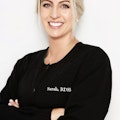
Answer from Sarah Crow, RDH: We talk about prevention constantly in dentistry. We educate patients about brushing, interdental cleaning, fluoride, nutrition, and regular hygiene visits. But are we actually practicing prevention and creating health, or are we simply repeating the same appointment every six months? Prevention begins with assessment. Before we pick up an instrument, we should be asking: What is happening in this patient’s mouth today, and what has changed since their last visit?
Your periodontal probing numbers are talking. Are you listening?
A 5 mm pocket that bleeds is more than a number to document. Generalized bleeding isn’t something we should automatically dismiss as “normal for this patient.” And when a patient consistently presents with inflammation, we shouldn’t become comfortable simply because we’ve seen it before in them.
Familiar doesn’t mean healthy. What a patient perceives as “normal bleeding” to them also doesn’t mean healthy. A patient could be obese, and that may be “normal” to them, but is it healthy? I argue no, something needs to change.
The opportunity to change our approach
This is where I believe we have an opportunity to change the way we approach the hygiene appointment. Instead of automatically thinking, this patient is due for a cleaning, let’s think, this patient is due for an assessment. Where is the biofilm? Where is the bleeding? Most likely those two things are consistent and congruent with one another. Are pocket depths changing? Is there recession or attachment loss? What do the radiographs tell us? What systemic or behavioral risk factors could be influencing the patient’s oral health? Is the patient’s current home-care routine actually working? Is their technique in need of an adjustment? Those findings should drive what happens next. Our patients deserve individualized care based on what we find—not simply what we have always done.
How technology can help
Technology can help us too. Voice-activated periodontal charting, AI-assisted radiographic analysis, intraoral imaging, and biofilm-disclosing agents can help us identify patterns, improve documentation, and make our findings easier for patients to understand. But technology should support our clinical judgment—not replace it.
Changing the conversation
And perhaps most importantly, we need to change the conversation with our patients.
Instead of saying, “Everything looks pretty good; we’ll see you in six months,” what if we said,
“I’m seeing bleeding in several areas today, which tells me there is inflammation present. Let’s talk about why that may be happening and what we can do differently between now and your next visit.”
That’s prevention. Your appointments should obsess over removing what is there today. It is identifying why it’s there and helping the patient change the conditions that allowed it to develop in the first place.
So, the next time you glance over at that periodontal chart, don’t just look at the numbers. Listen to what they’re telling you, because our job isn’t simply to give patients a cleaner mouth twice a year—our job is to help them keep a healthy one.
More from the author:
Editor’s note: This article first appeared in RDH eVillage newsletter, a publication of the Endeavor Business Media Dental Group. Read more articles and subscribe.