Nicotine pouches in the dental chair: A practical screening and monitoring protocol for general practice
Key Highlights
- Add nicotine pouches to health histories and ask about frequency, duration, and placement habits.
- Monitor frequent users for localized gingival recession, tissue changes, inflammation, and xerostomia.
- Use nonjudgmental education to discuss potential oral health risks and practical harm-reduction strategies.
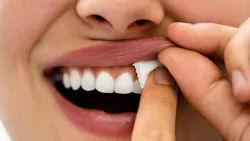
Nicotine pouches have moved from a niche product to something most general dentists now see weekly, if not daily. Unlike smoking or vaping, pouch use rarely comes up during a standard social or medical history. Patients don't always think to mention it, and many don't consider it “tobacco use” at all, since brands like Zyn are marketed as tobacco-free and smoke-free. That gap matters clinically.
Nicotine is a vasoconstrictor regardless of delivery format, and the placement site for a pouch is localized and repetitive in a way that cigarette or vape use is not. As practitioners, we're likely to be the first clinicians to notice a pattern before a patient connects the dots themselves.
The research base here is thin but growing. A 2022 population survey of nicotine pouch use in Great Britain confirmed rapid uptake of the category and called for ongoing monitoring, since long-term oral and systemic effects are not yet well characterized.1 A 2023 review in the International Journal of Dentistry outlined several plausible mechanisms by which nicotine may directly affect periodontal tissue, independent of delivery format.2 More recently, a 2025 case report in BMC Oral Health described two patients whose gingival recession appeared precisely at their habitual pouch-placement sites.3
Clinicians are still largely working from what we know about nicotine's vascular effects in other contexts rather than a large, pouch-specific, longitudinal dataset. This is exactly why a practical screening and monitoring approach in general practice is useful now, rather than waiting for the literature to catch up.
Start with the history
The simplest fix is also the most overlooked: add a specific question about nicotine pouch use to your intake and periodic health history update. Ensure that it is worded separately from “do you use tobacco?”4 Something like, “Do you currently use nicotine pouches (such as Zyns or Velo)?” works well. Where relevant, it's also worth asking about placement habits such as: which side, how often, and for how long per pouch?
A monitoring protocol worth adopting
For patients who report regular use, I've found it useful to capture a baseline with either intraoral photos or an intraoral scan, along with the traditional periodontal probing measurements. Taking the time to evaluate these areas at every recall appointment would be warranted for a frequent pouch-user rather than at their yearly periodontal probings to ensure any changes in recession are caught as early as possible.
This is an objective documentation approach that is useful both for early intervention and for patient education. Patients tend to respond very differently to being shown a side-by-side scan than to being told recession “might” be happening.
In terms of what to actually track, it’s not just about the recession levels. Pay close attention to tissue texture or keratosis changes at the contact area, and any localized inflammation distinct from the patient's general periodontal status. The great thing about this protocol is that it does not require new equipment if you're already scanning or taking intraoral photos for other purposes.
What to tell patients
Chairside guidance doesn't need to be alarmist or shameful to be effective. Practical, nonjudgmental suggestions tend to land better than scare tactics. Some suggestions you may make to patients are rotating placement sites rather than using the same spot repeatedly, avoiding overnight use, and using lower strengths of nicotine.
For patients using pouches to quit smoking, it's worth acknowledging that nicotine pouches tend to be the lesser of the evils, since the effects are a bit more localized from what we have seen so far. However, patients should still be educated on the possible risks of nicotine pouch use on their oral health. The main concern noted from nicotine pouch use is not only gum recession, but also formation of precancerous lesions and xerostomia.
Another thing to keep in mind is that many nicotine pouch users are using them for the cognitive or focus benefits, and not for quitting smoking at all. Many of these patients do not have an underlying nicotine addiction, and you may find that many are open to quitting when informed of the negative effects these pouches have on their oral health.
I've written a more detailed, consumer-facing explainer covering the vasoconstriction, pH, and mechanical factors for patients here: Are Zyns Bad for Your Gums? A Dentist's Honest Answer. This may be useful as a handout or link for patients, or if you’re interested in more details on the actual mechanisms that nicotine pouches have on oral health.
An evidence gap we can help close
Because pouch-specific longitudinal data doesn't yet exist, the anecdotal patterns general practitioners are seeing chairside may end up being some of the more useful early signals available. Documenting cases systematically through case photos or scan comparisons shared within study clubs or specialty groups may end up contributing meaningfully to a research base that's currently thin. Until then, a simple medical history question and a low-effort monitoring habit are enough to move this from a blind spot to a routine part of periodontal risk assessment.
Related reading: What hygienists are missing in oral cancer screenings—and how to fix it
Editor’s note: This article first appeared in RDH eVillage newsletter, a publication of the Endeavor Business Media Dental Group. Read more articles and subscribe.
References
- Tattan-Birch H, Jackson SE, Dockrell M, Brown J. Tobacco-free nicotine pouch use in Great Britain: a representative population survey 2020–2021. Nicotine Tob Res. 2022;24(9):1509-1512. doi:10.1093/ntr/ntac099
- Ye D, Rahman I. Emerging oral nicotine products and periodontal diseases. Int J Dent. 2023;2023:9437475. doi:10.1155/2023/9437475
- Alkhatib OA. Localized gingival recession and leukoplakia associated with nicotine pouch sse: two clinical case reports. BMC Oral Health. 2025;25(1):2004. doi:10.1186/s12903-025-07320-4
- Jackson JM, Weke A, Holliday R. Nicotine pouches: a review for the dental team. Br Dent J. 2023;235(8):643-646. doi:10.1038/s41415-023-6383-7
About the Author
 Justin Ficor, DMD
Justin Ficor, DMD
Justin Ficor, DMD, is a practicing general dentist registered with the British Columbia College of Oral Health Professionals (BCCOHP), with 10 years of clinical experience. After observing the oral effects of nicotine pouch use in his own patients, he founded Öra Pouches, a nicotine-free oral pouch designed to support oral health. Contact him at [email protected].