Evaluation and documentation: Protecting patients and providers


Episode highlights
- Close the loop on treatment. Reevaluation helps determine whether gingivitis, periodontal concerns, or other clinical findings have improved—and whether the care plan needs to change.
- Make your notes objective and specific. Record relevant findings, dates, consent or refusal, recommendations, and follow-up rather than subjective impressions or unclear abbreviations.
- Try the good witness test. Ask another qualified person to review sample clinical notes for completeness and clarity from an outside perspective.
- Document missed appointments and make room for follow-up. Attendance records can support continuity of care, while team conversations can help identify barriers such as anxiety, transportation, and scheduling constraints.
Episode description
Clinical documentation is easy to push to the bottom of the list when the schedule is full, the next patient is waiting, and the electronic health record is already open. But evaluation and documentation are essential parts of the dental hygiene process of care—not just paperwork to finish before heading home.
In this episode of A Tale of Two Hygienists, Jessica Atkinson and Dave Torres welcome back JoAnn Gurenlian for a practical conversation about closing the loop on patient care. They discuss why reevaluation matters after treatment, common charting mistakes, informed consent and refusal, accurate coding, and the risks of incomplete or templated notes that don't reflect what actually happened. The conversation also explores how to document missed appointments, build time for clinical notes, and make records useful when another provider takes over a patient's care.
The takeaway? Clear, accurate documentation helps support clinical decisions, continuity of care, patient advocacy, and the practice as a whole.
A Tale of Two Hygienists podcast – Episode 562
Why evaluation and documentation belong together — 01:30
JoAnn Gurenlian: I really want patients to understand that this is an investment in their health. It's not a see-you-once-or-twice-a-year moment. It's an investment in their health. If we know that there are links between periodontal disease and systemic health, we have to take that seriously. We have to make sure our patients are able to manage for the time that they're not with us.
If we aren't documenting correctly and we are at risk for a lawsuit, the practice is at risk. And so, it's not just a job, right? I'm not just here to clean teeth. I'm here to support a great practice. All of this is important. We can't shave off that five or seven minutes we were using for documentation so that we can do something else. We have to be able to preserve the dignity of the appointment and the dignity of the representation of what it is that we do.
Dave Torres: Hey, hygiene family, welcome back to another episode of A Tale of Two Hygienists podcast.
Whether you're driving to work, setting up your operatory, or squeezing in and listening between patients, we're so glad you're here. Every episode, we sit down with people who are pushing this profession forward, and I'm so excited because today it's no different. Jess, please tell the listeners: who are we talking to again?
Jessica Atkinson: This is our third, and this is our final capstone of the month of October, Dental Hygiene Month, with JoAnn Gurenlian. We're going to be talking today about evaluation and documentation.
If you haven't met JoAnn, or if this is the first time you're listening in this month, I'm going to give you a little bit of background on why we have JoAnn coming to talk with us today.
JoAnn is the Director of Education, Research, and Advocacy for the American Dental Hygienists' Association. She is also a professor emerita for the Department of Dental Hygiene at Idaho State University, a fellow in the ADHA, an affiliate academic fellow in the American Academy of Oral Medicine, and past president of ADHA and the International Federation of Dental Hygienists.
Dr. Gurenlian is the author of over 350 papers in dental hygiene, which is documentation. So we got the right girl here! She has also contributed to dental and medical publications and conducted over 650 presentations at regional, national, and international events.
Welcome back, JoAnn. I'm excited to get back into this.
JoAnn Gurenlian: Thank you for having me, Jessica and Dave. I am so excited that we're having this conversation today.
Jessica Atkinson: Well, we've assessed, we've diagnosed, we've done all of those things. And now, one of my favorite sayings in dental hygiene—I have a few—is, "If it isn't written down..." Can you guys fill in the blank? What is the end of that?
JoAnn Gurenlian: It didn't happen.
Jessica Atkinson: It didn't happen. So what is the role of that connection between evaluation and documentation within the dental hygiene process of care, JoAnn?
JoAnn Gurenlian: Evaluation is one of my favorite parts. I like to ask my colleagues, "What have you prevented today in this appointment, and how do you know you did that?"
An evaluation helps you answer those questions. It is designed to help both the clinician and the patient understand if they have achieved the goals specified in the care plan. This is a golden opportunity for us to have that conversation with our patients about where they are now. Do they need continued care, and to what extent? Or have they achieved a healthy status? Hooray for that!
That's where evaluation fits into the picture. A lot of times, we go, "Oh, it was lovely to see you, Dave. We'll see you in six months," and goodbye. We don't know if we resolved your gingivitis or your attrition or whatever. Maybe you have a small lesion that's a little bit of a concern. We just kind of farm you off to somebody else and never do the follow-up to see where a person might be.
Then, of course, there's documentation. Jessica, you said it so well: if you don't write it down, it didn't happen.
This is our opportunity not just to protect ourselves legally, which is important because we want to minimize risk, but also to showcase what has been accomplished over a given period of time. Other professionals who may follow you can look at that same information and make their own determinations.
For example, if you've made a referral to a speech therapist, a physical therapist, a physician, or a dental specialist, the notes help that professional understand what actually occurred. They can then use that information to make their own plans and diagnoses.
Evaluation and documentation are partners in the process, and I think they're indispensable to the care we provide.
Common documentation mistakes hygienists should watch for — 07:00
Dave Torres: Documentation is so important, obviously, beyond the legal requirement. But what are some of the common mistakes I could be making when writing my notes? The patient can be 10 minutes late. Is that even a concern, or is there something I should be avoiding?
JoAnn Gurenlian: One thing I've read in the literature related to documentation and legal records is that you don't have to write everything down the second you see the patient if your next patient has been waiting 10 minutes for you, Dave.
But you do have to document everything in the course of a day. You don't want to go back later and try to remember, "Who was that, and what did we do then?" Short-term memory can be hard for us when we've had a full day, we're tired, and we want to go home.
There are some common things to pay attention to:
· One is using subjective information instead of objective information. For example, "Wow, that patient, JoAnn Gurenlian, was really grouchy today." I could be as pleasant as pie or as grouchy as could be. It doesn't matter. That's not relevant to the objective assessments and diagnoses. Stay objective.
· Use abbreviations that we all know. Thanks to texting, we have all kinds of abbreviations, but they may not be ones that everyone would understand.
· Another mistake is not dating the information. When did this happen? Not everyone knows that you did something on Friday, June 12th. They need to know when it happened.
· And a special one that really gets my goat is not having informed consent or refusal. We make an assumption that because we saw our patient and said, "Oh, you're here for your dental hygiene appointment today," they're consenting to treatment. But are they consenting to all the treatment? The best example we hear all the time is, "I don't want radiographs today."
We have to document that the patient agreed to these procedures but refused this procedure. That's really something we have to pay attention to.
Jessica Atkinson: Should that be signed or just documented?
JoAnn Gurenlian: It can just be documented. Verbal consent can be used, including when a patient refuses treatment. I really like written consent.
Sometimes patients will say, "I didn't know you were going to do all those things, and it costs this much money." If they've signed something, they're aware, and you have documentation to support you later when they come back and say, "You didn't tell me it was going to cost $375 today for this appointment."
We're thinking as care providers; we're not thinking as financial implementers. But that's something to keep in mind.
Another issue is not coding correctly. I'm at fault for this just as much as anybody else. I don't always remember all the right codes. I have to look them up.
Jessica Atkinson: I was taught that you could never use a prophy code in conjunction with an SRP code. That was taught to me as an absolute rule: you cannot do that. Then I went to a different university, and they're like, "Actually, you can," and showed me the CDT code. It blew my brains right out of my body. I was like, "What?"
JoAnn Gurenlian: Here's my favorite one. We can code for providing instruction and education, including home care instruction. I don't know that everyone knows that. And again, it's hard to keep up with everything, right? But there are CDT codebooks we can use. We can look it up. We can Google it.
Jessica Atkinson: My favorite is the CDT Companion because it gives scenarios. When I read it as a scenario, I was like, "Oh, okay, this is why."
A prophy code is not a full-mouth code, even though prophylactic means preventing disease. You have to read it and go, "Okay, I see where you're coming from," even though it sounds weird.
JoAnn Gurenlian: Yeah, no, I agree. I'm all for it. Those are some of the common things we see.
Electronic health records are great. We love them, right? They have prompts, move us in the right direction, and help make sure we don't miss anything. But sometimes we don't have the right section or prompt to put something in the record. We have to be willing to add notes when needed.
I use DHDX for dental hygiene diagnosis. A lot of times, somebody else will come in and go, "What is that?" It's a good example of an acronym that not everyone recognizes and that isn't always represented in electronic health records. I like to make sure we include that.
Why the re-evaluation appointment matters — 12:15
Jessica Atkinson: I agree. I was thinking about evaluation, JoAnn, and how you're talking about, "If it's not written down, it didn't happen," and "The shortest pencil is better than the longest memory." That's my other favorite. Get it written down that day.
But what if we didn't even evaluate? I'm going to be vulnerable with you all. When I was a brand-new dental hygienist, guess what appointment got shoved under the rug? The re-evaluation appointment after nonsurgical periodontal therapy didn't happen.
Can you talk to us a little bit about why evaluation is so important? We talked about it a little, but let's expand on why evaluation is integral to our profession.
JoAnn Gurenlian: I'm going to say this, and I hope the listeners won't be mad at me afterward. I think the reason is that we operate in a 50-year-old model of practice that isn't contemporary enough to recognize the standards for clinical dental hygiene practice.
We think that if we do an assessment and a care plan, that's all we need to do. We can skip some of these things because, by the way, we're really busy in that 45-minute or hour appointment.
We also make the assumption that if we tell a patient, "Dave, I would really like to see you back in two weeks to see if that lesion has gone away," or, "We've done a considerable amount of work to try to eliminate gingivitis, and I need to see if we've done all we can do and if you are actually healing and improving," the patient might say, "That sounds really good, but who's going to pay for that? And I don't have the time."
Pick a reason why they're not going to do it. So what do we do? We go, "Okay, we'll catch you next time." Six months isn't that long to wait, right? We rationalize that we don't have to do this step.
Yet this is so important because I don't like to leave somebody with disease. If they've demonstrated disease in their mouth, I need to know that the recommendations I've made are being followed.
What if I told a patient, "You really should step up and use a water flosser"? I've had patients tell me, "I can't use it. I don't know how to use it." And you're sitting there going, "Didn't you just pull out the directions and read them from cover to cover like I do?" No, they don't. They just want to turn the button on and splash water all over the bathroom.
That's why we need to allow time for a patient to come back so we can ask, "How is it going, and have we seen a difference?" If we have, praise the Lord. If we haven't, we have to take a step back and ask, "What else do we need to do?" Maybe that wasn't the right recommendation, and we're going to switch you to something else.
I really want patients to understand that this is an investment in their health. It's not a see-you-once-or-twice-a-year moment. It's an investment in their health. If we know there are links between periodontal disease and systemic health, we have to take that seriously.
We have to make sure our patients can manage their health during the time they're not with us, which is just as important as the time they are with us.
Jessica Atkinson: Think about why that fell by the wayside. Why did I let it happen? The pressures of time. I think for me, I let the importance get lost in the daily grind.
Dave Torres: Yeah.
JoAnn Gurenlian: I think you summarized that beautifully. We're busy and don't always think of those things.
It's also part of the practice philosophy. If a practice has the philosophy that we want to evaluate our patients and see if they're progressing toward optimal health, that's a different mindset from, "You're here, you're cleaned, and you're gone."
How incomplete documentation can create legal risk — 16:39
Dave Torres: JoAnn, let's talk about something spicy: risk. Let's talk about why that's important. Can you walk us through what actually happens legally and professionally when documentation fails?
Writing notes isn't my biggest forte. I think it's a bit mundane, right? But I think we underestimate how quickly an incomplete chart can become the most important document in the room. Tell me a little bit about those risks.
JoAnn Gurenlian: We know that we live in a litigious society, and people are happy to sue for any reason they can find. If they can get something from it that benefits them, they're happy.
We see legal risks all the time. Some include failure to diagnose and failure to inform the patient of something.
For example, a patient might say, "I've been a patient of your practice for 10 years. No one ever told me I had a periodontal problem."
We say, "Wait a second. Let's go back and look at our records." If our records say nothing beyond that the patient was here and had a scale, polish, and fluoride, with nothing else documented, I have no leg to stand on to support that case when it goes to court.
On the other hand, if we have records showing that we've told the patient for five years that they have a periodontal problem, need to see a periodontist, or need to take certain steps—and all of that is documented and signed by the clinician—that's a very different situation.
The judge can look at those records and see that the patient was told multiple times but didn't follow the clinicians' recommendations.
Jessica Atkinson: I've heard and seen scenarios where a problem was documented. There was a periodontal chart, and the patient had been treated with a prophylactic code, but the conversation wasn't happening with the patient.
The patient showed up with four-millimeter bleeding pockets. One day, they saw a different clinician, and the clinician said, "We've got a problem here that has been documented but not diagnosed for years."
JoAnn Gurenlian: Failure to diagnose is one of the biggest issues seen in oral health litigation.
You bring up a great point. It goes back to all of it: Is there an assessment that demonstrates the patient's condition? Is there a diagnosis associated with it? It can't just be signs and symptoms. It has to be an actual classification or naming of a disease.
And was the patient given a suitable care plan to support that diagnosis? All of these things fall into place in terms of our dental hygiene standards of care. They're guideposts that help protect us from malpractice or litigation risk.
Jessica Atkinson: Protection. I think it's not just protection for us as providers. It's protection for our patients, too. Documentation and evaluation really drive a standard of care.
JoAnn Gurenlian: Absolutely. But remember, too, you have a responsibility to protect the practice. We want the best for our patients, and we want to showcase the great care they've received.
We want to show that they've made progress, or identify barriers and stumbling blocks that are preventing them from making the progress we hope to see by a certain point in time.
At the same time, if we aren't documenting correctly and we're at risk for a lawsuit, the practice is at risk, too. We haven't protected the practice.
It's not just a job, right? I'm not just here to clean teeth. I'm here to support a great practice.
Practical ways to make clinical notes more useful: the “good witness test” — 21:17
Dave Torres: Now you've got me thinking about my templates, my notes, my 8 o'clock patient, and then my afternoon patient after I've had some quick lunch and my energy is kind of drained. I tend to notate a little differently.
What are some best practices you can give me for documenting? As the doctor's doing an exam, I'm over here adding a quick note. While I'm waiting for the patient to go to the restroom and come back, I'm adding another quick note.
What are some best practices that could make my life a little less miserable while keeping me legally protected when it comes to clinical notes?
JoAnn Gurenlian: I do think templates help. Having some type of guidepost that you can use to make sure you hit the marks on all these things is really helpful, whether that's a physical template you keep as a cheat sheet in the practice or an electronic health record you can add to as needed.
But I'm going to give you a tip that may or may not make the mark for you. It's called the good witness test.
Take a couple of examples of the documentation you've submitted and show them to somebody else. Ask that person to review them as if they're checking state board requirements, malpractice requirements, or insurance audit requirements. You could even ask a consultant who audits practices to look at them through that lens.
I think that can be a big eye-opening moment. We're looking at documentation as protection, but also as a way to mitigate risk.
It's an opportunity for someone to say, "You've done a fabulous job, Dave. These three records show that you've attended to all the essential elements. There's only one missing piece: you didn't date it."
Somebody else will see what you don't see because you're doing it every day. You're documenting while the patient's in the bathroom, while the dentist is doing the exam, and while you're trying to be as efficient as possible so that when 5:00 or 7:00 rolls around, you're able to get out of that office.
You don't want to be thinking, "I've got another hour of documentation to do."
Jessica Atkinson: I find that we often write notes knowing we're going to be the provider who sees that patient next time. But that's not always the case.
The good witness test is helpful, but how about a good practitioner test as well? If I'm going to follow Dave or he's going to follow me, will he know what we did, how we did it, and what was discussed so he can continue providing good care? Or will he be starting at ground zero?
JoAnn Gurenlian: One of the best examples is when I'm seeing Dave for one appointment and then see Jessica at my next appointment. I tell Jessica, "Dave said this, and I needed this treatment," or whatever it might be.
If Jessica doesn't see anything in the record, she's trying to figure out whether Dave actually said that or whether I heard it from someone else and now want that treatment. She's left trying to understand what's going on.
I think it's really helpful to have another provider take a look at your notes and offer another perspective.
Jessica Atkinson: I've never had this done before on me.
Dave Torres: That's actually a really good point because there are about four hygienists in my office. I've had patients say, "You know, I never did my fluoride on this and that."
And I'm like, "It's actually right here." The other person documented the fluoride treatment, and the patient says, "Oh yeah, that's right, I forgot."
Some patients might try to pin you against each other. But when you have clear documentation, it's a preview of what happened during that appointment—and, dare I say, guidance.
Jessica Atkinson: I love guided templates. They help us remember what we need to write.
But I want to put a caution sign up about templates. Maybe this patient saw me and we didn't do fluoride, but fluoride was already in the predictive-text template and I didn't edit it.
Then, when the patient sees Dave next time, the record says we did fluoride, even though it didn't happen. I wrote it because it was part of a template.
Remember, you're protecting the practice. I love that you brought that up, JoAnn: protecting the practice, protecting yourself as a provider, and protecting the patient by taking our documentation seriously.
We get into these routines. What are some suggestions to help us be more careful?
Making time for documentation in a busy hygiene schedule — 26:49
JoAnn Gurenlian: I think sometimes we have to press the pause button. Take a breath.
Yes, we have a lot to do, and yes, we have a lot to record. Everything takes time, but we have to remind ourselves that all of this is important.
We can't shave off those five or seven minutes we were using for documentation so we can do something else. We have to preserve the dignity of the appointment and the dignity of the representation of what it is that we do.
I always say, if you feel you can't do this right now, don't do it because you're going to do a crappy job, and that's a problem. Press the pause button and say, "I will come back to this, and I will do this later."
The other thing we have to do—and this is going to sound heretical—is schedule our own time. When somebody else is scheduling our time, we aren't necessarily getting what we need to have a great appointment.
We have to build in the time so we can breathe, end our day well, and get everything in. It's just as important to have time to prepare the operatory for the next patient as it is to have time for documentation.
No-shows, cancellations, and the patient relationship — 28:18
Dave Torres: Should we be documenting when patients don't show, like no-shows or cancellations? Should that be part of the legal record?
JoAnn Gurenlian: Absolutely. First of all, there may be legitimate reasons. We don't want our patients coming in and sharing their flu with us, so they don't attend that day.
But there are other times when it's just, "I don't feel like going, and I'm going to blow that off."
That links back to the fact that we've been telling a patient for three years, or however many years, that they have a particular oral health condition that requires further evaluation and treatment, and they've been blowing it off or not coming to their appointments.
If it goes to a legal situation, you have records demonstrating that the patient wasn't attending appointments and has a history of missed visits. Maybe there have been three failed appointments in a year. That says something about their commitment to their oral health.
Jessica Atkinson: In education, this is huge because students are finding their own patient populations. We have them document why patients missed appointments and how many times the student contacted them.
It's extensive because, as a student, I don't want to go back to a patient hoping to meet my requirements, only to end up with four missed appointments and all those hours I could have been filling with someone new.
I think that started me thinking, "We should be documenting not only our professional habits, but the patient's habits as well."
If this goes to litigation, you can show that it wasn't because we didn't provide an opportunity. It was because of the missed appointments.
JoAnn Gurenlian: I think it's also helpful for the entire practice. Everyone is working together as a team, and it provides an opportunity to have a discussion.
Why isn't Mr. Smith here today? What can we do differently to get him back to a regular appointment?
Jessica Atkinson: Was it because you're scheduling him early in the morning and he has a hard time getting everything ready to go?
I have a colleague whose brother has specific transportation needs that make an early appointment unfeasible.
So we're talking about social determinants of health, JoAnn.
JoAnn Gurenlian: Yes, we are. But remember, a very high percentage of patients have a fear of dentistry and dental anxiety. That may be the reason someone is choosing not to attend appointments.
It's great to have that conversation as a team and ask, "What can we do to make this a more manageable appointment for Mr. Smith?"
Maybe we have that conversation with him, and instead of trying to do everything in a short period of time, we set limits on what we're going to accomplish. That way, it's a great appointment, and Mr. Smith will come back.
There's an opportunity here. It's not just about legal risk. It's also about making things better for our patients.
Advocating for the value of the hygiene appointment — 31:39
Dave Torres: It's also about advocating for ourselves, as well.
A scenario that pops into my head is a patient who was trying to cancel an appointment we'd scheduled when we last saw her. I'd instructed my front desk because their job is to keep the schedule full, right? My job is to service the patients. Sometimes we're praying for cancellations, and that may come true, but the front desk immediately puts another patient in that spot.
We have a hygiene coordinator, and I've told the front desk, "If a patient calls to cancel, call me. I will speak to that patient."
They're like, "For real?" And I'm like, "Absolutely. This isn't just your responsibility."
I answer the phone, and I'm familiar with the patient because I did the chart prep. I was looking forward to the appointment, so I'm finding out what's going on.
Let's call her Mrs. Jones. She says, "I'm going to have to cancel my appointment."
"Oh no, is everything okay?"
"Yes, everything is okay."
"Then what's going on? How come you're not going to be able to make it? I booked a whole hour for you."
"Well, I have a nail appointment."
Guys, it took everything in me not to blow steam. I clenched the phone, looked at my hygiene coordinator, and said, "She has a nail appointment?"
The patient said yes. I told her, "Okay, we can cancel the appointment, but I'm not going to be able to see you for at least a month."
"What? I want to be able to come in next week!"
I said, "I have patients who want to see me, and the fact that you're forfeiting your spot means I'm not able to see the people who really want to be seen right now."
She said, "Oh, it's just that my new appointment lady's so busy."
And I'm like, "So am I. If you want to see only me, my availability is going to be in a month. If you want to see another hygienist, I'm sure they have more availability. I'll have to check your schedule."
"No, I only want to see you."
We already had that connection and that investment. Lord knows how many notes I've written about her procedures. But she kept the appointment because I advocated for myself and explained that we'd done so much work to get to this point, and now she's prioritizing a nail appointment.
I get it, guys. I'm a guy. I don't typically do my nails, and I know that for patients here in South Florida, that's a need. But at the end of the day, we advocate for ourselves.
I went back to explaining to the front desk: "If patients don't show, we have to document it. Document these things because we're also advocating for ourselves."
We want our teamwork to have synergy, where we can have flexibility. But what message are we sending patients if we say, "It's okay, you can just cancel the appointment"?
What about all that work? What about all that time, the resources, verifying the insurance, and preparing the chart? I can keep going, but you get the point.
We're health care providers, and patients come to us for our services. I wanted to put that out there because I was curious whether I should be documenting when patients cancel their hygiene appointments because they have nail appointments.
JoAnn Gurenlian: One of the best things you've done, Dave, is communicate the value of the dental hygienist and the dental hygiene appointment to the patient. They prioritized their interests and needs based on the information you gave them.
I think that's really important for all of us to remember, instead of relying on somebody else to say, "Okay, we'll reschedule you in six weeks for Jessica or Dave."
This conversation between the dental hygiene provider and the patient elevates the value of the dental hygienist and that appointment.
Thank you for sharing that, because that's fabulous.
The takeaway: documentation is an investment in care — 35:57
Jessica Atkinson: Thank you for being here, JoAnn, to talk about the value we have in evaluation and documentation.
As we look back at this episode, I hope everyone listening also took away the value we bring to our patients and ourselves by advocating for ourselves.
I think documentation is advocation for ourselves, our patients, and our practice.
If you're struggling to find that four-letter word—time—remember to use Dave's example and advocate for yourself, and use what JoAnn shared with us today.
Documentation takes time, and that time is protecting you, protecting your practice, and protecting the patient.
Thank you for being with us.
JoAnn Gurenlian: Thank you for having me. It's been a great pleasure.
Dave Torres: Thank you, JoAnn.
Where to find our guests
JoAnn Gurenlian on LinkedIn
Contact the ATOTH hosts
Jessica Atkinson: [email protected]
Dave Torres: [email protected]
Hear more from JoAnn Gurenlian on A Tale of Two Hygienists
About the Author
 Jessica Atkinson, MEd, BSDH, RDH, FADHA
Jessica Atkinson, MEd, BSDH, RDH, FADHA, is a dental hygiene educator, clinician, and advocate dedicated to advancing the profession through innovation and education. She combines her clinical expertise and love for education to create engaging, practical learning experiences. Jessica is an Associate Professor and Senior Clinic Coordinator at Utah Tech University, co-host of A Tale of Two Hygienists, and CEO of HYGIENE edgeUCATORS, where she develops continuing education for educators and clinicians. She co-founded Hygiene Edge, a platform with over 100,000 YouTube subscribers. Recognized with the Element Award and Outstanding Service Award, she is a Fellow of the ADHA and past president of UDHA.
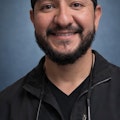 David Torres, CRDH
David Torres, CRDH, cohost of A Tale of Two Hygienists, is an experienced dental hygienist with over a decade of clinical expertise, specializing in patient education, preventive care, and the integration of modern dental technologies. Known for his passion for teaching, campus recruiting, and coaching, David is dedicated to elevating patient experiences while helping dental professionals improve efficiency, workflow, and long-term success.
Related
 3-D renderings of teeth
 woman holding her face due to dental pain